Trump dismisses GOP diesel critics, floats US diesel cap amid Russia deal
Synopsis
Trump is defending a Russian diesel deal even as a sanctions law he signed — now named after the late Senator Lindsey Graham — could penalise countries buying Russian oil from 18 October. His own Republican co-sponsors are calling the move a contradiction. India, one of Russia's biggest oil customers, is watching closely to see if it ends up on the tariff list.
Key Takeaways
Donald Trump dismissed Republican senators opposing his Russian diesel deal as not 'serious' on 13 October .
Trump floated a 'cap on diesel,' potentially restricting US exports, but offered no operational details.
OFAC General License 135 , issued on Friday, authorises transactions involving Russian-origin diesel; Russia is set to supply nearly five million tonnes in total.
Public Law 119-111 allows tariffs of up to 100 per cent on goods from countries buying Russian oil; duties can take effect from 18 October .
Bipartisan critics — including Republican Senators Murkowski , Collins , Tillis , and Curtis — have called on the administration to 'immediately reverse course.' India , hit with a 25 per cent additional tariff in August 2025 over Russian crude purchases, faces fresh uncertainty as the administration has not disclosed whether it will be targeted under the new law.
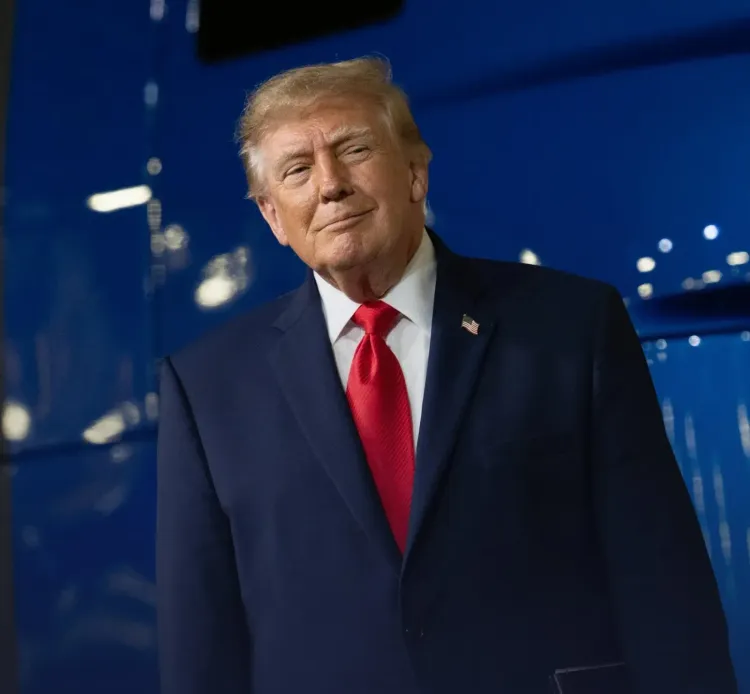
US President Donald Trump on 13 October brushed aside Republican senators opposing his Russian diesel arrangement, calling them not 'serious,' and floated the possibility of a US 'cap on diesel' — a sweeping measure that could restrict American exports and reshape global fuel markets. The remarks came as a sanctions law Trump himself signed last month is set to allow tariffs on countries purchasing Russian oil starting 18 October.
Trump Defends the Russian Diesel Deal
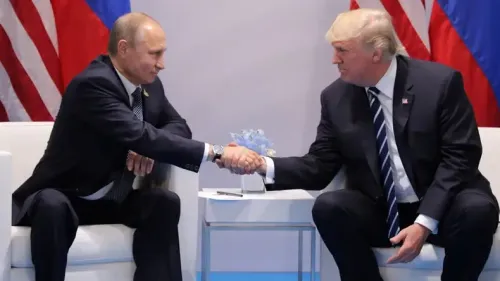
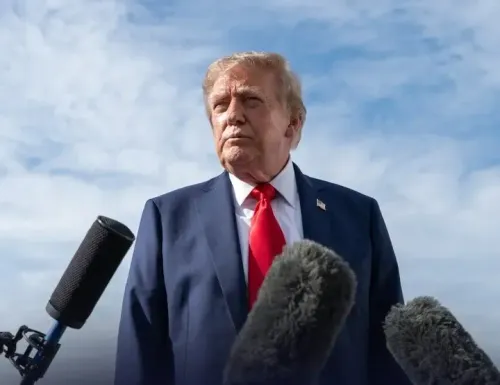
Speaking to reporters at the White House before departing for a campaign trip to Youngstown, Ohio, Trump defended the arrangement he brokered with Russian President Vladimir Putin. 'I think these are Republicans that can't really be serious,' Trump said before boarding Marine One. 'We have — you know, we make a lot of oil. We could do a restriction on oil, but the rest of the world would be greatly, greatly affected if we do that.'
He went further, suggesting a targeted fuel measure: 'We could do a restriction, you know, a cap on diesel, keep it all for ourselves. That would have a very big impact.' Trump added that the arrangement was not a personal deal but one 'for the rest of the world,' and framed any resulting benefit to American farmers and ranchers as a justification. He offered no details on how such a cap would function, whether it would apply to exports or domestic supply, or how it would be reconciled with ongoing US purchases of Russian-origin diesel.
The Treasury's Office of Foreign Assets Control (OFAC) issued General License 135 on Friday, formally authorising transactions involving Russian-origin diesel. Trump had announced last week that Russia would supply roughly 300,000 tonnes of diesel immediately, with nearly five million tonnes in total, as his administration seeks to bring down fuel prices that have climbed since the Iran war began in February.
Republican and Democratic Criticism Mounts
The bipartisan pushback is significant in scale and specificity. Republican critics include Senators Lisa Murkowski of Alaska, Susan Collins of Maine, Thom Tillis of North Carolina, and John Curtis of Utah. They joined Democratic Senators Jeanne Shaheen, Ron Wyden, and Richard Blumenthal in a joint statement on Sunday urging the administration to 'immediately reverse course.'
Murkowski pointed directly to the contradiction embedded in Trump's own legislative record. 'The President should be using those authorities instead of allowing Russia to export diesel, rake in revenues, and continue its catastrophic war in Ukraine,' she said. Collins was equally blunt: 'I was a co-sponsor of the Russian sanctions law, which the President recently signed, but is now not following.'
The Law Trump Signed — and Appears to Be Sidestepping
Public Law 119-111, named after the late Senator Lindsey Graham, empowers the President to impose duties of up to 100 per cent ad valorem on goods from countries purchasing Russian-origin crude oil and related energy products. The law also grants the President authority to waive those duties in the US national interest — a provision critics argue is now being invoked to benefit Moscow. Congress had originally banned imports of Russian energy into the US in 2022 following Russia's invasion of Ukraine.
The first duties under the new law can take effect from 18 October. The administration has not publicly stated whether India will be on the list of targeted buyers.
India's Exposure and New Delhi's Position
India has been among the largest buyers of Russian crude since 2022. Trump imposed an additional 25 per cent tariff on Indian goods in August 2025 specifically over those purchases. New Delhi has long argued it is held to a double standard. 'Where the United States is concerned, it continues to import from Russia uranium hexafluoride for its nuclear industry, palladium for its EV industry, fertilisers as well as chemicals,' India's External Affairs Ministry said in August — a pointed rebuttal that has not prompted any formal US response.
With 18 October approaching and the administration silent on India's status, New Delhi faces renewed uncertainty over whether it will be swept into the tariff net even as Washington simultaneously licenses Russian diesel imports for its own market.
Point of View
Then licensed Russian diesel imports days before the law's first trigger date. The 'national interest' waiver built into Public Law 119-111 is doing enormous work here, and Congress's bipartisan revolt signals that the waiver's legitimacy will be contested. For India, the asymmetry is glaring — New Delhi faces tariff exposure for buying the same Russian crude that Washington is now effectively blessing for its own market. The External Affairs Ministry's August rebuttal about US imports of Russian uranium and palladium remains unanswered, and that silence will carry diplomatic weight as 18 October approaches.
NationPress
13 Oct 2026
Frequently Asked Questions
What is Trump's Russian diesel deal?
Trump announced last week that Russia would supply approximately 300,000 tonnes of diesel immediately, with nearly five million tonnes in total, as his administration attempts to reduce fuel prices that have risen since the Iran war began in February. The Treasury's OFAC formally authorised these transactions through General License 135 on Friday.
What is Public Law 119-111 and why does it matter?
Public Law 119-111, named after the late Senator Lindsey Graham, allows the US President to impose duties of up to 100 per cent ad valorem on goods from countries that purchase Russian-origin crude oil and related energy products. The first duties can take effect from 18 October, creating a direct conflict with the administration's simultaneous move to license Russian diesel imports.
Which senators are opposing the Russian diesel deal?
A bipartisan group including Republican Senators Lisa Murkowski, Susan Collins, Thom Tillis, and John Curtis, along with Democratic Senators Jeanne Shaheen, Ron Wyden, and Richard Blumenthal, issued a joint statement urging the administration to 'immediately reverse course.' Murkowski and Collins were co-sponsors of the very sanctions law Trump signed.
What does the Russian diesel deal mean for India?
India is among the largest buyers of Russian crude since 2022 and was hit with an additional 25 per cent tariff on Indian goods in August 2025 over those purchases. The administration has not publicly stated whether India will be targeted under the new October 18 tariff mechanism, leaving New Delhi in a state of ongoing uncertainty.
What did Trump mean by a 'cap on diesel'?
Trump floated the idea of restricting US diesel, saying 'we could do a restriction, you know, a cap on diesel, keep it all for ourselves' — suggesting it could have a 'very big impact.' He did not clarify whether it would apply to exports or domestic supply, or how it would interact with ongoing Russian diesel imports.