White House: Trump Signs EO Blocking Banks From Aiding Cartels
Synopsis
The White House announced on 2 June 2026 that President Donald Trump signed an executive order directing banks and financial institutions to stop facilitating drug trafficking, illegal immigration and the cartels behind them, calling it a core measure to end fraud against American taxpayers and reverse mass illegal migration.
Key Takeaways
The White House announced the executive order on 2 June 2026 via its official X account.
The order targets banks and financial institutions alleged to be aiding drug trafficking, illegal immigration and cartels.
The White House said illegal aliens and foreign fraudsters cost American taxpayers 'BILLIONS' yearly.
It builds on the Bank Secrecy Act of 1970 and the USA PATRIOT Act of 2001 anti-money-laundering framework.
Treasury is expected to issue compliance guidance shaping the order's real-world impact.
Indian banks with U.S. correspondent ties and diaspora remittance flows could feel indirect effects.
The White House, the official communications arm of the Executive Office of the President of the United States, announced on 2 June 2026 that President Donald Trump has signed an executive order directing banks and financial institutions to stop facilitating drug trafficking, illegal immigration and the cartel networks behind them. The post framed the directive as a core plank of a wider drive to curb fraud against American taxpayers and reverse what it called 'mass illegal' migration.
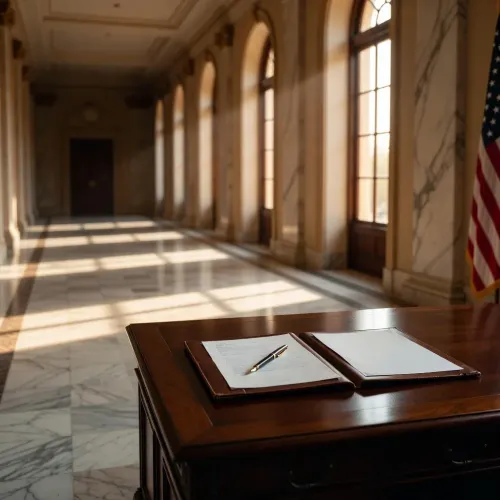
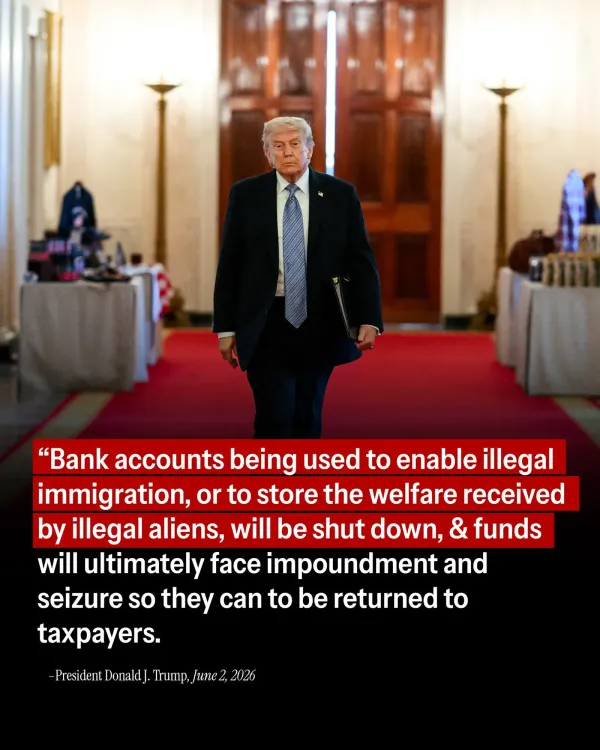
In its post, the White House said: 'Illegal aliens & foreign fraudsters steal BILLIONS yearly from American taxpayers,' adding that the President had signed the order to 'stop banks & financial institutions from aiding drug trafficking, illegal immigration, & the cartels behind it as part of the effort to END fraud & reverse mass illegal' activity. The message was accompanied by a single image.
Context
The directive sits at the intersection of two long-running U.S. policy priorities: immigration enforcement and anti-money-laundering oversight. By aiming the order at financial intermediaries rather than only at border agencies, the administration is signalling a strategy of choking off the revenue and payment rails that sustain transnational criminal organisations.
Executive orders are presidential directives that carry the force of law for federal agencies and do not require approval from the U.S. Congress. They are typically operationalised through follow-on rules and guidance from departments such as the Treasury and the Department of Homeland Security.
Policy backdrop
The order builds on a decades-old architecture of U.S. financial-crime law. The Bank Secrecy Act of 1970 required banks to report suspicious transactions and assist authorities in detecting money laundering, while the USA PATRIOT Act of 2001 sharply expanded anti-money-laundering obligations to cover terrorist financing and related criminal activity.
Successive U.S. administrations have used sanctions designations, reporting thresholds and agency directives to disrupt illicit fund flows linked to drug cartels and human-smuggling networks. The latest executive order appears to extend that pattern by placing fresh compliance expectations on banks dealing with suspected cartel-linked or migration-related fraud.
Stakeholders and impact
The most immediate stakeholders are U.S. financial institutions, which can expect tighter screening, reporting and possibly enhanced due-diligence requirements on cross-border transfers. Compliance costs are likely to rise, particularly for banks with significant remittance, correspondent-banking or border-state operations.
American taxpayers are positioned by the White House as the principal beneficiaries, with the order pitched as a fraud-prevention measure. Border communities, where cash-intensive businesses and remittance corridors are concentrated, are likely to feel the operational effects most directly.
For the wider hemisphere, including Latin American economies linked to U.S. remittance flows, any sweeping new compliance posture could indirectly affect legitimate transfers if banks de-risk by exiting certain corridors, a pattern observed after past anti-money-laundering tightening cycles.
What's next
Attention now shifts to the U.S. Treasury Department, whose forthcoming guidance will determine how prescriptive the bank-level compliance obligations become and how quickly they take effect. Congressional committees with jurisdiction over financial services and homeland security are also likely to schedule hearings on the order's scope and on related immigration-funding questions.
For Indian observers, the move is relevant on two fronts: the Indian diaspora in the United States is a major remittance source, and Indian banks with U.S. correspondent relationships routinely calibrate their own compliance frameworks to American standards. Any meaningful change in U.S. bank conduct rules tends to ripple through global compliance practice within months.
Point of View
Fraud and cartel financing into a single directive, the administration is consolidating multiple political priorities into one regulatory lever. The real test will lie in Treasury's implementing rules, which determine whether this becomes a sweeping compliance overhaul or a largely symbolic signal. For markets, the watch-point is bank de-risking behaviour, which historically has had outsized effects on remittance corridors well beyond U.S. borders.
NationPress
21 Oct 2026
Frequently Asked Questions
What did the White House announce on 2 June 2026?
The White House said President Donald Trump signed an executive order directing banks and financial institutions to stop aiding drug trafficking, illegal immigration and the cartels behind them, as part of a wider push to end fraud against American taxpayers.
Does the executive order need approval from the U.S. Congress?
No. Executive orders are presidential directives that carry the force of law for federal agencies and do not require congressional approval, though Congress can hold hearings and shape related legislation.
How does this order relate to existing U.S. anti-money-laundering laws?
It builds on the Bank Secrecy Act of 1970 and the USA PATRIOT Act of 2001, which together require banks to report suspicious transactions and maintain anti-money-laundering controls covering terrorist financing and related crimes.
How could this affect Indian banks and the Indian diaspora?
Indian banks with U.S. correspondent banking ties typically align their compliance frameworks with American standards, and stricter U.S. rules could indirectly influence remittance flows from the large Indian diaspora in the United States.
What happens next after the executive order is signed?
Implementation will depend on guidance from the U.S. Treasury Department on bank compliance obligations, alongside possible congressional hearings on immigration funding and financial oversight.