Is Trump Facing His Supporters After a Chaotic Tariff War and Pursuit of a Nobel Prize?
Synopsis
In a return to his supporters, Trump's rally in Pennsylvania highlights domestic economic concerns. While he touts achievements, his party faces challenges ahead of the House elections, with affordability issues looming large. Polls reveal troubling trends for Trump, emphasizing the need for a focused economic narrative.
Key Takeaways
Trump's focus on affordability highlights growing concerns among voters.
Polls show declining support for Trump, indicating potential challenges ahead.
Economic initiatives like the $2,000 payment aim to regain voter trust.
Republican concerns about domestic issues could impact upcoming elections.
Trump's narrative on inflation may not resonate with all voters.
New York, Dec 10 (NationPress) After initiating a chaotic tariff war, indiscriminately targeting various nations, and pursuing a doubtful Nobel Prize, US President Donald Trump has returned to address his core supporters amid rising concerns over affordability.
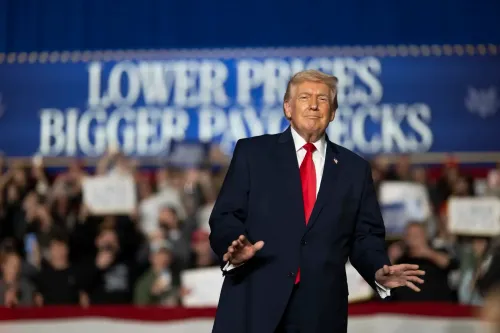
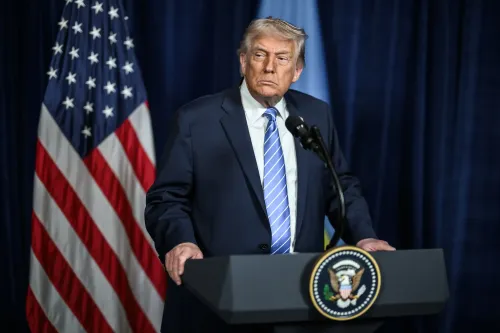
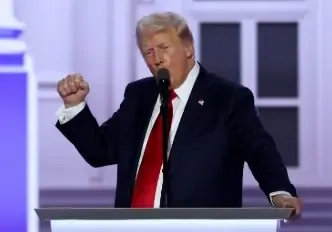
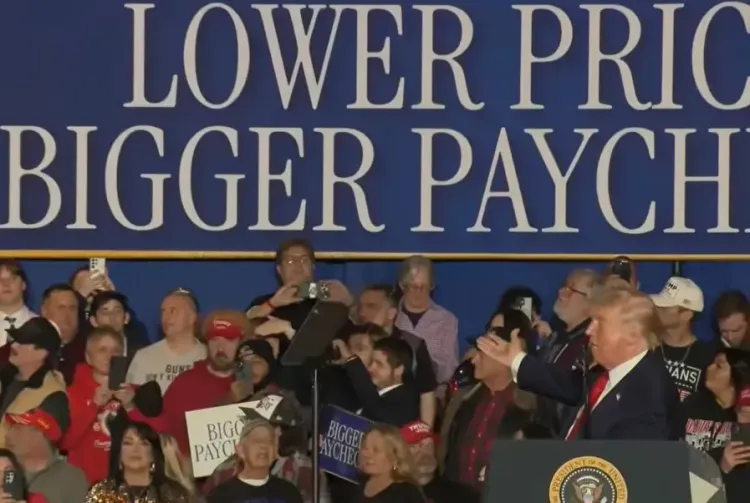
On Tuesday, he shifted focus to a domestic gathering at a Pennsylvania casino resort, under the theme, 'Lower Prices; Bigger Paychecks', reminiscent of his large election campaign rallies.
While there were anticipations of announcements regarding economic challenges impacting voters facing persistently high prices, he instead reiterated his claims of reduced petrol prices, unprecedented levels of investment, and job creation.
During his lengthy address, he mocked former President Joe Biden, criticized Democrats, revisited elements of the culture war such as transgender athletes in women's sports, issued warnings to Europe regarding immigration, and denounced renewable energy, all interspersed with his characteristic humor.
He discussed 'peace through power'—ending conflicts—and emphasized his tariffs' purported benefits, though he did not address their role in escalating prices.
Trump stated that immigrants who contribute positively and integrate are welcome, while condemning those he labeled as criminals, both legal and illegal.
He claimed that many illegal migrants were allowed entry under Biden's administration, asserting that Biden was too weakened to make decisions himself, with the 'radical left' taking control.
His choice to launch this renewed domestic campaign in Pennsylvania is significant, given its status as a crucial swing state that contributed to his 2025 victory.
Despite extensive travels abroad, he noted that his advisors suggested he return to the campaign trail.
With the House of Representatives elections approaching next year, there are concerns within the Republican Party about insufficient attention to domestic economic matters.
Republican Congressman Tony Gonzales expressed this worry, telling NBC News, 'If we don't do that, we would be morons, because the economy is very much on people's minds.'
Trump recently declared, 'The word affordability is a Democrat scam.' However, on Tuesday, he proclaimed, 'Let's make America Affordable again', albeit with little detail.
Democrats have gained traction in recent elections by emphasizing affordability, particularly regarding high prices and housing costs.
Recent Democratic victories in gubernatorial elections in Virginia and New Jersey, along with a significant reduction in Trump's lead in a Tennessee House race, raise concerns for Republican legislators.
With a narrow seven-seat majority in the House, a potential Democratic majority next year could expose Trump to impeachment threats similar to those he faced during his first term.
Some polls indicate troubling trends: a Quantus Congressional poll shows a 4 percent lead for Democrats, while a Rasmussen poll reports 54 percent disapproval of Trump's performance.
Furthermore, a Economist/YouGov poll reveals that 57 percent believe the country is on the wrong track, compared to 36 percent who feel it is headed in the right direction.
Despite his skepticism regarding affordability, Trump has begun addressing economic issues affecting voters.
He proposed a $2,000 payment for most Americans, dubbing it a 'Tariff Dividend Cheque'.
Additionally, he initiated a Trump Account for newborns, featuring a government starter of $1,000 alongside funds from donations.
On Monday, he pledged $12 billion to farmers as compensation for losses stemming from the tariff war, particularly affecting soy and corn exports.
Trump has urged the Federal Reserve to reduce interest rates to invigorate the economy, with many economists anticipating a 0.25 percent cut on Wednesday.
It may take time—potentially years—before voters witness any advantages from the tariffs and investments Trump has championed.
He attributed escalating living costs to the rampant inflation during Biden's term, which peaked at 19 percent.
However, for public perception, prices have not decreased as he promised during his campaign, and while inflation is lower, it still stands at 3 percent even after his tenure.
Point of View
I believe it's essential to present an unbiased perspective on political events. Trump's recent rally demonstrates his attempts to reconnect with his supporters, but the underlying economic issues and polling data suggest a challenging road ahead. The focus on affordability will be critical for both Trump and the Republican Party as they navigate the upcoming elections.
NationPress
12 Oct 2026
Frequently Asked Questions
What was the main focus of Trump's recent rally?
Trump's rally primarily focused on addressing domestic economic issues, emphasizing affordability and job creation.
What are the concerns within the Republican Party?
There are growing concerns about the lack of emphasis on domestic economic matters as the House elections approach.
How are recent polls impacting Trump's position?
Recent polls indicate a declining approval rating for Trump and a potential lead for Democrats, raising concerns for his party.
What economic initiatives did Trump propose?
Trump proposed a $2,000 payment to Americans and initiated a Trump Account for newborns, aiming to address financial concerns.
What has been Trump's narrative regarding inflation?
Trump has blamed the high cost of living on inflation during Biden's term, while facing criticism for not delivering on promises of lower prices.