IANS Year Ender 2025: How Did Trump Navigate Controversies This Year?
Synopsis
As 2025 comes to a close, President Donald Trump navigates a tumultuous year filled with controversies and unexpected challenges. From international relations to domestic policies, how has his presidency evolved amidst chaos?
Key Takeaways
Trump's foreign policy has been marked by both successes and failures.
The economy showed resilience despite significant challenges.
Immigration policies faced confusion and legal issues.
Trump's influence on the GOP is being questioned following electoral defeats.
Domestic issues like affordability played a critical role in shaping public perception.
New York, Dec 31 (NationPress) The year commenced with high hopes as President Donald Trump took charge of the United States. However, as 2025 draws to a close, he finds himself ensnared in a web of turmoil and controversies.
Following a period of stagnation under Joe Biden, Trump kicked off 2025 with pledges of bold action. Yet, as the year wraps up, both foreign policy and voters’ financial situations have spiraled into disarray.
The US has witnessed a centralization of power, unprecedented since the post-World War II era, suggesting that Trump's political, economic, trade, and social policies are increasingly aligned with national interests.
While US alliances and geopolitical interests have been strained by conflicting mercantilist and geostrategic agendas, Trump can still highlight notable achievements amid the chaos and uncertainty stemming from the tariff war and efforts to reshape global relations.
One significant success was his ability to mediate a cessation of hostilities between Israel and Hamas in the Gaza conflict.
The stock market is concluding the year at nearly record highs, with a GDP growth of 4.3% in the third quarter.
Additionally, the US trade deficit hit its lowest point in five years, leading to promises of trillions in investments to fuel Trump's Make in America initiative.
Trump also rolled back numerous progressive policies—some controversial, like allowing transgender men into women’s bathrooms and sports, while others aimed at addressing historical injustices.
The economy remained resilient despite a 43-day government shutdown triggered by Democrats' demands for health insurance programme funding.
His tariff policies were characterized by erratic shifts, including imposing a 50% tariff on India and a 25% tariff on Russian oil imports, wielding tariffs as tools of coercive diplomacy.
These tactics tested alliances and threw global trade into a state of uncertainty, revealing their limitations.
At one point, Trump threatened China with tariffs as high as 145%, only to retract after Beijing retaliated, branding his tariff strategy a "joke".
While Trump succeeded in concluding the Gaza war, efforts to negotiate peace in the Ukraine conflict were thwarted by Vladimir Putin, who resisted his overtures.
Trump’s attempts to broker a deal included publicly belittling Ukraine’s President Volodymyr Zelensky, which incited a unified response from European allies rallying around Kyiv.
As the year concludes, Putin remains firmly in control.
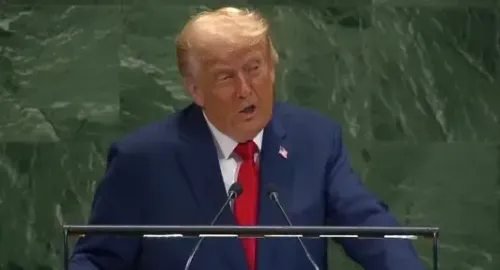
Despite pursuing the Nobel Peace Prize, Trump's military engagements included operations against Venezuela, framed as an anti-drug cartel initiative, and renewed threats towards Iran while conducting strikes against Islamist targets in Syria and Nigeria.
Trump sought Elon Musk's expertise to streamline government operations, yet this collaboration ended in chaos as Musk, who initially promised to save $1 trillion, left the project in disarray, diminishing Washington's international influence relative to China.
Numerous government officials suspected of disloyalty were dismissed, fueling a campaign of retribution against those who had previously opposed him, although some high-profile cases, like that against New York Attorney General Letitia James, fell flat.
Illegal immigration, a key campaign issue that propelled him to power, has been marred by confusion. Although the tightened southern border was further restricted, deportation efforts became entangled in legal complications and lacked clarity.
Trump is also attempting to impose limitations on legal immigration, introducing costly fees for H1B visas and delaying Green Cards while promoting 'Golden Visas' priced at $1 million.
Despite previously advocating for automatic Green Cards for foreign graduates of US universities, Trump faces internal conflict over his immigration agenda, especially from his MAGA base.
He also clashed with MAGA supporters regarding the release of files related to Jeffrey Epstein, a convicted pedophile associated with powerful figures. Although Trump promised to release these documents, he later opposed their disclosure, leading to a revolt in Congress.
In the end, the documents yielded no compromising evidence against him, unlike those involving former President Bill Clinton.
The GOP faced significant electoral setbacks, losing key positions in Virginia and Miami, which raised questions about Trump's grip on the party.
As the Democrats leveraged the affordability issue—addressing the rising cost of living—they seemed poised for better prospects in the upcoming midterm elections, despite their lack of a clear agenda.
With a razor-thin Republican majority, any seat flips could jeopardize their control, reminiscent of Trump's tumultuous first term marked by two impeachments.
In a bid to secure more seats, Trump influenced redistricting in Texas, only to face challenges from California, which could provide Democrats with a similar advantage.
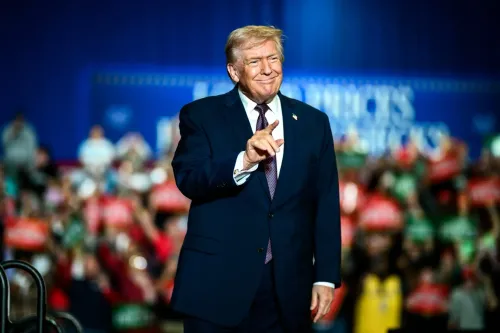
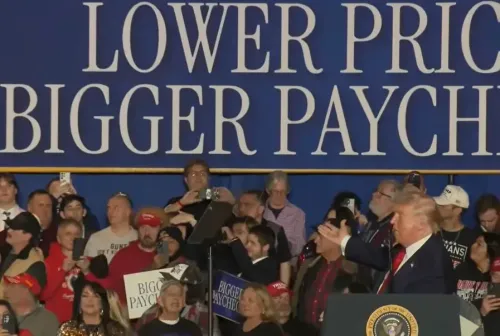
After spending much of the year focused on international affairs, the affordability issue forced Trump to engage more with domestic audiences through campaign-style rallies, placing blame on Biden for rising prices instead of proposing new policies.
Point of View
The past year has seen President Trump's leadership challenged on multiple fronts. His approach has sparked debates within the party and the public, raising questions about his effectiveness and the future direction of the Republican Party.
NationPress
27 Sept 2026
Frequently Asked Questions
What were Trump's major achievements in 2025?
In 2025, Trump's significant achievements included a notable reduction in the US trade deficit, high stock market performance, and mediation in the Gaza conflict between Israel and Hamas.
How did Trump's policies impact immigration?
Trump's immigration policies included tightening the southern border, introducing costly fees for H1B visas, and delaying Green Cards while promoting Golden Visas, leading to confusion and legal entanglements.
What controversies surrounded Trump's foreign policy?
Trump's foreign policy faced controversies, including erratic tariff strategies against China and strained relations with European allies regarding Ukraine, culminating in challenges to his diplomatic efforts.
How did Trump's presidency affect the Republican Party?
Trump's presidency has resulted in significant electoral setbacks for the GOP, raising concerns about his influence and the party's direction, especially after losses in Virginia and Miami.
What challenges did Trump face domestically in 2025?
Domestically, Trump grappled with the affordability issue, rising living costs, and the need to engage more with American voters amidst growing criticisms of his administration.