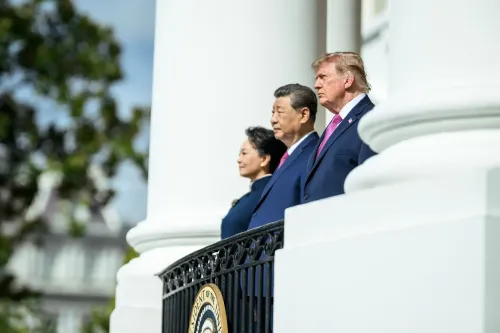
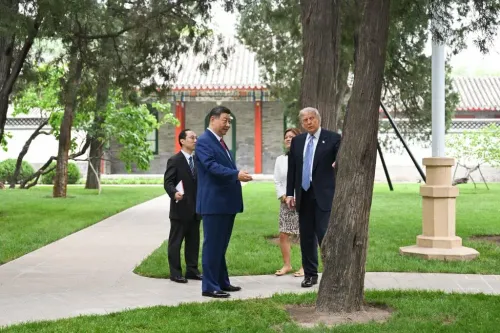
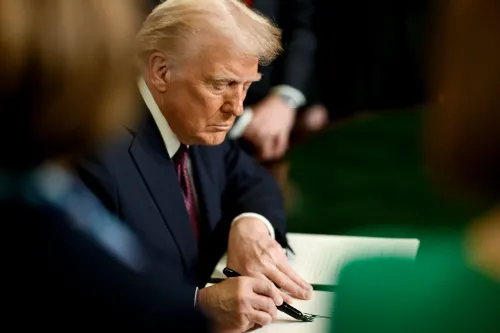
Trump Greets Xi Jinping at APEC Summit in Shenzhen
Synopsis
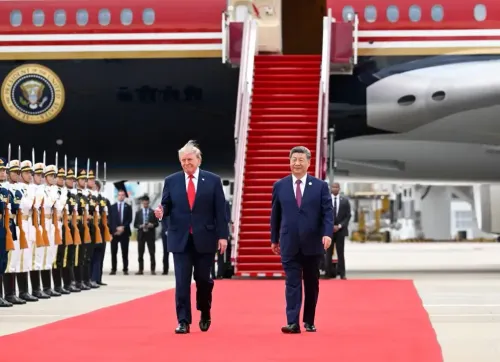
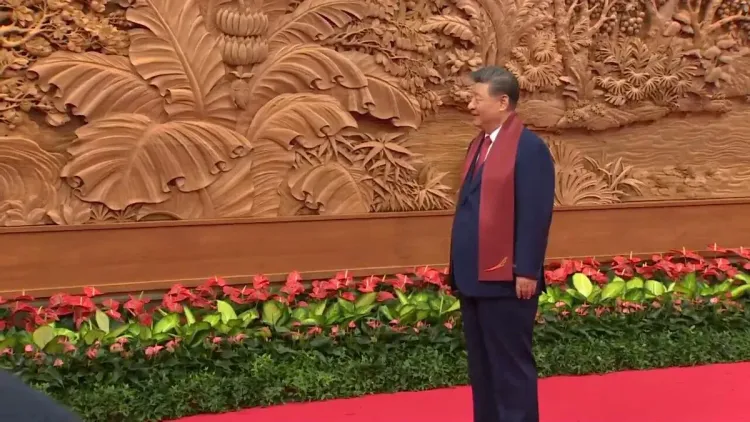
US President Donald J. Trump greeted Chinese President Xi Jinping at the APEC Summit in Shenzhen on November 19, 2026. The meeting revives a long-standing pattern of US-China leader encounters at multilateral Asia-Pacific forums, with global attention fixed on any trade or security signals.
Key Takeaways
Trump greeted Chinese President Xi Jinping at the APEC Summit in Shenzhen on November 19, 2026 .
Shenzhen , a symbol of China's economic rise in Guangdong province, is hosting the annual leaders' meeting of the 21-member APEC forum .
Trump and Xi have previously held bilateral sideline meetings at the 2017 APEC summit in Da Nang and the 2018 G20 in Buenos Aires .
APEC summits have historically served as a structured venue for US-China bilateral engagement even during periods of heightened rivalry.
Analysts are watching for signals on tariffs, technology export controls , and potential follow-up bilateral talks.
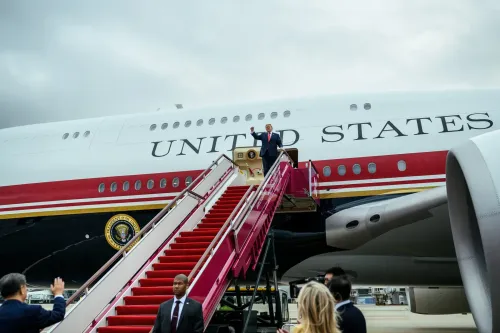
Two of the world's most consequential leaders met face-to-face on Thursday, November 19, 2026, as US President Donald J. Trump greeted Chinese President Xi Jinping on arrival at the APEC Summit in Shenzhen — a handshake that carries the full weight of the world's most closely watched bilateral relationship.
A Charged Setting: Why Shenzhen Matters
Shenzhen, the gleaming tech-and-finance metropolis in Guangdong province, is no ordinary backdrop. The city is a living symbol of China's economic transformation — a former fishing village that became a global manufacturing and innovation hub virtually overnight. Hosting an APEC leaders' summit here sends a pointed signal about Beijing's economic ambitions and its confidence on the world stage.
The Asia-Pacific Economic Cooperation (APEC) forum, which brings together the leaders of 21 Pacific Rim economies, has long served as a preferred venue for US-China bilateral encounters that exist outside the formal diplomatic calendar. Even during periods of acute friction, the multilateral setting gives both sides room to engage without the optics of a full state visit.
Trump and Xi: A History Written at Summits
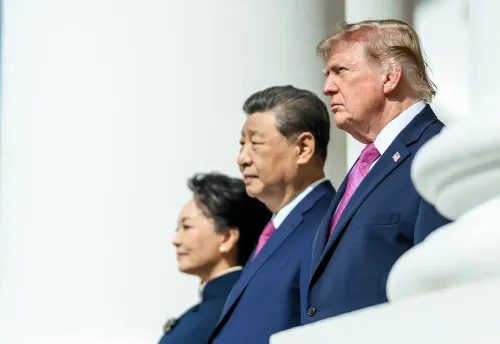
This is not the first time the two leaders have used an Asia-Pacific multilateral stage to manage one of the world's most complex relationships. Trump and Xi met on the sidelines of the 2017 APEC summit in Da Nang, Vietnam, and again at the 2018 G20 summit in Buenos Aires as a bruising trade war between their two countries was escalating. Both encounters were closely dissected for signals on tariffs, technology access, and regional security.
The pattern is consistent: leader-level meetings at forums like APEC function as a pressure-relief valve, offering a structured moment to reset or recalibrate even when the underlying tensions remain unresolved.
What Rides on the Sidelines in Shenzhen
The question the world's capitals are now asking is whether the Shenzhen encounter will produce anything beyond diplomatic courtesies. Analysts and trade negotiators will be watching for any signals on tariff adjustments, technology export controls, or agreements to launch follow-up bilateral working-group talks. A joint statement — even a brief one — would be treated as a significant development given the breadth of outstanding disputes between Washington and Beijing on trade, semiconductors, and regional security.
India, as a major Indo-Pacific economy and a nation acutely sensitive to shifts in both US and Chinese foreign policy, will be parsing every word that emerges from Shenzhen this week.
The world waited for this handshake. Now it waits to see what it was worth.
Point of View
Which is calibrating its own strategic positioning between Washington and Beijing, the tenor and outcome of this encounter will directly inform New Delhi's diplomatic calculus in the months ahead.
NationPress
19 Nov 2026
Frequently Asked Questions
Where is the APEC Summit 2026 being held?
The APEC Summit 2026 is being held in Shenzhen, a major city in Guangdong province, China.
Did Trump and Xi Jinping meet at APEC 2026?
Yes. President Donald J. Trump greeted Chinese President Xi Jinping on his arrival at the APEC Summit in Shenzhen on November 19, 2026.
What is APEC and why does it matter for US-China relations?
APEC, the Asia-Pacific Economic Cooperation forum, is an annual gathering of leaders from 21 Pacific Rim economies. It has historically provided a low-pressure but high-profile stage for US-China bilateral meetings on trade and security.
Have Trump and Xi met at APEC before?
Yes. Trump and Xi held bilateral meetings at the 2017 APEC summit in Da Nang, Vietnam, and at the 2018 G20 in Buenos Aires amid escalating trade tensions.
What could come out of the Trump-Xi meeting in Shenzhen?
Observers are watching for any signals on tariff adjustments, technology export restrictions, joint statements, or agreements to launch follow-up bilateral working-group discussions.