Has Trump Implemented the ‘Donroe Doctrine’ for a Multipolar World?
Click to start listening
Synopsis
President Trump is boldly reaffirming American dominance in the Western Hemisphere after a successful operation in Venezuela. His recent warnings to various nations have sparked significant debate on sovereignty and regional stability, as he adapts the historic Monroe Doctrine for today's multipolar world.
Key Takeaways
- Trump's confidence stems from the operation against Maduro.
- The Donroe Doctrine emphasizes US strategic interests.
- Warnings issued to countries signal a shift in foreign policy.
- The NSS highlights a global contest for influence.
- Modern US policy adapts to a multipolar era.
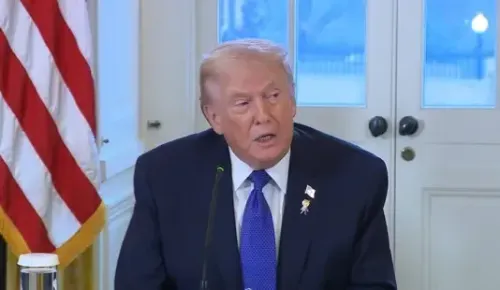
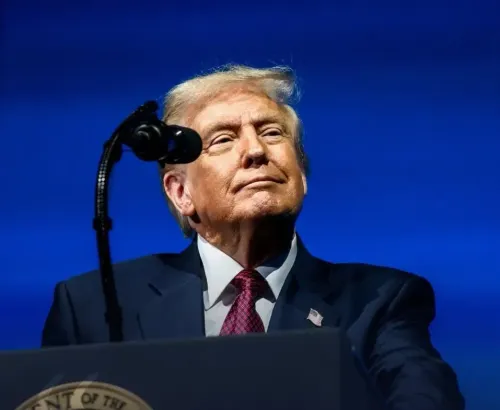
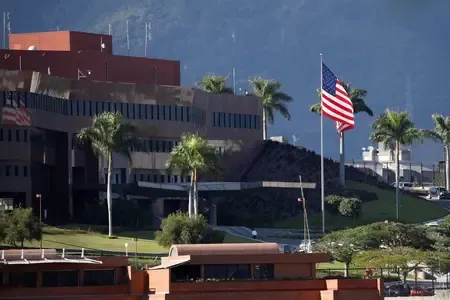
New Delhi, Jan 5 (NationPress) Following the successful operation in Venezuela that resulted in the capture of its leader Nicolas Maduro, US President Donald Trump is radiating confidence, emphasizing the establishment of American dominance in the Western Hemisphere that will never be challenged again.
Over the weekend, reports indicated that he issued warnings to nations such as Colombia, Cuba, Mexico, Iran, and Greenland.
Notably, Greenland is a self-governing territory of Denmark, a US ally and a member of NATO. Concerning Iran, India advised its nationals to refrain from non-essential travel due to ongoing protests.
The protests against the current Iranian regime have prompted Washington to warn of punitive measures should Iran take any major actions.
Trump is reportedly focusing on nations that are viable and prosperous, where oil can be freely accessed, as he mentioned on Sunday.
While the Caracas operation is being portrayed as a strike against drug trafficking and narco-terrorism, his threats to other nations have reignited discussions surrounding sovereignty, regional stability, and Washington's influence in Latin America.
Several reports attribute this episode to the recently released US National Security Strategy (NSS), which underscores the importance of competition with revisionist powers and the protection of American economic and security interests, echoing the historical context of the Monroe Doctrine.
The NSS aims to revive the over 200-year-old foreign policy statement known as the Monroe Doctrine, which was originally established to counter European colonialism in the Western Hemisphere.
Created in 1823 by President James Monroe, this doctrine regarded any foreign intervention in the political matters of the Americas as a direct threat to the United States.
“After years of neglect, the United States will reassert and enforce the Monroe Doctrine to restore American preeminence in the Western Hemisphere, and to safeguard our homeland and access to key regions,” stated the NSS, further adding, “This ‘Trump Corollary’ to the Monroe Doctrine represents a rational and powerful reaffirmation of American priorities and security interests.”
The term “Trump Corollary” has been referred to in various reports, including from The Economist, which describes it as the “Donroe Doctrine.”
The document suggests that America’s friends ought to prepare for the worst.
The NSS casts the competition with revisionist states as a global struggle for influence. In Latin America, the United States has historically perceived outreach from Russia, China, and Iran as a challenge to its traditional sphere of influence.
The Maduro operation and the public warnings to nations associated with Caracas signify a desire to mitigate or penalize external influences that challenge US preferences for regional alignment.
A noteworthy aspect is the doctrine's adaptation to a multipolar world. Rather than solely opposing European colonialism, contemporary US policy views the hemisphere as a battleground for great-power competition.
The recent raid and Trump's identification of additional countries reflect a Monroe-style insistence on hemispheric primacy, now operationalized through not just diplomacy and economic pressure but also targeted military actions and coercive public signals aimed at influencing both state and non-state actors.
President Trump’s comments explicitly highlighted oil and strategic geography regarding Greenland and other territories, linking resource access and supply-chain considerations with national security.
This linkage underlines an NSS concern that economic dependencies and resource access could lead to strategic vulnerabilities.
Point of View
It is imperative to recognize that President Trump's actions and rhetoric signal a significant shift in US foreign policy. While the revival of the Monroe Doctrine in a modern context raises questions of sovereignty and regional influence, it is essential to critically evaluate the implications for international relations and the delicate balance of power that governs our world today.
NationPress
10/01/2026
Frequently Asked Questions
What is the Donroe Doctrine?
The Donroe Doctrine refers to the adaptation of the Monroe Doctrine under President Trump's administration, emphasizing American dominance and strategic interests in the Western Hemisphere in a multipolar world.
Why did Trump issue warnings to other countries?
Trump issued warnings to countries like Iran and Cuba to assert US dominance and address concerns about external influences challenging American interests in the region.
What historical context supports the Monroe Doctrine?
The Monroe Doctrine, established in 1823, was designed to counter European colonialism in the Americas and regarded foreign intervention in the political affairs of the Americas as a threat to the US.
How does the NSS relate to the Donroe Doctrine?
The US National Security Strategy (NSS) emphasizes competition with revisionist powers and aligns with the principles of the Donroe Doctrine by prioritizing American economic and security interests.
What are the implications of the Donroe Doctrine?
The implications include a renewed focus on US influence in Latin America and a potential increase in military actions and diplomatic pressures aimed at curbing external powers like Russia and China.