Trump Hosts Chinese Leader at White House State Dinner
Synopsis
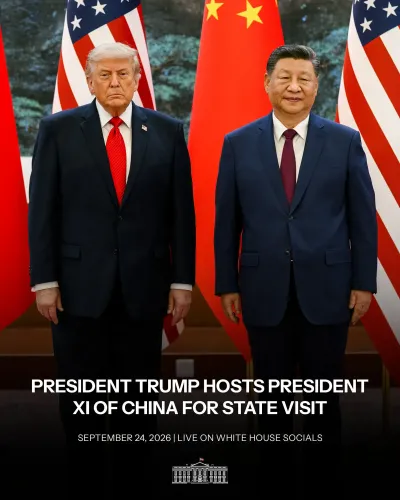
President Trump hosted China's leadership at a White House State Dinner on September 25, 2026 — the first such visit to Washington in over a decade — invoking his own earlier Beijing trip as the model for the evening's reciprocal hospitality.
Key Takeaways
Trump hosted a State Dinner for China's leadership at the White House on September 25, 2026 .
Trump cited his own 2026 Beijing visit as the basis for the reciprocal hospitality offered in Washington.
The visit marks the first time a Chinese leader has returned to Washington in over a decade, with the last comparable visit in 2015 .
State dinners between the two powers have historically accompanied parallel negotiations on tariffs, technology, and regional security.
Analysts and diplomats will scrutinise any joint statements or follow-on announcements emerging from the dinner for signs of policy movement.
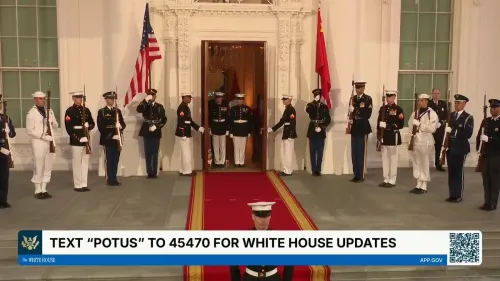
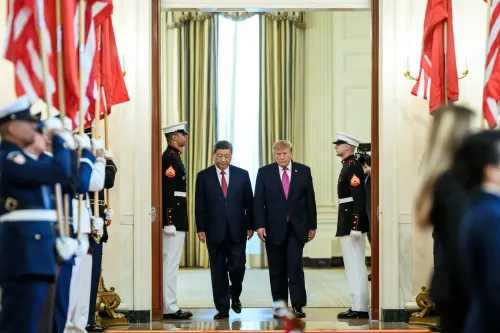
A rare moment of great-power pageantry unfolded in Washington on Friday, September 25, 2026, as President Donald J. Trump welcomed China's leadership to a State Dinner at the White House — the first such visit by a Chinese leader to the US capital in over a decade. The White House framed the evening as a deliberate act of reciprocity, invoking Trump's own Beijing visit earlier this year as the template for the night's honour.
Beijing's hospitality repaid at 1600 Pennsylvania Avenue
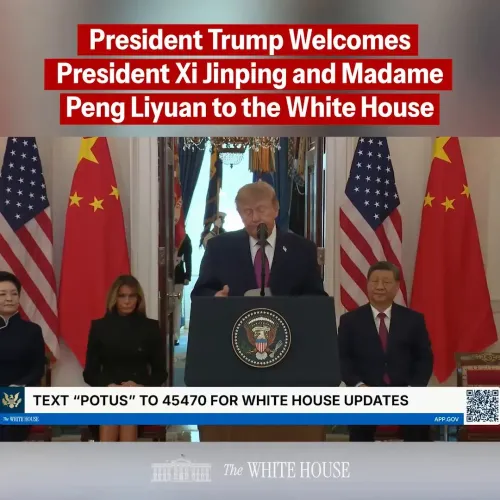
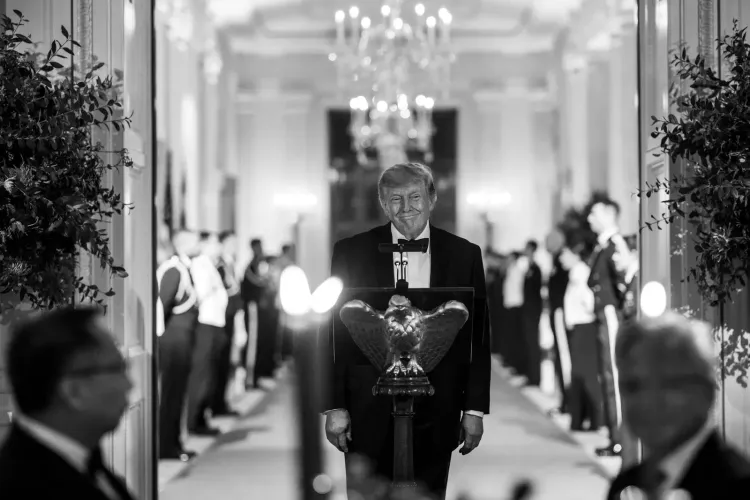
Speaking at the State Dinner, President Trump drew a direct line between his 2026 Beijing visit and the Washington reception: 'The hospitality of the Chinese people was on full display during my visit to Beijing earlier this year — and tonight, we hope to show you the same honor as you return to Washington for the first time in over a decade.' The language was precise and personal — a leader invoking a shared memory to set the diplomatic tone before a single negotiation had formally opened.
State dinners between the United States and China have historically served as more than ceremonial occasions. They function as visible signals — to allies, adversaries, and markets alike — that the world's two largest economies are choosing conversation over confrontation, at least for an evening. The last comparable visit to Washington came in 2015, making this return a moment with genuine symbolic weight.
From 2017 to 2026: the long arc of US-China summitry
During Trump's first term, his 2017 state visit to Beijing set a high-protocol benchmark for bilateral engagement, featuring elaborate ceremonial welcomes at the Forbidden City. That visit alternated with Washington-hosted summits as the two sides navigated early trade tensions. Nine years and considerable geopolitical turbulence later, the State Dinner marks a resumption of that reciprocal rhythm.
The broader backdrop is one of contested interdependence — the United States and China remain bound by vast trade flows while competing on technology, regional influence, and military posture. State dinners in this context are rarely just dinners: the guest lists, the toasts, and especially any joint statements that emerge in the hours after the last course are scrutinised by diplomats from Tokyo to Brussels.
What the room signals, and what comes next
The White House's choice to publicly quote Trump's dinner remarks — and to frame the event explicitly as reciprocal hospitality — telegraphs an intent to project warmth rather than friction. Whether that warmth translates into movement on tariffs, technology-transfer rules, or broader security architecture will become clearer in any joint communiqués or follow-on announcements in the coming days.
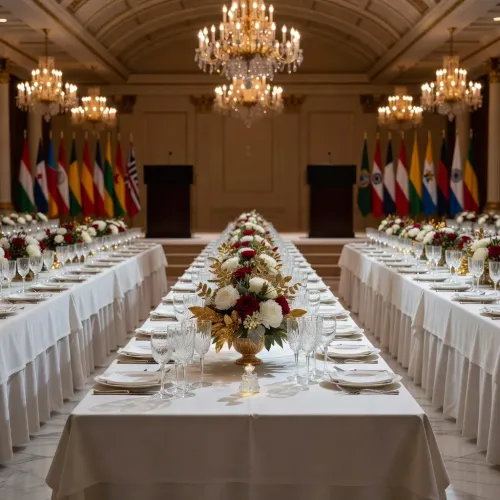
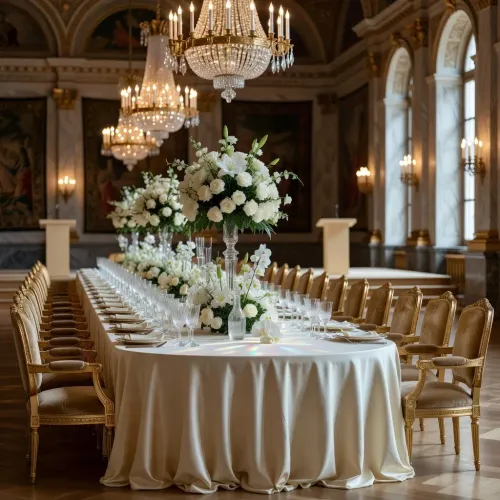
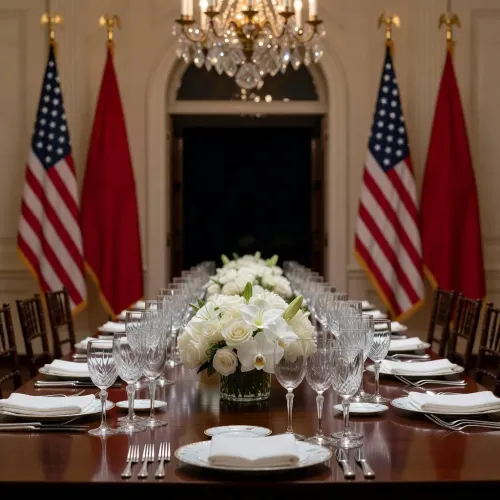
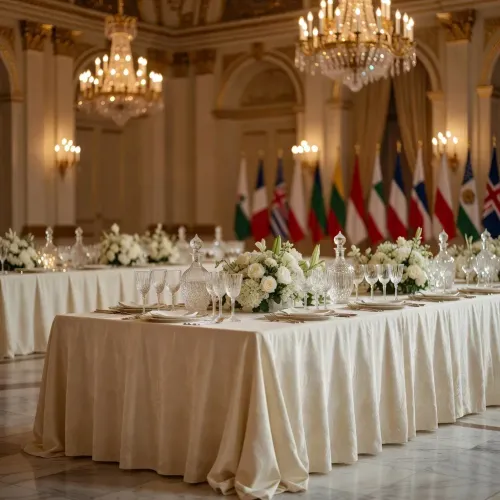
For now, the image is the message: two flags on the table, a president invoking shared memory, and the quiet machinery of great-power diplomacy running on crystal and candlelight. The world will be reading the fine print by morning.
Point of View
Which matters enormously for how both leaders sell the encounter at home. The decade-long gap since a Chinese leader last visited Washington gives this dinner unusual symbolic charge, and the administration's decision to publicise the toast suggests it wants that symbolism widely noted. The real diplomatic test comes in the hours and days after: whether the warmth of the room produces anything durable in the ledger of tariffs, technology controls, or Taiwan will define how history eventually files this evening.
NationPress
25 Sept 2026
Frequently Asked Questions
Why is Trump hosting a China state dinner in 2026?
President Trump is hosting China's leadership at a White House State Dinner as a reciprocal gesture following his own visit to Beijing earlier in 2026, aiming to signal continued high-level diplomatic engagement between the two countries.
When was the last time a Chinese leader visited Washington?
According to background research, the last comparable visit by a Chinese leader to Washington took place in 2015 , making the 2026 State Dinner the first such occasion in over a decade.
What is the significance of a US-China state dinner?
State dinners between the United States and China are high-protocol diplomatic events that signal a willingness to engage and typically accompany or precede parallel negotiations on trade, technology, and security issues.
Did Trump visit China before this dinner?
Yes. Trump stated at the dinner that he visited Beijing 'earlier this year,' referring to a 2026 trip during which he received hospitality from Chinese leadership — the dinner in Washington was framed as the reciprocal event.
What could come out of the Trump-China state dinner?
Observers are watching for any joint statements, tariff adjustments, technology-transfer agreements, or announcements of follow-on summits that may be released in the hours or days after the dinner concludes.