Trump Warns Iran: Any New Mine Placement Will Be Destroyed
Synopsis
President Trump issued a stark public ultimatum to Iran on August 25, 2026, warning that any vessel placing mines in contested waters will be immediately destroyed. The White House statement invokes a 'Zero Tolerance policy,' escalating US pressure over freedom of navigation in the Persian Gulf and Strait of Hormuz.
Key Takeaways
President Trump publicly warned Iran that any ship or boat placing new mines will be 'immediately and systematically destroyed.' The White House declared a 'Zero Tolerance policy on mine placement in full force and effect.' The statement was posted on Tuesday, August 25, 2026 by the official White House account.
The warning targets the Persian Gulf and Strait of Hormuz — a chokepoint for roughly 20 percent of global seaborne oil.
The posture extends Trump's maximum-pressure doctrine, which began with the US withdrawal from the JCPOA in 2018 .
Possible responses to watch: increased US Navy patrols and shifts in Iranian naval activity in the region.
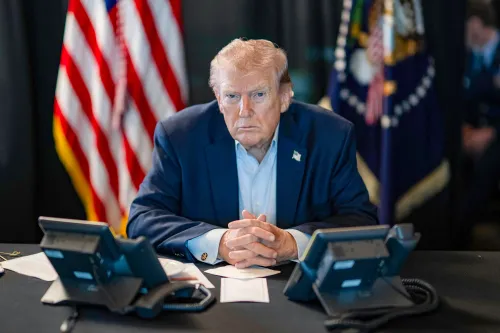
A blunt, unambiguous ultimatum — and a direct warning to Tehran. The White House on Tuesday, August 25, 2026, posted a statement from President Donald J. Trump declaring that Iran has been formally notified that any ship or boat placing new mines in contested waters will be 'immediately and systematically destroyed,' invoking what he called a 'Zero Tolerance policy on mine placement in full force and effect.'
The Ultimatum in Trump's Own Words
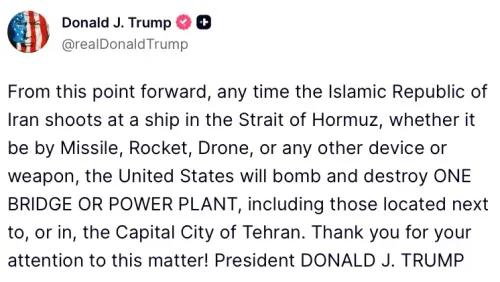
The statement, shared verbatim by the official White House account, leaves no room for diplomatic ambiguity. Trump declared: 'Iran has been notified that any ship or boat placing new mines will be immediately and systematically destroyed.' The phrase 'immediately and systematically' signals not a conditional threat but a standing operational order — a posture designed to function as deterrence through certainty of consequence.
The 'Zero Tolerance policy' framing is deliberate. It forecloses the grey-zone ambiguity that has historically allowed Iran to deny involvement in mine-related incidents while still disrupting commercial shipping.
Why the Persian Gulf Mine Threat Is Never Just About Mines
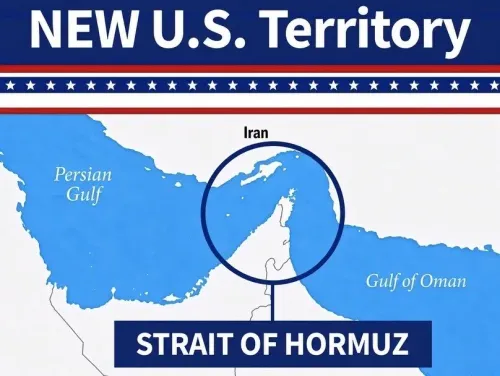
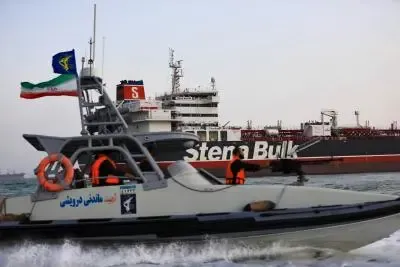
The Strait of Hormuz — the narrow chokepoint between the Persian Gulf and the Gulf of Oman — carries roughly 20 percent of the world's seaborne oil. A credible mine threat in these waters does not merely endanger individual tankers; it reprices global energy risk overnight. That is precisely the leverage Tehran has historically sought.
The 2019 Gulf of Oman tanker incidents, in which limpet mines were used to damage commercial vessels, drew direct US accusations against Iran — accusations Tehran denied. Those incidents accelerated a surge in US Navy presence in the region and triggered a round of international shipping-insurance premium spikes. Trump's current statement suggests Washington believes that threat vector has not gone away.
Maximum Pressure, Sharpened
This warning fits squarely within the maximum-pressure doctrine that defined Trump's first-term Iran policy — the strategy that began with the US withdrawal from the JCPOA in 2018 and escalated through sanctions, military posturing, and direct confrontation. The difference now is the explicit, public nature of the threat: not a diplomatic note, not a back-channel message, but a presidential statement broadcast to the world.
For oil tanker operators and maritime shippers routing cargo through the Gulf, the statement functions as both a reassurance and a warning — Washington is watching, and Washington says it will act. Whether the US Navy patrol tempo in the region increases in the coming days will be the first concrete signal of how far this posture goes beyond words.
Point of View
Declaratory military signalling — a hallmark of the maximum-pressure playbook. By framing the order as already 'in full force and effect,' Washington is attempting to eliminate the ambiguity that gave Tehran deniability in the 2019 Gulf of Oman incidents. For India, which depends heavily on Gulf shipping lanes for energy imports, an escalation in Hormuz tensions carries direct economic consequences. The statement also tests whether explicit presidential threats can substitute for sustained diplomatic engagement — a bet that has historically produced mixed results in the US-Iran standoff.
NationPress
10 Oct 2026
Frequently Asked Questions
What did Trump say about Iran and mines?
President Trump stated that Iran has been formally notified that any ship or boat placing new mines will be 'immediately and systematically destroyed,' and declared a 'Zero Tolerance policy on mine placement in full force and effect.'
Why is the Strait of Hormuz important for global oil supply?
The Strait of Hormuz is the world's most critical oil chokepoint, carrying roughly 20 percent of all seaborne oil. Any disruption — including mine threats — directly affects global energy prices and supply chains.
Has Iran placed mines in the Persian Gulf before?
The US accused Iran of using limpet mines in the 2019 Gulf of Oman tanker incidents, which damaged commercial vessels. Iran denied involvement, but the incidents led to a significant increase in US naval presence in the region.
What is Trump's maximum pressure policy on Iran?
Maximum pressure is a US strategy initiated after the 2018 withdrawal from the JCPOA nuclear deal, combining sweeping economic sanctions with military posturing to force Iran to renegotiate its nuclear and regional activities.
How does the Iran mine warning affect India?
India is a major importer of Gulf oil routed through the Strait of Hormuz. Any escalation in the region risks disrupting energy supplies and raising shipping insurance costs, with direct consequences for Indian fuel prices and trade.