Trump threatens to bomb Iranian bridges, power plants over Strait of Hormuz attacks
Synopsis
Trump has put a specific retaliatory formula on the table: one Iranian bridge or power plant destroyed for every attack on a ship in the Strait of Hormuz — including targets near Tehran. The warning covers all vessels, not just American ones, dramatically widening the potential trigger for US military action in one of the world's most oil-critical waterways.
Key Takeaways
President Donald Trump warned on 22 July that the US would bomb Iranian bridges and power plants for every attack on a ship in the Strait of Hormuz .
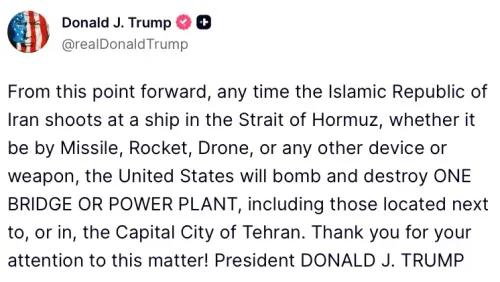
The warning, posted on Truth Social , covers attacks by missiles, rockets, drones, or any other weapon .
Retaliation targets could include infrastructure in or near Tehran , Iran's capital.
The threat applies to any vessel in the strait — not only US-flagged ships — broadening the potential trigger significantly.
The Strait of Hormuz carries a major share of global crude oil and LNG trade; disruption would affect energy prices worldwide, including in India .
Iran has not yet issued an official public response to the warning.
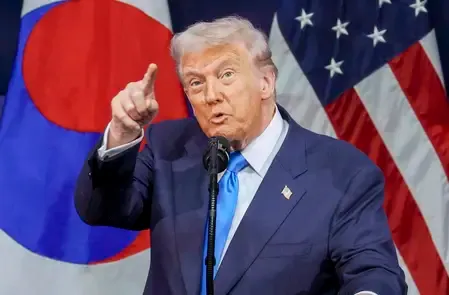
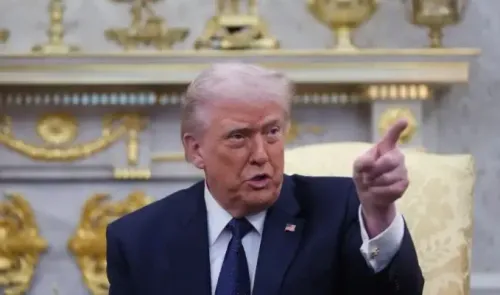
US President Donald Trump on Wednesday, 22 July issued one of his most explicit military warnings to Iran, declaring that the United States would bomb Iranian bridges and power plants — including those in and around Tehran — if the Islamic Republic targeted any vessel transiting the Strait of Hormuz. The warning, posted on Trump's social media platform Truth Social, marks a significant escalation in Washington's public posture toward Iran over maritime security.
What Trump Said
In his post, Trump wrote: 'From this point forward, any time the Islamic Republic of Iran shoots at a ship in the Strait of Hormuz, whether it be by Missile, Rocket, Drone, or any other device or weapon, the United States will bomb and destroy One Bridge Or Power Plant, including those located next to, or in, the Capital City of Tehran.'
He concluded the message with: 'Thank you for your attention to this matter! President Donald J. Trump.'
Notably, the warning made no distinction between US-flagged vessels and ships belonging to other nations — Trump's stated trigger is any attack on 'a ship in the Strait of Hormuz', broadening the scope of a potential US military response considerably.
Why the Strait of Hormuz Matters
The Strait of Hormuz is one of the world's most critical maritime chokepoints, through which a substantial share of globally traded crude oil and liquefied natural gas (LNG) passes daily. Any disruption to shipping in the corridor has immediate downstream consequences for energy markets worldwide.
This comes amid a broader pattern of US-Iran tensions over Gulf shipping, with Iran having previously seized or harassed commercial vessels in the region. Trump's warning now places a specific and public retaliatory framework on the table — one that targets civilian infrastructure inside Iran.
Impact on India
For India, which imports a substantial portion of its crude oil from the Gulf region, security in the Strait of Hormuz carries direct strategic and economic weight. Any escalation affecting shipping through the corridor could push up freight costs, raise domestic energy prices, and disrupt supply chains — consequences that would ripple through the Indian economy at a time when it is managing inflation pressures.
Scale and Scope of the Warning
Trump's post specified the nature of US retaliation with unusual precision: one bridge or power plant destroyed per attack on a vessel. The inclusion of facilities 'located next to, or in, the Capital City of Tehran' signals that the threat extends to Iran's most politically sensitive geography, not merely its periphery.
Analysts note that targeting civilian infrastructure — bridges and power plants — raises significant questions under international humanitarian law, adding a legal dimension to an already volatile diplomatic standoff. The statement has not yet drawn an official public response from Tehran.
What Comes Next
The warning is likely to heighten diplomatic activity across the Gulf, with regional powers and major oil importers closely watching Iran's reaction. Whether Tehran treats the post as a credible military commitment or a political signal will shape the next phase of US-Iran tensions in the waterway. Markets tracking oil freight and energy futures are expected to remain sensitive to any follow-up developments.
Point of View
Publicly stated retaliatory formula — one piece of infrastructure per ship attack — that effectively commits US credibility to a trigger Iran controls. By extending the umbrella to all vessels, not just American ones, Washington has implicitly taken on the role of guarantor for global Gulf shipping, a posture with enormous strategic and legal implications. Targeting civilian infrastructure such as bridges and power plants also sits in contested territory under international humanitarian law, a dimension that mainstream coverage has largely glossed over. The real question is whether Tehran reads this as a credible red line or a Truth Social post — and whether the ambiguity itself is the point.
NationPress
21 Oct 2026
Frequently Asked Questions
What did Trump threaten against Iran over the Strait of Hormuz?
Trump warned on 22 July that the US would bomb one Iranian bridge or power plant — including those near Tehran — for every attack Iran carries out on a ship in the Strait of Hormuz. The warning was posted on his Truth Social platform and covered attacks by missiles, rockets, drones, or any other weapon.
Does Trump's warning cover only US ships in the Strait of Hormuz?
No. Trump's post referred to 'a ship in the Strait of Hormuz' without limiting the trigger to US-flagged vessels, meaning an attack on any country's ship could potentially prompt US military retaliation against Iran.
Why is the Strait of Hormuz strategically important?
The Strait of Hormuz is one of the world's most critical maritime chokepoints, through which a large share of globally traded crude oil and liquefied natural gas passes. Disruption to shipping there directly affects global energy prices and supply chains.
How does this affect India?
India imports a significant share of its crude oil from Gulf nations, making security in the Strait of Hormuz a matter of direct economic importance. Any escalation that disrupts shipping through the corridor could raise freight costs, push up domestic fuel prices, and strain supply chains.
Has Iran responded to Trump's warning?
As of the time of reporting, Iran had not issued an official public response to Trump's Truth Social post. The diplomatic and military fallout from the warning is expected to be closely watched by Gulf states, major oil importers, and global energy markets.