Trump Joins Quad Leaders in Multilateral Summit Meeting
Synopsis
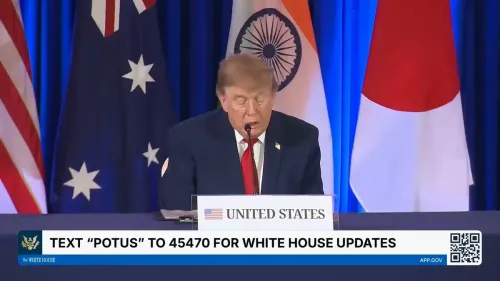
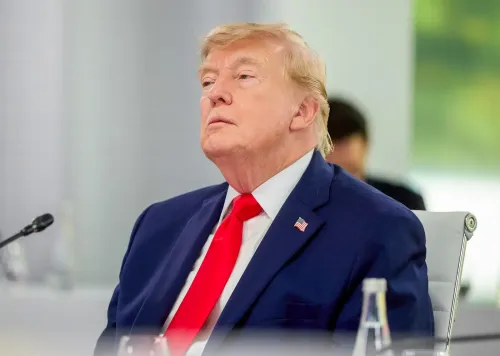
President Donald Trump joined leaders of India, Japan and Australia on November 17, 2026, for a Quad multilateral meeting, the White House confirmed. The session marks a continued leaders-level commitment to the Quadrilateral Security Dialogue during Trump's second term, with joint deliverables and future scheduling under watch.
Key Takeaways
President Trump participated in a Quad leaders-level multilateral meeting on November 17, 2026 .
The Quadrilateral Security Dialogue comprises the United States, India, Japan, and Australia .
The Quad was revived at officials' level in 2017 during Trump's first term and held its first leaders' summit in March 2021 .
The grouping operates without a formal treaty structure, focusing on maritime security, technology standards, and supply-chain resilience.
Key watch-items include any joint readout, new working-group announcements, and scheduling of the next leaders' engagement.
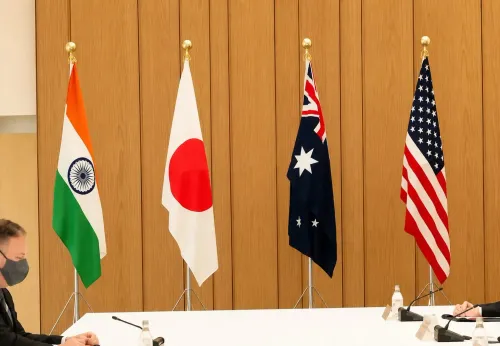
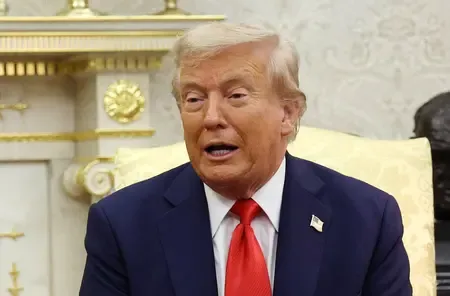
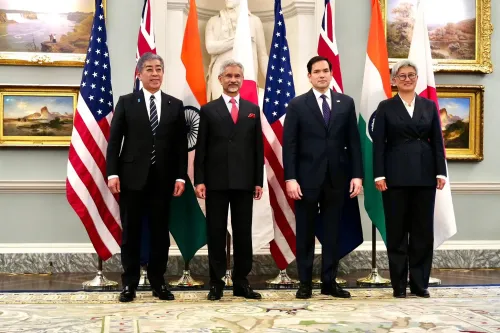
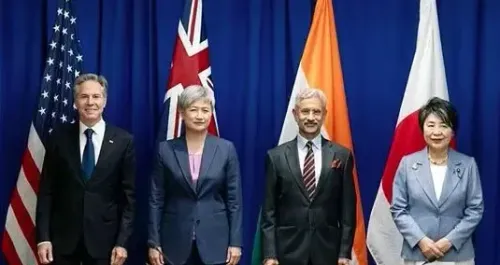
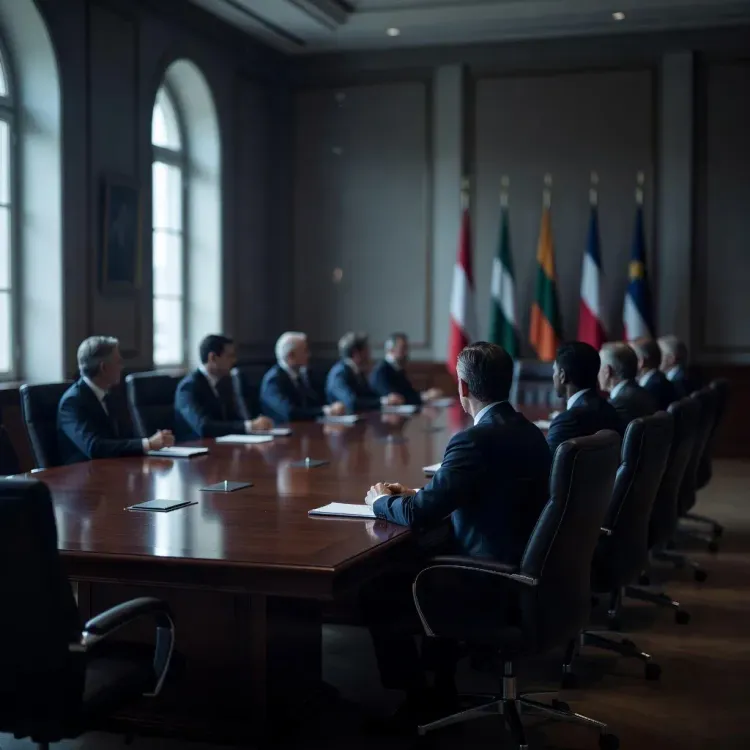
Four of the Indo-Pacific's most consequential democracies pulled up chairs together on Tuesday, November 17, 2026, as President Donald Trump participated in a multilateral meeting with Quad leaders — a signal that the grouping's leaders-level engagement is very much alive in his second term. The White House confirmed the session, bringing together the heads of the United States, India, Japan, and Australia under the banner of the Quadrilateral Security Dialogue.
What the Quad is — and why the room matters
The Quad is not a treaty alliance. It carries no mutual-defence clause, no standing military command. What it does carry is convening power: when the leaders of four major democracies — collectively representing trillions of dollars in GDP and a combined Pacific coastline stretching thousands of kilometres — sit down together, the signal to the broader Indo-Pacific is deliberate and loud.
The grouping was first revived at the officials' level in 2017 during Trump's first term, after lying dormant for nearly a decade. It graduated to its first-ever leaders-level summit in March 2021, held virtually, and has since built a rhythm of in-person gatherings focused on maritime domain awareness, critical and emerging technology standards, supply-chain resilience, and health security.
Trump's second-term Quad calculus
That Trump's White House is actively hosting and publicising a Quad leaders session in November 2026 matters for context: sceptics questioned whether a 'America First' second term would dial down multilateral formats. Tuesday's meeting is a data point against that read. The Quad has historically offered Washington a way to coordinate Indo-Pacific strategy without the institutional overhead of formal alliances — a format that suits Trump's preference for flexible, results-oriented diplomacy.
India, Japan, and Australia each bring distinct weight. India anchors the Indian Ocean flank and is the grouping's largest democracy by population. Japan provides treaty-alliance depth and advanced manufacturing. Australia bridges the Pacific and Indian Ocean theatres and hosts critical US force-posture arrangements. Together, the four frame a coherent — if informal — strategic arc from the Pacific Rim to the Arabian Sea.
What comes next from the meeting room
The immediate watch-items are a joint leaders' readout or statement, any announcement of new Quad working groups, and whether specific deliverables on semiconductor supply chains or maritime surveillance are tabled. Quad meetings have previously produced concrete initiatives — including vaccine-distribution partnerships and undersea cable security frameworks — so the absence or presence of such announcements will define how substantive Tuesday's session truly was.
The timing of the next leaders-level Quad engagement will also be closely read: annual cadence has become an expectation, and any scheduling signal from the four capitals will indicate whether the grouping is consolidating or coasting.
Four leaders, one room, zero treaty obligations — and yet the entire Indo-Pacific is watching to see what they agree on.
Point of View
Japan, and Australia, Washington signals that the grouping remains a live instrument of US strategic coordination — not a Biden-era relic. For India, the meeting reinforces its centrality to any US-led Indo-Pacific framework, a leverage point New Delhi will deploy in parallel bilateral conversations on trade and technology. The real test, however, is whether the meeting produces tangible deliverables or settles for the optics of solidarity.
NationPress
17 Nov 2026
Frequently Asked Questions
What is the Quad and which countries are members?
The Quad, or Quadrilateral Security Dialogue, is a multilateral forum comprising the United States, India, Japan, and Australia. It focuses on Indo-Pacific cooperation including maritime security, technology standards, and supply-chain resilience, without a formal treaty structure.
When did the Quad hold its first leaders-level summit?
The first Quad Leaders Summit was held virtually in March 2021. The grouping was originally revived at the officials' level in 2017 and has since established a regular cadence of in-person leaders' meetings.
What was discussed at the November 2026 Quad meeting?
The specific agenda of the November 17, 2026 meeting has not been officially detailed beyond the White House confirmation of the session. Historically, Quad meetings have addressed maritime awareness, semiconductor supply chains, and undersea cable security.
Is India part of the Quad summit with Trump in 2026?
Yes, India is a core member of the Quad alongside the United States, Japan, and Australia. Indian leadership participated in the multilateral session confirmed by the White House on November 17, 2026.
What should we watch for after the Quad leaders meeting?
Key items to follow include any joint leaders' statement or readout, announcements of new Quad working groups, specific deliverables on technology or maritime security, and confirmation of the date for the next scheduled Quad leaders' engagement.