Trump Lays Wreath, Delivers Memorial Day Remarks
Synopsis
The White House announced that President Donald Trump participated in a wreath-laying ceremony and delivered remarks on Memorial Day, 25 May 2026, continuing a longstanding executive tradition of honoring fallen US military personnel on the federal holiday.
Key Takeaways
President Trump participated in a wreath-laying ceremony on Memorial Day, 25 May 2026 .
He also delivered official remarks as part of the observance, fulfilling the two core duties of a presidential Memorial Day appearance.
Memorial Day is a federal holiday observed on the last Monday of May to honor US military personnel who died in service.
Presidential wreath-laying at national memorial sites is an unbroken executive tradition dating to at least the mid-20th century.
The event was shared via an official White House broadcast link, making it accessible to a wide domestic and international audience.
Veterans and military families are the primary stakeholders, with the ceremony providing formal national acknowledgment of their sacrifice.
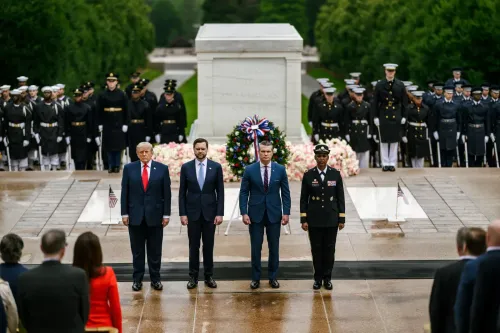
The White House announced on Monday, 25 May 2026 that President Donald Trump participated in a wreath-laying ceremony and delivered remarks in observance of Memorial Day, the federal holiday dedicated to honoring United States military personnel who died in service to their country.
Context
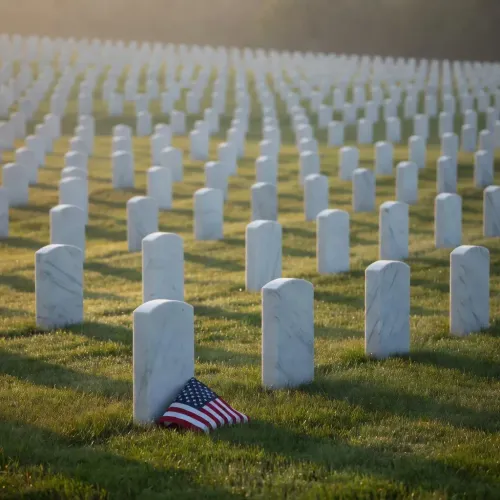
Memorial Day is observed on the last Monday of May each year and stands as one of the most solemn occasions in the American civic calendar. The day is marked by ceremonies at national cemeteries, moments of silence, and official addresses that reflect on the sacrifice of fallen service members. Wreath-laying at national memorial sites is a central ritual of the observance.
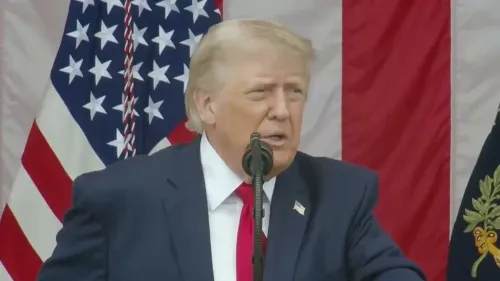
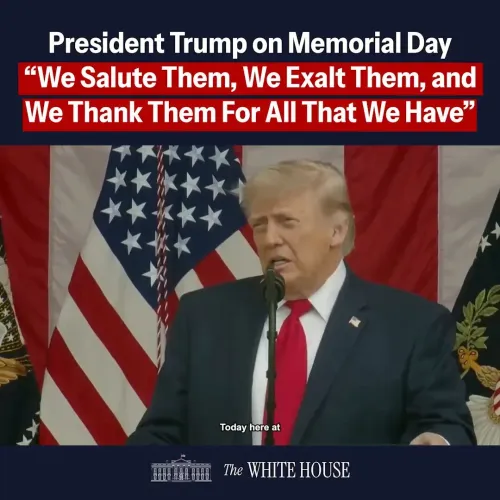
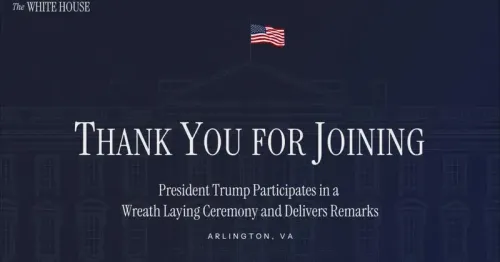
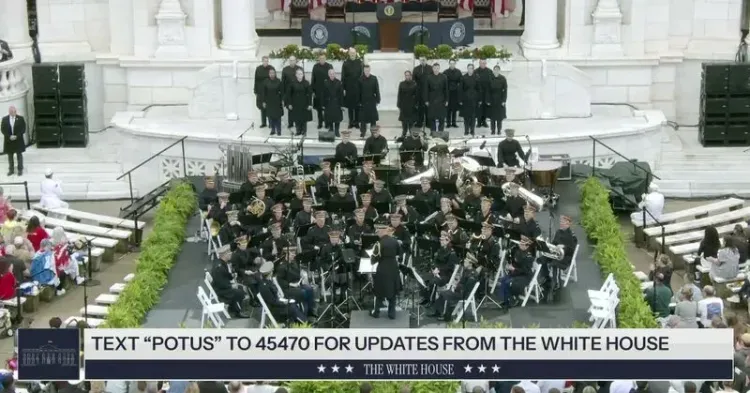
The White House shared a broadcast link alongside an image documenting President Trump's participation, signaling the formal, ceremonial character of the event. The post described him as both participating in the ceremony and delivering spoken remarks, the two core components of a presidential Memorial Day observance.
Policy Backdrop
Sitting presidents have conducted Memorial Day wreath-laying ceremonies at prominent national sites — most notably Arlington National Cemetery in Virginia — as an unbroken executive tradition stretching back to at least the mid-20th century. The ritual carries bipartisan continuity: it is observed regardless of the political affiliation of the administration in office.
During Trump's first term (2017–2021), he participated in Memorial Day ceremonies including wreath-laying events in 2017 and 2019. The tradition underscores the president's constitutional role as Commander-in-Chief and the symbolic weight the executive branch places on military sacrifice and national memory.
Stakeholders and Impact
Veterans and military families are the primary stakeholders of Memorial Day observances. For millions of Americans with relatives who served and died in uniform — across conflicts from World War II to more recent engagements in Afghanistan and Iraq — the presidential ceremony provides official national acknowledgment of their loss.
Parallel observances are typically held at state and local levels across the United States, with governors, mayors, and community leaders conducting their own tributes. The White House ceremony sets the tone for these nationwide commemorations and is broadcast to a wide domestic and international audience.
What's Next
In the weeks and months following Memorial Day, attention in Washington typically turns to legislative activity touching veterans affairs, including appropriations for the Department of Veterans Affairs and defense-related budget discussions in Congress. The annual observance often provides political context for debates on veterans' healthcare, benefits, and military commemoration funding.
The remarks delivered by President Trump during the ceremony are expected to be released in full transcript form through official White House channels, offering a formal record of the administration's framing of national sacrifice and military service for 2026.
Point of View
Anchoring itself to a universally respected tradition carries low political risk and high symbolic return. The ceremony also sets the rhetorical stage for any forthcoming legislative push on veterans affairs or defense appropriations.
NationPress
19 Sept 2026
Frequently Asked Questions
What did President Trump do on Memorial Day 2026?
President Trump participated in a wreath-laying ceremony and delivered official remarks on Memorial Day, 25 May 2026 , as announced by the White House.
Where does the US president lay a wreath on Memorial Day?
US presidents traditionally lay a wreath at Arlington National Cemetery in Virginia on Memorial Day, though the White House did not specify the exact location of the 2026 ceremony in its post.
What is Memorial Day in the United States?
Memorial Day is a federal holiday observed on the last Monday of May each year to honor US military personnel who died while serving in the armed forces.
Has Trump done Memorial Day ceremonies before?
Yes. During his first term, President Trump participated in Memorial Day wreath-laying ceremonies including in 2017 and 2019 , continuing a tradition observed by presidents since at least the mid-20th century.
Why does the US president lay a wreath on Memorial Day?
The wreath-laying is a formal expression of the president's role as Commander-in-Chief, offering official national recognition of the sacrifice of fallen service members on behalf of the entire country.