Trump commission urges DOJ to redefine church-state separation doctrine
Synopsis
A Trump-appointed commission wants the DOJ to formally declare that 'separation of church and state' — a phrase not found in the Constitution — has been wrongly used for 70-plus years to penalise religious Americans. Based on 103 witnesses over seven months, the panel's recommendations could rewrite how federal agencies handle religion in schools, the military, and healthcare.
Key Takeaways
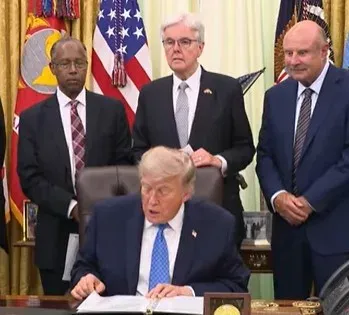
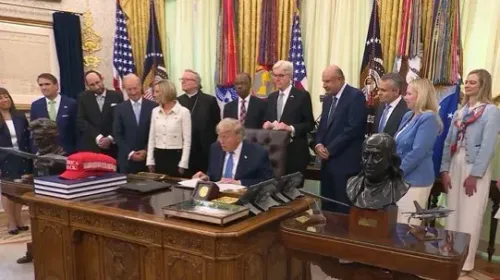
Presidential commission on religious liberty presented its report to President Trump on 27 June .
Lead recommendation urges the DOJ to issue guidance redefining the Establishment Clause and the phrase 'separation of church and state.' Commission Chairman Dan Patrick said 103 witnesses over seven months described being penalised using a phrase he says is absent from the Constitution.
Government officials invoking church-state separation against individuals would be required to explain in writing how the conduct violates the Constitution.
President Trump pledged to closely study the report and continue working to protect religious liberty for all Americans.
If implemented, the guidance could affect religion-related disputes in schools, government institutions, the military, and healthcare .
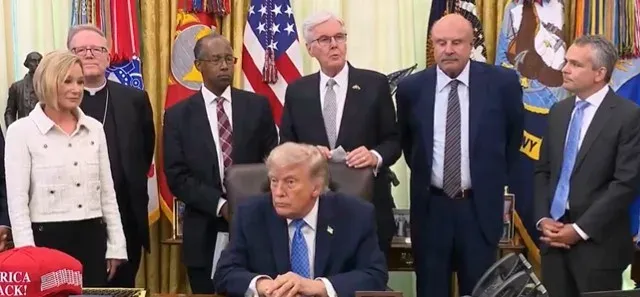
A presidential commission on religious liberty has formally recommended that the Department of Justice (DOJ) issue guidance clarifying the constitutional meaning of the Establishment Clause, arguing that the phrase 'separation of church and state' has been misapplied for decades to suppress religious expression in American public life. The recommendation was presented to President Donald Trump on Friday, 27 June, and ranks among the commission's most consequential proposals.
Key Recommendations
The commission's lead proposal calls on the DOJ to 'issue guidance clarifying the proper understanding of the Establishment Clause and the separation of church and state.' Alongside this, federal agencies would be directed to produce 'Know Your Rights' guidance for students, parents, teachers, religious leaders, healthcare workers, and military personnel.
A further proposal would require any government official who invokes 'separation of church and state' against an individual exercising religious belief to provide a written explanation of how that conduct violates the Constitution. Commission Chairman Dan Patrick framed this as a safeguard against what he described as the routine weaponisation of a phrase absent from the constitutional text.
What the Commission Chair Said
'The overwhelming majority of our witnesses said that they were attacked and punished, and what was used against them was one phrase that's not in the Constitution,' Patrick said. He added that the phrase derived from 'one line out of one of hundreds of letters by Thomas Jefferson' and had been used 'to batter and hammer people of faith for the last 70 to 80 years.'
The commission drew its findings from testimony by 103 witnesses over seven months, with Patrick saying a common thread ran through virtually every account.
Voices from the Commission
Commission member Ryan T. Anderson described a pattern of religious exclusion in public institutions. 'We saw over and over again, students being told they can form a club, but not if it's a religious club. They can speak at commencement, but not if they mention God. Parents can get vouchers, but not if they use it at a religious school,' Anderson said.
Television personality and commission member Phil McGraw argued that the impact extended well beyond houses of worship. 'It's not just the liberty to choose which house of worship they want, it's actually getting into their daily life and they're being persecuted in their jobs, in their professions,' McGraw said.
President Trump's Response
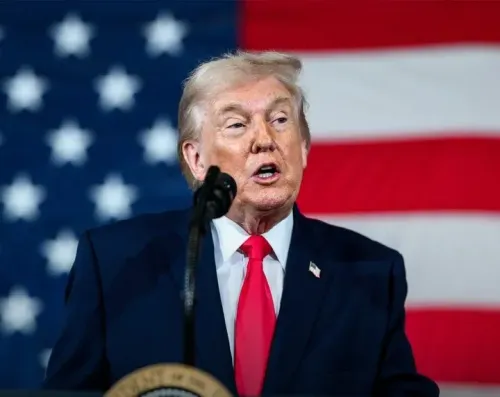
President Trump said his administration would review the report and continue efforts to protect religious liberty. 'We will closely study this report that is being presented to me as president today, and my administration will continue to work with the really the pillars of protecting religious liberty for all Americans,' Trump said.
Broader Implications
If adopted, the DOJ guidance could reshape how federal agencies handle religion-related disputes across schools, government offices, the military, and healthcare settings. This comes amid a broader push by the Trump administration to expand protections for religious expression — a priority that critics argue risks eroding the constitutional boundary between government and religion. The commission's report does not carry the force of law, but DOJ guidance based on its recommendations could significantly influence agency practice and litigation strategy.
Point of View
But attaching it to a DOJ guidance directive gives it institutional teeth that academic debate never did. The real stakes are in the implementation: guidance that shifts agency behaviour on religious clubs, vouchers, and military chaplaincy could trigger a fresh wave of litigation that ultimately lands back at a Supreme Court already sympathetic to expansive religious liberty claims. What the report sidesteps is the harder question of whose religious liberty — and at whose expense. A framework that protects one faith's expression in public institutions may simultaneously constrain others, a tension the commission's 103 witnesses did not appear to address.
NationPress
25 Sept 2026
Frequently Asked Questions
What did Trump's religious liberty commission recommend?
The commission recommended that the Department of Justice issue formal guidance redefining the constitutional understanding of the Establishment Clause and clarifying that the phrase 'separation of church and state' does not appear in the Constitution. It also proposed 'Know Your Rights' guidance for students, teachers, healthcare workers, and military personnel.
What is the Establishment Clause and why does it matter here?
The Establishment Clause is the First Amendment provision that prohibits the government from establishing an official religion. The commission argues it has been over-broadly interpreted using the phrase 'separation of church and state' — a phrase from a Thomas Jefferson letter, not the Constitution itself — to restrict religious expression in public life.
Who led the commission and what evidence did it gather?
The commission was chaired by Dan Patrick and heard testimony from 103 witnesses over seven months . Witnesses reportedly described being penalised for religious expression in schools, workplaces, healthcare settings, and the military.
How did President Trump respond to the report?
President Trump said his administration would closely study the report and continue working to protect religious liberty for all Americans. He did not announce immediate executive action.
What happens next with the commission's recommendations?
The recommendations do not carry the force of law. The DOJ would need to act on them by issuing formal guidance, which could then influence how federal agencies handle religion-related disputes in schools, government, the military, and healthcare — and potentially shape future litigation.