Trump Pledges Lower Electricity Bills as Data Centers Expand
Synopsis
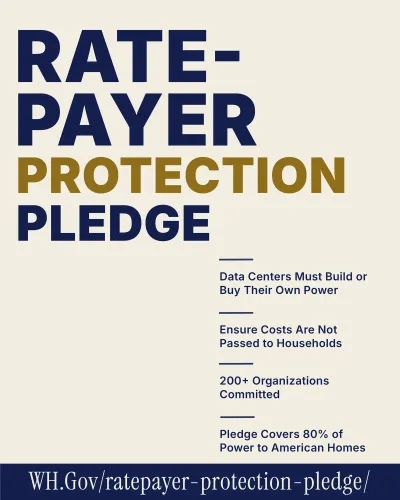
President Trump pledged on July 24, 2026 that the rapid expansion of data centres across the United States will not raise electricity bills for American families, framing the commitment as a 'Ratepayer Protection Pledge' amid surging AI-driven power demand on the national grid.
Key Takeaways
The White House on July 24, 2026 published a 'Ratepayer Protection Pledge' attributed to President Donald J.
Trump stated that as new data centres are built across the country, electricity bills for American families will 'actually come down.' The pledge comes amid rapid US data centre expansion driven by artificial intelligence and digital infrastructure demand.
The Trump administration has a stated 'energy dominance' policy agenda focused on deregulation and expanded domestic energy production.
Congressional action and formal announcements from FERC and the DOE will determine whether the pledge translates into binding ratepayer protections.
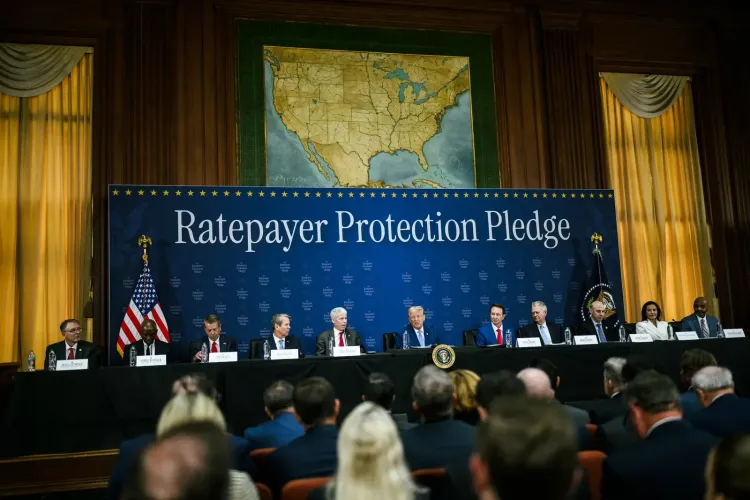
The White House on Thursday, July 24, 2026, shared a pledge from President Donald J. Trump committing to protect American electricity ratepayers as the country's data centre infrastructure continues to grow at an unprecedented pace.
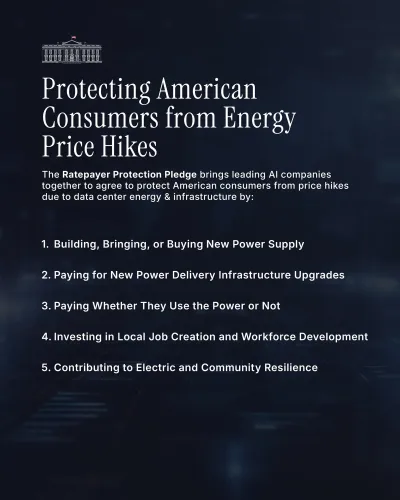
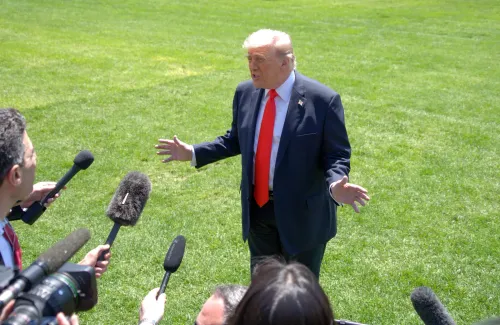
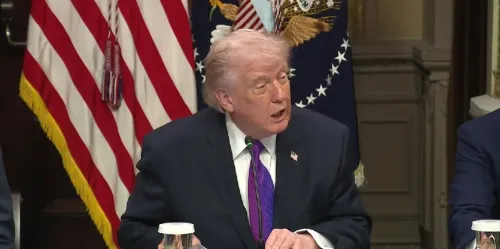
In a statement attributed to the President, the White House quoted Trump as saying: 'We're here today to continue the incredible progress we're making in communities nationwide to ensure that as new data centers go up... electricity bills for American families will actually come down.' The post, labelled a 'Ratepayer Protection Pledge,' was accompanied by four images.
Context
The United States is in the midst of a rapid expansion of data centre infrastructure, driven primarily by surging demand from artificial intelligence applications and broader digital services. This growth has placed significant new pressure on the national electricity grid, raising concerns among utility regulators and consumer advocates that increased power consumption by large computing facilities could push household electricity bills higher.
The Trump administration's pledge positions the federal government as an active guarantor that the costs of this infrastructure boom will not be passed on to ordinary American families and utility ratepayers.
Policy Backdrop
President Trump, both in his first term (2017–2021) and in his current administration, has championed an 'energy dominance' agenda centred on deregulation, expanded domestic energy production, and reducing regulatory burdens on electricity generation. His first term included the 2017 withdrawal from the Paris Agreement, framed explicitly as a measure to protect American energy consumers and industries from costly climate regulations.
The current ratepayer protection framing follows a broader pattern of administrations attempting to balance the technology sector's enormous and growing electricity demands with consumer cost protections. Policy tools typically deployed in such efforts include permitting reforms, energy production incentives, and directives to federal bodies such as the Federal Energy Regulatory Commission (FERC) and the Department of Energy (DOE) to review grid reliability and utility rate structures.
Stakeholders and Impact
The primary beneficiaries named in the pledge are American families and utility ratepayers — households that pay monthly electricity bills and have little direct control over rate-setting decisions made by utility companies and state regulators. For these consumers, rising electricity demand from data centres is a tangible concern: grid operators in several states have already flagged capacity constraints driven by large-scale computing facilities.
Technology companies and data centre operators represent the other major stakeholder group. These firms have invested heavily in US-based infrastructure, and federal permitting and energy policy decisions directly affect the speed and cost at which they can expand. A federal ratepayer protection framework, if enacted, would likely involve negotiations between these industry players, utility companies, and regulators over how costs are allocated.
What's Next
Observers will watch for follow-through in the form of Congressional legislation on data centre permitting and energy infrastructure, as well as formal announcements from FERC or the DOE on grid modernisation and specific ratepayer safeguard mechanisms. The pledge signals a political priority, but its translation into binding policy will depend on regulatory rulemaking and legislative action in the months ahead. The administration's ability to deliver lower electricity bills alongside a data centre construction boom will be a key test of its energy agenda.
Point of View
Pro-data-centre agenda is seen as benefiting corporations at the expense of ordinary households. By framing data centre expansion as compatible with — even beneficial to — lower consumer electricity costs, the White House is attempting to pre-empt a potent counter-narrative from critics. This pledge fits squarely within Trump's long-running 'energy dominance' brand, but the gap between political commitment and regulatory delivery will be closely watched. Whether FERC rulemaking and Congressional legislation can actually insulate ratepayers from grid cost increases driven by AI infrastructure demand remains the central unanswered question.
NationPress
24 Jul 2026
Frequently Asked Questions
What is Trump's Ratepayer Protection Pledge?
The Ratepayer Protection Pledge is a commitment announced by President Donald J. Trump on July 24, 2026 , stating that the expansion of data centres across the United States will result in lower electricity bills for American families, not higher ones.
Why are data centres affecting electricity bills in the US?
Data centres, particularly those powering artificial intelligence services, consume very large amounts of electricity. As more facilities are built, they place additional demand on the national grid, which can put upward pressure on electricity rates for all consumers, including households.
What is Trump's energy policy for data centers?
The Trump administration supports rapid expansion of US data centre infrastructure while pursuing deregulation and increased domestic energy production to keep costs down. The administration argues that expanding energy supply will offset the additional demand from computing facilities.
Will US electricity bills go up because of AI data centers?
President Trump has pledged that electricity bills for American families will 'actually come down' even as data centres expand. However, the specific regulatory and legislative mechanisms to ensure this outcome are still being developed by agencies such as FERC and the DOE .
What is FERC's role in protecting electricity ratepayers?
The Federal Energy Regulatory Commission (FERC) is the primary federal body overseeing wholesale electricity markets and interstate grid reliability. It plays a central role in setting rules that determine how costs from new grid infrastructure and large power consumers are allocated between industry and household ratepayers.