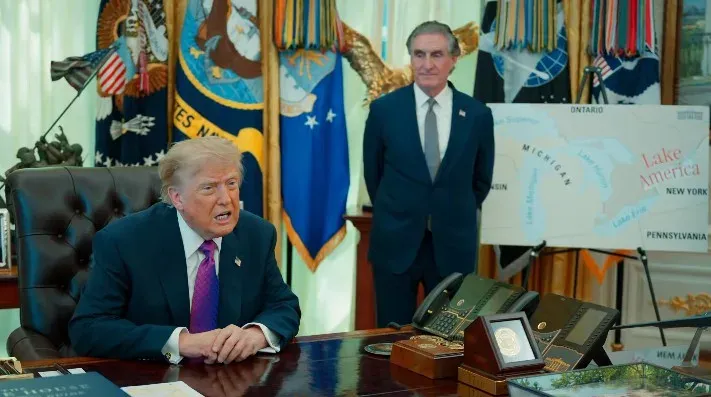
Trump renames Lake Ontario 'Lake America' via executive order
Synopsis
Trump has signed an executive order renaming Lake Ontario 'Lake America' — the second major geographical renaming of his presidency after the Gulf of Mexico became the 'Gulf of America' in January 2025. The move applies only to US federal usage, leaving Canada, international bodies, and private map makers free to ignore it entirely.
Key Takeaways
President Donald Trump signed an executive order on 28 August renaming Lake Ontario to 'Lake America' in all US federal references.
The US Interior Secretary has 30 days to complete the renaming via the Board on Geographic Names .
Trump cited nearly $4 billion in US investment in the Great Lakes ecosystem over the past decade and the Coast Guard's operation of 9 of 11 ice-breaking vessels on the lakes.
The order does not bind Canada , the province of Ontario, international organisations, or private map providers.
This follows Trump's January 2025 order renaming the Gulf of Mexico 'Gulf of America' in federal usage — the same legal template applies.
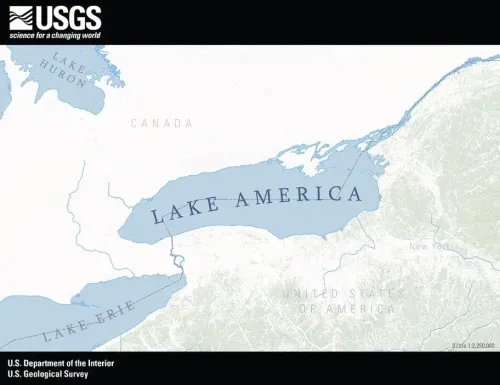
US President Donald Trump has signed an executive order directing the federal government to rename Lake Ontario as 'Lake America', citing the lake's economic significance and what the order describes as the United States' dominant role in protecting the Great Lakes. The directive, issued on 28 August, gives the US Interior Secretary 30 days to complete the renaming in coordination with the federal Board on Geographic Names.
What the Executive Order Says
The order applies exclusively to US federal usage — maps, contracts, official documents, and government communications. It directs the Board on Geographic Names to update the Geographic Names Information System and issue guidance requiring all executive departments and federal agencies to adopt the new name. The order does not compel Canada, the province of Ontario, international organisations, or private map providers to follow suit.
Trump justified the renaming on several grounds. 'The United States is the greatest protector of the Great Lakes, including the body of water currently known as Lake Ontario,' he said in the order. He further stated that without US security and investment, 'this freshwater system would not be open for shipping, recreation, and responsible use to the same extent as it is today.'
Key Claims and Figures Cited
The order asserts that the US Coast Guard operates nine of the 11 ice-breaking vessels on the Great Lakes and keeps commercial shipping lanes open without charge. Trump also claimed the United States had invested nearly $4 billion in protecting the Great Lakes freshwater ecosystem over the past decade, while Canada had invested 'far less' in comparable programmes. Notably, the order did not provide comparative Canadian investment figures.
Trump additionally asserted that the deepest parts of the lake lie within US territory and that the United States accounts for most of the lake's water volume. The order cited Oswego, New York, as a historic fort and the first US port of call from the St Lawrence Seaway, and referenced shipbuilding and naval operations at Sackets Harbor during the War of 1812.
Economic Importance of the Great Lakes System
The White House said the broader Great Lakes–St Lawrence Seaway system supports hundreds of thousands of American jobs and generates billions of dollars in economic output, cargo value, and business revenue. The system carries iron ore, limestone, coal, agricultural products, and other bulk commodities. Water from the lake also supplies drinking water to nearby communities and supports nuclear, natural gas, and oil-fired power plants.
'The Lake will continue to play a pivotal role in shaping America's future and the global economy,' Trump said. 'In recognition of this flourishing economic resource and its critical importance to our Nation's economy and its people, I am directing that the Lake officially be renamed as Lake America,' he added.
Background and Context
Lake Ontario is the easternmost and smallest by surface area of North America's five Great Lakes. It is bordered by New York state to the south and east, and the Canadian province of Ontario to the north, west, and southwest. Its waters drain into the St Lawrence River before reaching the Atlantic Ocean. The lake is shared between the United States and Canada, with the international border running through it — meaning the renaming applies only to the US federal side of that boundary.
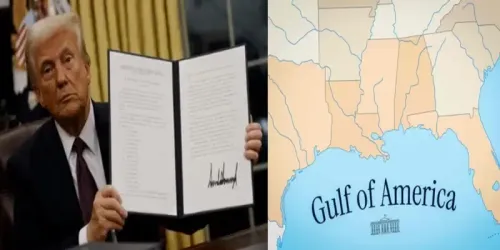
This is not the first such geographical renaming under Trump. In January 2025, he directed the federal government to replace 'Gulf of Mexico' with 'Gulf of America' in all federal references, a move that similarly required changes to the Geographic Names Information System but did not bind other countries or international bodies. The latest order follows the same legal and procedural template. How Ottawa responds — diplomatically or cartographically — remains to be seen.
Point of View
Yet it puts Canada in the uncomfortable position of either protesting a symbolic gesture or quietly absorbing another territorial assertion from Washington. What the order conspicuously omits is any comparative data on Canadian investment in the Great Lakes, undermining the core justification. Paired with the Gulf of Mexico precedent, a pattern is emerging: unilateral federal renaming as a low-cost, high-visibility tool of geopolitical pressure.
NationPress
12 Oct 2026
Frequently Asked Questions
What is Trump's executive order renaming Lake Ontario?
President Donald Trump signed an executive order on 28 August directing the US federal government to rename Lake Ontario as 'Lake America', citing US economic investment and the country's role in protecting the Great Lakes. The change applies only to US federal maps, documents, and official communications — not to Canada or international bodies.
Does the renaming affect Canada or the province of Ontario?
No. The executive order explicitly does not require Canada, the province of Ontario, international organisations, or private map providers to adopt the new name. Lake Ontario is a shared body of water, and the order's reach ends at US federal usage.
How long does the US government have to implement the new name?
The US Interior Secretary has 30 days to complete the renaming process in coordination with the federal Board on Geographic Names, which must update the Geographic Names Information System and issue guidance to all federal agencies.
What reasons did Trump give for renaming the lake?
Trump cited nearly $4 billion in US investment in the Great Lakes ecosystem over the past decade, the Coast Guard's operation of nine of eleven ice-breaking vessels on the lakes, and the lake's historical role in American exploration, commerce, and defence — including naval operations at Sackets Harbor during the War of 1812.
Has Trump renamed other geographical features before?
Yes. In January 2025, Trump ordered the federal government to use 'Gulf of America' instead of 'Gulf of Mexico' in all federal references, following the same legal template — changes to the Geographic Names Information System without binding other countries or international bodies.