Trump Welcomes Xi Jinping for State Visit at White House
Synopsis
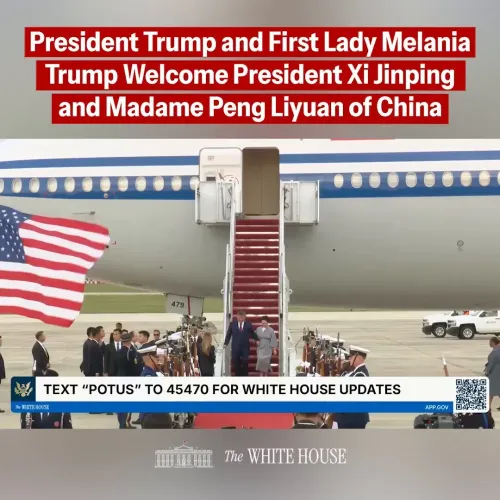
President Donald J. Trump and First Lady Melania Trump welcomed President Xi Jinping of China and Madame Peng Liyuan to Washington, D.C. ahead of a formal state visit at the White House, marking one of the highest-tier diplomatic engagements between the two powers.
Key Takeaways
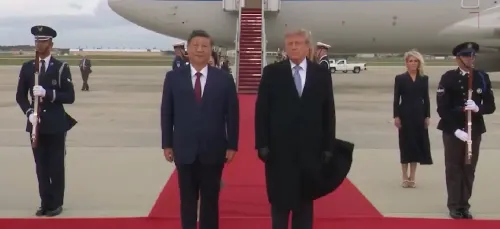
President Trump and First Lady Melania Trump personally greeted President Xi Jinping and Madame Peng Liyuan upon their arrival in Washington, D.C.
The visit is a full state visit at the White House — the highest diplomatic tier Washington extends to foreign leaders.
US-China leader-level summits have historically produced major outcomes, including the Phase One trade agreement signed in January 2020 .
Both leaders' spouses participating in the arrival ceremony reflects the full formal protocol of a state visit.
Joint statements, economic consultations, and security discussions are expected to follow the arrival ceremony.
The visit is being closely watched by regional powers, including India , for signals on the trajectory of US-China competition.
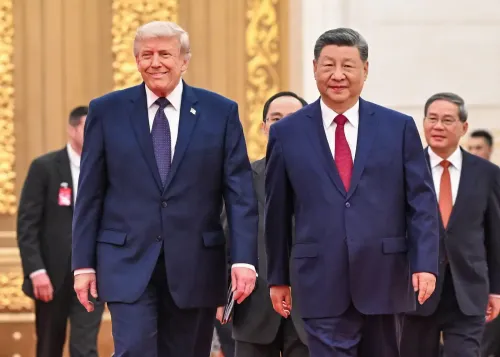
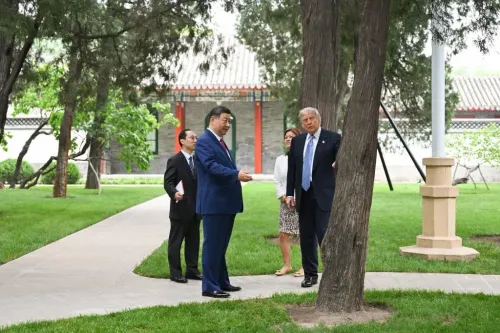
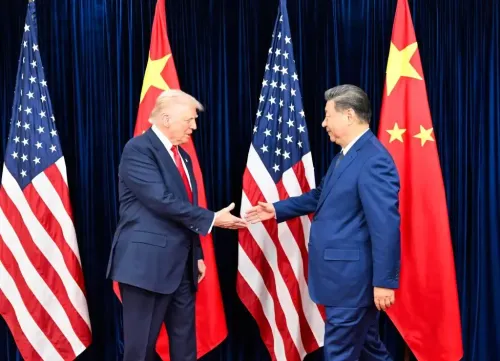
Two of the world's most consequential leaders stood face to face on American soil as President Donald J. Trump and First Lady Melania Trump personally greeted President Xi Jinping of China and Madame Peng Liyuan upon their arrival in Washington, D.C., ahead of a formal state visit at the White House.
An Arrival Steeped in Protocol — and Stakes
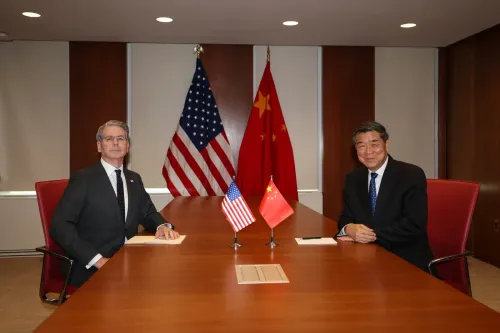
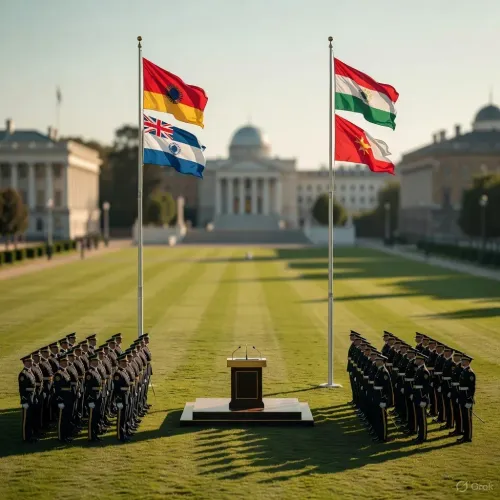
The arrival ceremony, with both leaders accompanied by their spouses, follows the full weight of diplomatic protocol reserved for the highest tier of state visits. A White House greeting at the arrival stage — rather than a working lunch or sideline pull-aside — signals that both sides have invested political capital in this moment. The optics matter: two nuclear powers, two of the world's three largest economies, choosing the language of formal ceremony.
US-China leader-level meetings have historically been inflection points. The April 2017 Trump-Xi summit at Mar-a-Lago opened a direct channel between the two men that shaped the contours of trade and security dialogue for years. The January 2020 signing of the US-China Phase One trade agreement — a partial truce in a bruising tariff war that began in 2018 — showed what direct leader engagement could, at least temporarily, produce.
What a State Visit at the White House Signals
Not every foreign leader gets a state visit. The format — arrival ceremony, spousal participation, formal dinners, joint statements — is Washington's most deliberate diplomatic offering. For Beijing, acceptance of the invitation carries its own message: a willingness to engage at the highest level despite ongoing friction over trade imbalances, technology transfer, and regional security flash points in the Indo-Pacific.
For New Delhi and other capitals watching closely, the temperature of this meeting sets the baseline for how US-China competition plays out across every other bilateral relationship in the region. A warm arrival on the North Lawn does not resolve structural tensions — but it does open the room where those tensions get negotiated.
Joint Statements and What Comes Next
The arrival greeting is the opening frame. The substance — any joint communiqué, economic consultations, or security understandings — will emerge from the meetings that follow inside the White House. Diplomatic officials and trade negotiators on both sides will be watching every word of any agreed text for signals on tariffs, technology controls, and bilateral investment rules. A state visit of this magnitude rarely ends without at least a framework statement, and the world will parse every line of it.
The handshake at the door is historic. What gets signed inside will be the real story.
Point of View
Even as structural competition over technology and trade remains unresolved. For India, positioned between Washington's security partnerships and Beijing's economic gravity, the temperature of this meeting directly shapes the diplomatic space New Delhi has to manoeuvre. The real test will be whether the warmth of the arrival translates into durable agreements, or whether it is atmospherics masking a relationship still defined by rivalry.
NationPress
24 Sept 2026
Frequently Asked Questions
Why is Xi Jinping visiting the White House?
President Xi Jinping is in Washington, D.C. for a formal state visit at the White House, the highest diplomatic tier the United States extends to foreign leaders, to engage in direct leader-level talks with President Trump on trade, security, and bilateral relations.
What is a state visit and why does it matter?
A state visit is the most formal category of diplomatic visit, involving arrival ceremonies, spousal participation, formal dinners, and joint statements. It signals that both governments have prioritised the relationship at the highest political level.
What was the last major Trump-Xi agreement?
The most significant agreement from the first Trump administration was the US-China Phase One trade deal, signed in January 2020, which provided a partial resolution to tariff disputes that had escalated since 2018.
How does the Trump-Xi meeting affect India?
US-China summits directly influence the diplomatic and economic environment in the Indo-Pacific. The outcomes — on trade, technology controls, and regional security — shape the strategic space available to India in its own relationships with both Washington and Beijing.