Two police guards shot dead protecting polio team in Balochistan
Synopsis
Two police officers guarding female polio workers were shot dead in Noshki, Balochistan, forcing a suspension of the ongoing vaccination drive. The attack is the latest in a chronic pattern of violence that has made Pakistan one of the most dangerous places in the world for frontline health workers — and left poliovirus with nowhere else to hide.
Key Takeaways
Two police personnel guarding a polio team were shot dead in Noshki district, Balochistan on 22 September 2026 .
Gunmen on a motorcycle opened fire, seized the officers' weapons, and fled; the polio team members were unharmed .
Authorities suspended the anti-polio vaccination drive in the area following the attack.
Pakistan and Afghanistan are the only two countries where wild poliovirus remains endemic.
Previous attacks in Bajaur (May 18) , Chaman (May 24) , and Hangu (April 13) have followed a similar pattern in 2026.
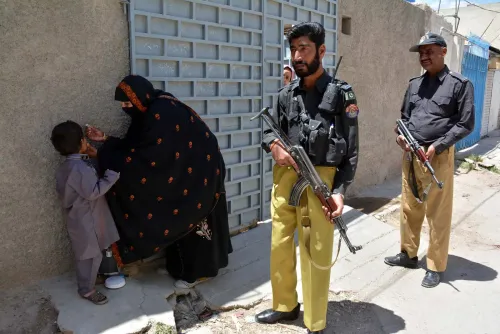
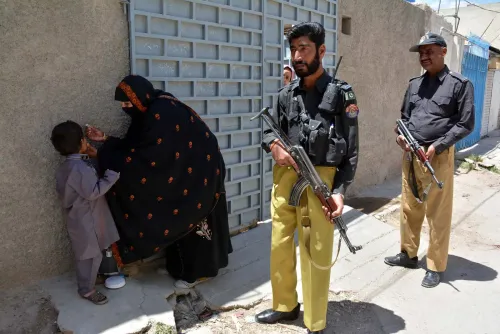
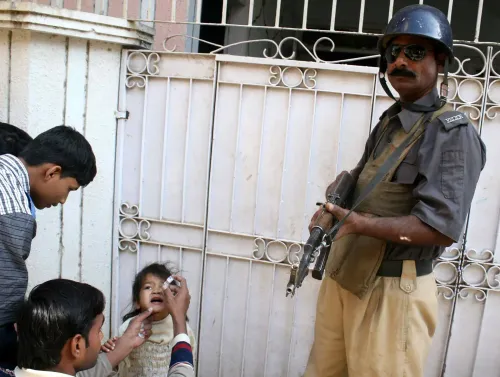
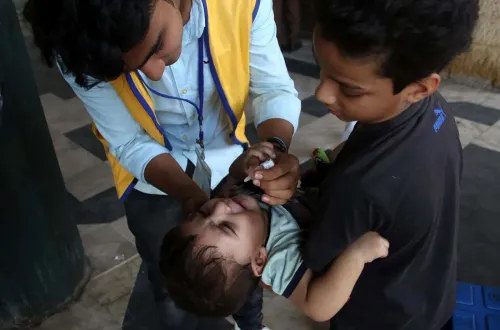
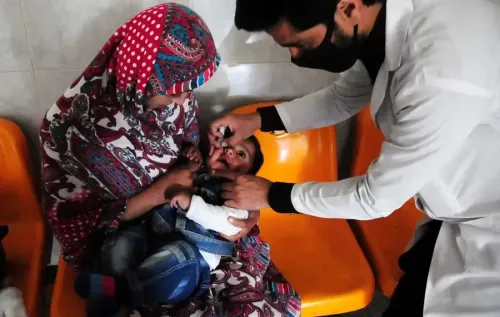
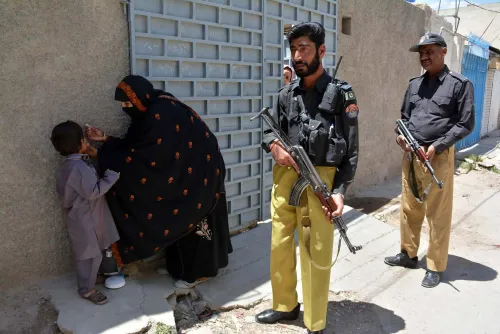
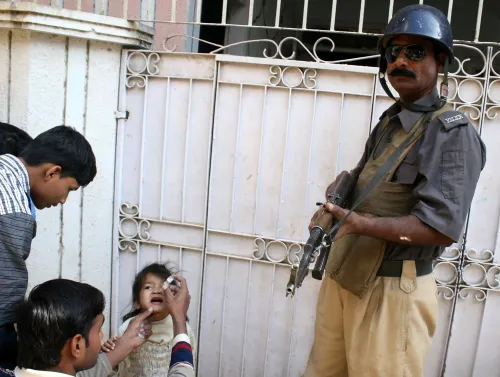
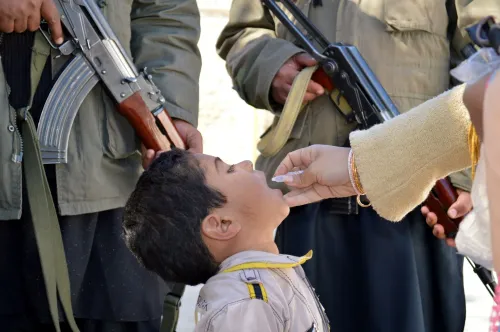
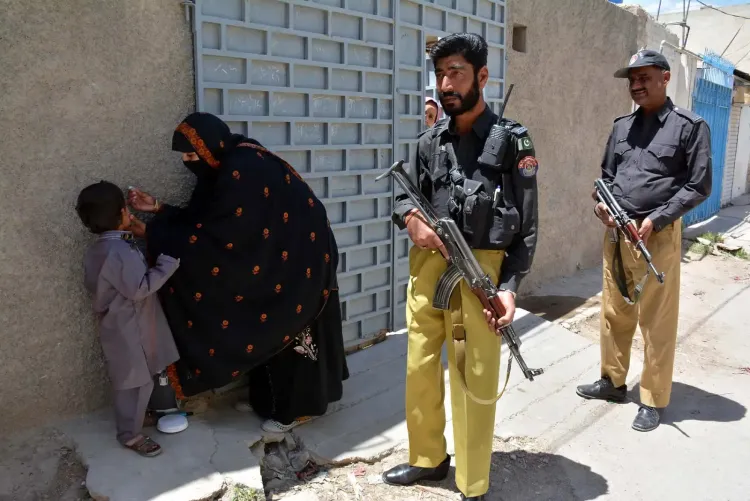
Two police personnel guarding a polio vaccination team were shot dead by armed assailants in the Noshki district of Pakistan's Balochistan province on Tuesday, 22 September, according to local media reports. The attack targeted officers escorting a team of female polio workers conducting inoculations as part of a week-long vaccination drive that had begun a day earlier.
How the Attack Unfolded
Noshki City Station House Officer (SHO) Munawar Zaman said gunmen riding a motorcycle opened fire on police personnel who were providing security cover to the female polio workers while they inoculated children in the area. The members of the polio team were not harmed in the assault. The attackers fled the scene after seizing the official weapons of the slain officers.
Following the incident, authorities suspended the ongoing anti-polio campaign in the region, according to reports citing Pakistani daily Dawn.
A Persistent Pattern of Violence
The attack is the latest in a long series of targeted strikes against polio vaccination efforts across Pakistan. Pakistan and Afghanistan remain the only two countries in the world where wild poliovirus is still endemic, making uninterrupted vaccination campaigns critical to global eradication efforts.
Polio workers and their security escorts have been frequently targeted, particularly in Khyber Pakhtunkhwa and Balochistan. On 18 May, at least two police personnel escorting vaccination teams were killed in separate incidents in Bajaur district of Khyber Pakhtunkhwa, with unidentified assailants striking teams in the Tabbai and Dag Qila regions of Salarzai, according to Pakistani broadcaster Geo News.
On 24 May, a police official deployed with a polio team was seriously injured in a firing incident near the Ishaqzai Qila area of Chaman district in Balochistan, though team members escaped unhurt.
Earlier in April, a police constable was killed and four others injured when assailants attacked a security party heading to cover polio teams in Hangu district of Khyber Pakhtunkhwa. The assault took place on 13 April in Thall tehsil, with the Hangu district police confirming the fatality in an official statement.
Implications for the Eradication Drive
Repeated attacks have forced repeated suspensions of vaccination campaigns, creating coverage gaps that allow the poliovirus to persist and spread. Public health experts have long warned that security-driven interruptions to inoculation drives undermine years of immunisation progress, especially in high-risk districts across Balochistan and Khyber Pakhtunkhwa.
The suspension of the current drive in Noshki following Tuesday's attack adds to a growing list of disrupted campaigns, raising fresh questions about Pakistan's ability to protect frontline health workers and meet its eradication commitments.
Point of View
Uniformed targets, weapons seized — that speaks to organised opposition to vaccination, not random violence. Yet each incident triggers only a localised suspension rather than a structural rethink of how polio teams are secured across Balochistan and Khyber Pakhtunkhwa. Pakistan's eradication timeline has slipped repeatedly, and the security gap is a core reason why. The international community funds the vaccination push but cannot substitute for the state's ability to guarantee safe access; until Islamabad addresses that gap at scale, poliovirus will continue to find sanctuary in precisely the districts these teams cannot safely reach.
NationPress
22 Sept 2026
Frequently Asked Questions
What happened in the Noshki polio team attack in Balochistan?
Two police officers guarding a team of female polio workers were shot dead by armed gunmen riding a motorcycle in Noshki district, Balochistan, on 22 September 2026. The assailants seized the officers' weapons and fled; the polio team members were unharmed.
Why was the anti-polio drive suspended after the attack?
Pakistani authorities suspended the ongoing week-long vaccination campaign in the Noshki area as an immediate security precaution following the killing of two police guards. Such suspensions are a recurring consequence of attacks on polio teams, leading to gaps in immunisation coverage.
Why is Pakistan one of the last places with wild poliovirus?
Pakistan and Afghanistan are the only two countries in the world where wild poliovirus remains endemic. Repeated attacks on vaccination teams, especially in Balochistan and Khyber Pakhtunkhwa, have disrupted campaigns long enough for the virus to persist in under-immunised communities.
How frequent are attacks on polio teams in Pakistan?
Attacks have occurred multiple times in 2026 alone. Two police escorts were killed in Bajaur district on 18 May, an officer was injured in Chaman on 24 May, and a constable was killed in Hangu district on 13 April — all while providing security for polio vaccination drives.
Who typically carries out these attacks on polio teams?
Assailants in most reported incidents are described as unidentified or unknown gunmen, and no group has been officially named in the Noshki attack. Historically, militant outfits operating in Khyber Pakhtunkhwa and Balochistan have opposed vaccination drives, sometimes falsely framing them as a foreign intelligence operation.