IED blast kills 2 civilians in Balochistan's Quetta, no claim yet
Synopsis
A Sunday IED blast on a water-supply vehicle in Quetta killed two civilians and wounded two more — the latest in a string of incidents in Balochistan that rights groups say is escalating into a humanitarian crisis. With over 30 civilians reportedly killed in Pakistani air strikes in Surab days earlier, and no international accountability in sight, pressure on the global community is building fast.
Key Takeaways
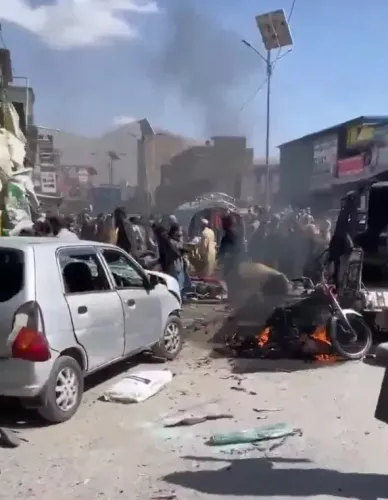
An IED detonated on a civilian logistics vehicle in Quetta, Balochistan on Sunday at approximately 3 pm local time , killing 2 civilians and injuring 2 others .
The vehicle was carrying water pipeline material ; no group has claimed responsibility for the attack.
The blast follows reported Pakistani Air Force strikes in the Gidar area of Surab that allegedly killed over 30 civilians , including women and children.
Sabiha Baloch of the Baloch Yakjehti Committee (BYC) alleged that the affected area is blockaded by Pakistani forces, preventing access for rescue teams and journalists.
Baloch Voice for Justice (BVJ) has demanded an independent, internationally monitored investigation and urged the UN , US , UK , and EU to intervene.
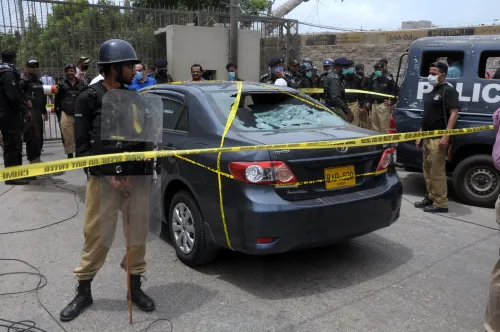
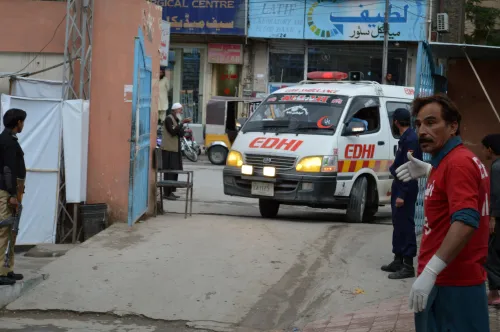
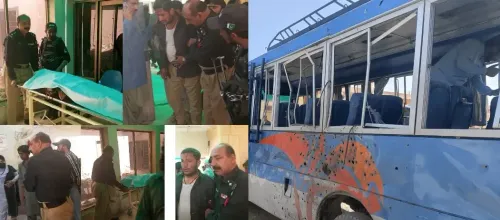
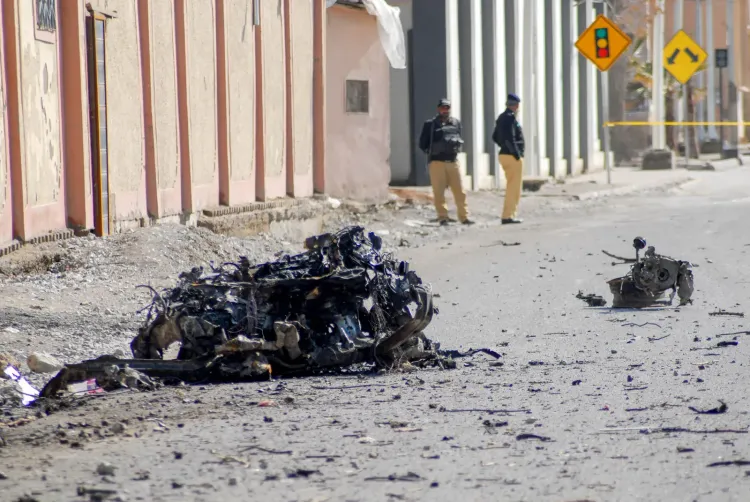
Two civilians were killed and two others injured on Sunday when an improvised explosive device (IED) exploded beneath a civilian logistics vehicle in Quetta, the provincial capital of Pakistan's Balochistan province, according to police sources. The attack, which occurred at approximately 3 pm local time, targeted a vehicle transporting water pipeline material. The bodies of the deceased and the injured were shifted to a hospital in Quetta, police said.
Details of the Attack
The IED was detonated under a civilian vehicle engaged in logistics work, according to police sources who spoke on condition of anonymity. As of Monday, no group had claimed responsibility for the blast. The nature of the target — a supply vehicle carrying infrastructure material — has drawn attention given the broader pattern of militant activity in the province.
Broader Context: Balochistan Under Strain
The attack comes days after the Pakistani Air Force reportedly carried out aerial strikes on residential areas in the Gidar area of Surab, killing over 30 civilians, including women and children, and injuring several others, according to reports. The strikes also caused significant damage to property. The sequence of incidents has intensified scrutiny of the security situation in Balochistan, a province that has seen decades of insurgency and counter-insurgency operations.
Rights Groups and Activists Respond
Sabiha Baloch, a central leader of the Baloch Yakjehti Committee (BYC), condemned the earlier air strikes, describing the pattern of civilian killings as 'genocide.' In a post on social media platform X, she said: 'The affected area is surrounded by Pakistani forces, restricting access for rescue teams, medical staff, ambulances, and journalists. Blocking humanitarian assistance and independent documentation compounds the grave human rights violations and demands immediate international attention.' She further urged 'journalists, medical teams, humanitarian organisations, and people around the world to demand immediate access to the affected area and ensure medical assistance reaches survivors.'
Human rights body Baloch Voice for Justice (BVJ) called for an 'immediate, independent, transparent and internationally monitored investigation' into the incidents. In a statement, the BVJ said: 'The identities and details of those killed and injured must be made public, and those responsible must be held accountable. Protecting civilians, particularly women and children, is a fundamental responsibility of the state, and all military operations must comply with international humanitarian law and the principles governing the protection of civilian life.'
International Community Urged to Act
The BVJ addressed its appeal to the United Nations, UN human rights mechanisms, the United States, the United Kingdom, the European Union, and other members of the international community, urging them to end what it called 'silence over the violence and war crimes against civilians in Balochistan by Pakistani forces.' The body warned that 'continued silence of the international community risks allowing such incidents to occur without accountability.'
With no group yet claiming the Sunday IED attack, investigators face the familiar challenge of attribution in a province where multiple armed factions operate. The coming days will likely see pressure mount on Pakistani authorities to establish accountability for both the blast and the reported air strikes.
Point of View
Followed days later by a vehicle bombing in the provincial capital, with no accountability mechanism in sight for either. The BVJ's appeal to the UN and Western governments reflects a long-standing frustration — that Balochistan's civilian toll rarely breaches the threshold of international attention the way comparable situations elsewhere do. Pakistan's government has not publicly responded to the air strike allegations, and that silence is itself a story mainstream coverage has largely left untold.
NationPress
17 Aug 2026
Frequently Asked Questions
What happened in the Quetta IED blast?
An IED exploded beneath a civilian logistics vehicle in Quetta, Balochistan, on Sunday at around 3 pm local time, killing two civilians and injuring two others. The vehicle was transporting water pipeline material when it was targeted.
Who has claimed responsibility for the Quetta IED attack?
As of Monday, no group had claimed responsibility for the attack, according to police sources. Attribution remains unclear in a province where multiple armed factions operate.
What were the reported Pakistani Air Force strikes in Surab?
Days before the Quetta blast, the Pakistani Air Force reportedly carried out strikes on residential areas in the Gidar area of Surab, allegedly killing over 30 civilians including women and children and injuring several others. Pakistan's government had not publicly commented on these allegations at the time of reporting.
What is the Baloch Yakjehti Committee (BYC) and what did it say?
The Baloch Yakjehti Committee (BYC) is a Baloch civil society and rights organisation. Its central leader Sabiha Baloch condemned the civilian killings, alleging that Pakistani forces had blockaded the affected area in Surab, restricting access for rescue teams, medical staff, and journalists, and called for immediate international attention.
What has Baloch Voice for Justice demanded?
Baloch Voice for Justice (BVJ) has called for an immediate, independent, transparent, and internationally monitored investigation into the incidents. It has urged the United Nations, the United States, the United Kingdom, and the European Union to end their silence and press for accountability over what it described as 'violence and war crimes' against civilians in Balochistan.