How Did Severe Weather Lead to Two Fatalities in Greece?
Click to start listening
Synopsis
Tragedy struck Greece as severe weather conditions resulted in two fatalities. A Coast Guard officer and a woman in her car were victims of high waves and floodwaters, respectively. As the country faces heavy rainfall and strong winds, emergency measures have been implemented. Learn more about the impact of this extreme weather.
Key Takeaways
- Two fatalities reported due to severe weather conditions in Greece.
- Emergency measures include school closures and travel restrictions.
- High waves and flooding have caused significant disruptions.
- Authorities received over 600 emergency calls for assistance.
- Weather conditions have prompted a 'Red Code' state of emergency.
Athens, Jan 22 (NationPress) Tragically, two individuals lost their lives as a powerful weather system impacted Greece, according to reports from authorities.
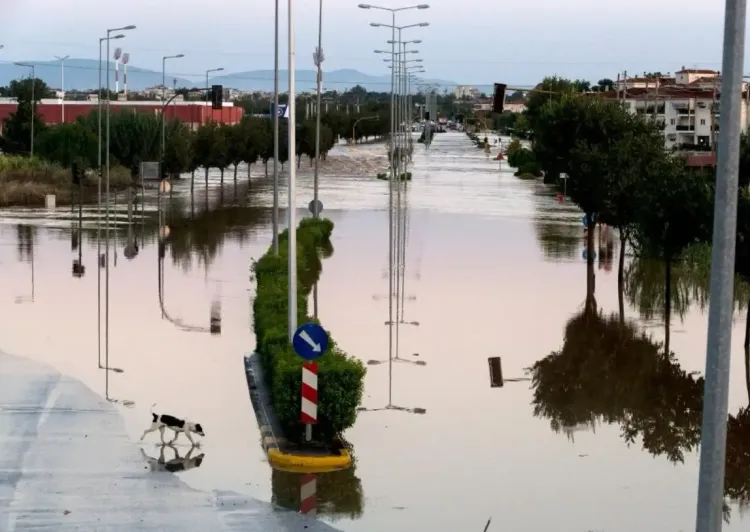
In the Peloponnese region of southern Greece, a Coast Guard officer tragically perished after being engulfed by turbulent waves at the port of Astros Kynourias, suffering severe head injuries, as reported by local officials. Meanwhile, in the Glyfada suburb of southern Athens, a woman was swept away along with her vehicle by rising floodwaters, as cited by Xinhua news agency and Greek national broadcaster ERT.
The adverse weather conditions have affected vast areas of the nation, unleashing torrential rains, strong winds, and snow in mountainous regions. At least six areas, including Attica, have been declared under a 'Red Code' emergency, prompting alerts for residents to remain indoors and adhere to official guidance.
In response to the crisis, authorities have ordered the closure of schools in Attica and other impacted regions. Nationwide traffic disruptions have been reported, with numerous drivers stranded in severely affected areas, and ferry services suspended at various ports.
The Fire Brigade reported receiving over 600 emergency calls, predominantly for evacuations from inundated streets, the removal of fallen trees, and efforts to pump out water from homes and businesses. The flooding has also inflicted substantial damage on agricultural lands and livestock facilities.
Earlier, on January 10, strong winds had already caused disruptions to ferry services at Piraeus port, leaving many vessels docked and causing inconvenience for travelers.
While no blanket sailing ban was enforced, several ferry operators canceled their scheduled routes due to the adverse weather conditions.
This disruption coincides with Greece experiencing a new wave of extreme weather marked by gale-force winds, heavy rainfall, and a significant drop in temperatures. Winds in certain parts of the Aegean and Ionian seas have reached as high as nine on the Beaufort scale.
Point of View
It is crucial to highlight how extreme weather events can lead to devastating consequences for communities. This tragic incident underscores the importance of heeding weather warnings and the need for robust emergency response systems to protect lives.
NationPress
22/01/2026
Frequently Asked Questions
What caused the fatalities in Greece?
Severe weather, characterized by high waves and flooding, led to the deaths of a Coast Guard officer and a woman in her vehicle.
What emergency measures were implemented?
Authorities declared a 'Red Code' emergency in several regions, closed schools, and suspended ferry services.
How widespread was the impact of the weather system?
The weather system affected large parts of Greece, causing significant disruptions and damage across multiple regions.