UAE Envoy Praises India's Impactful Role in West Asia Crisis
Synopsis
Abdulnasser Alshaali, UAE's Ambassador to India, praises India's significant influence in the West Asia crisis, highlighting the importance of Modi's diplomatic efforts and the country's strong regional ties.
Key Takeaways
India's diplomatic efforts in the West Asia crisis are highly regarded.
Prime Minister Modi's call to UAE President is a sign of strong bilateral ties.
India co-sponsored UN Resolution 2817 to reinforce sovereignty.
The UAE faces ongoing Iranian aggression but maintains strategic restraint.
Public safety and stability in the UAE remain a top priority.
New Delhi, March 31 (NationPress) Abdulnasser Alshaali, the Ambassador of the United Arab Emirates (UAE) to India, has praised New Delhi's pivotal role amid the current crisis in West Asia. He highlighted that India's extensive regional involvement and positive diplomatic history lend significant credibility to its voice.
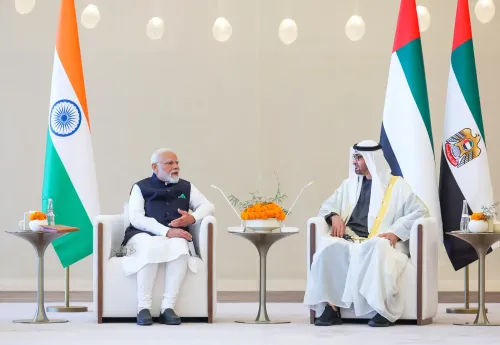
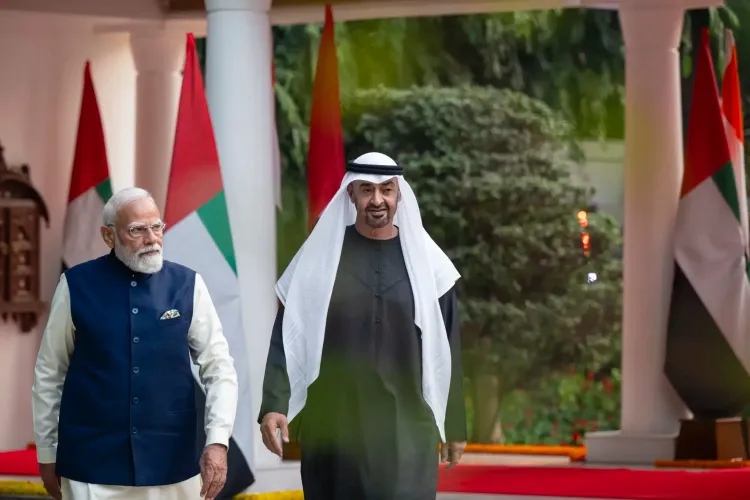
The Ambassador pointed out that Prime Minister Narendra Modi's phone call with UAE President Sheikh Mohamed bin Zayed Al Nahyan was perceived as a sign of solidarity, showcasing the strong relationship that both leaders have nurtured over the past decade.
In a conversation with IANS, Alshaali stated, "India's involvement in this crisis has been highly recognized. Prime Minister Narendra Modi was one of the first global leaders to reach out to His Highness Sheikh Mohamed bin Zayed Al Nahyan, the UAE president, following the initiation of the attacks. That call was interpreted as an act of brotherhood and exemplified the personal connection between two leaders who have collaboratively established this partnership for over ten years.
"India endorsed UN Security Council Resolution 2817, co-sponsoring the resolution alongside 135 nations. This action conveys a robust message that the international community will not accept assaults on state sovereignty or the intentional targeting of civilians and essential infrastructure. India stands as a major power with extensive relations across the West Asian region, and its voice is amplified by the trustworthiness of its strong and proactive diplomatic heritage," he elaborated.
When inquired about the escalating tensions in the Gulf due to the Iran-Israel conflict, Alshaali remarked that since February 28, Iran has subjected the UAE and its neighboring countries to a persistent campaign of "terrorist aggression."
As of March 29, he disclosed that 414 ballistic missiles, 15 cruise missiles, and 1,914 drones have targeted the UAE — surpassing the total directed at all other nations combined.
"What raises concerns is that these assaults have not been aimed at nations engaged in conflict with Iran but rather at its neighbors, including countries that have consistently sought to de-escalate tensions," Alshaali told IANS.
When asked about the possibility of retaliation from the UAE if Iranian attacks persist, the envoy indicated that the UAE has maintained a policy of "deliberate, calibrated, and strategic restraint" throughout the ongoing crisis.
He affirmed that the UAE retains its complete and legitimate right under the UN Charter to counter aggression and protect its sovereignty, and will take all necessary actions to defend its territory while ensuring the safety of its citizens and residents.
"Iran has intentionally targeted civilian infrastructure, including residential areas, airports, and other non-military facilities with missiles and drones. These attacks have resulted in casualties and injuries, which are entirely unacceptable and unlawful. Simultaneously, the UAE Armed Forces have shown remarkable operational readiness, successfully defending the nation's airspace and territory with professionalism and precision," Alshaali asserted.
He emphasized that despite the "blatant aggression," the situation in the UAE remains stable and under control, with national institutions functioning at peak readiness, critical sectors operating without interruption, and daily life proceeding normally.
The UAE envoy further stressed that the safety of citizens, residents, and visitors is a paramount priority for the UAE that cannot be compromised.
"Our stance has always been towards diplomacy. However, diplomacy necessitates reciprocity. Iran cannot fire missiles at gas and oil facilities and civilian infrastructure while simultaneously claiming to pursue peace. The UAE's sovereignty, territorial integrity, and the safety of everyone on its territory are non-negotiable," Alshaali concluded.
Point of View
Particularly during times of crisis. Such diplomatic engagements reflect India's commitment to peace and stability in the region, reinforcing its global standing as a responsible power.
NationPress
8 Oct 2026
Frequently Asked Questions
What was the significance of Modi's call to the UAE President?
Modi's call was seen as a gesture of solidarity and demonstrated the strong personal and diplomatic ties between India and the UAE.
How has India contributed to the West Asia crisis resolution?
India co-sponsored UN Security Council Resolution 2817, emphasizing the international community's stance against attacks on sovereignty and civilian targets.
What is the UAE's response to Iranian aggression?
The UAE is maintaining strategic restraint while asserting its right to defend its sovereignty and protect its citizens.
What attacks has the UAE faced from Iran?
The UAE has been subjected to 414 ballistic missiles, 15 cruise missiles, and 1,914 drones aimed at its territory since late February.
Is the situation in the UAE stable?
Yes, despite the tensions, the UAE's national institutions are operating effectively, and daily life continues without major disruption.