UK, France, Canada back two-state solution, ban West Bank settlement goods
Synopsis
Three of Israel's key Western allies — the UK, France, and Canada — have moved from condemnation to enforcement, announcing import bans on settlement goods and targeted sanctions while explicitly calling settlements illegal under international law. On the same day, the UN Secretary-General raised alarm over Israeli strikes on hospitals and civilians in southern Lebanon. The coordinated Western shift could reshape the diplomatic landscape around the conflict.
Key Takeaways
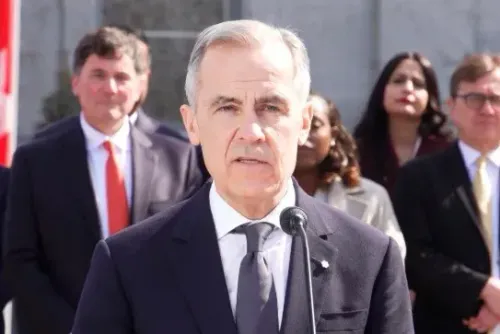
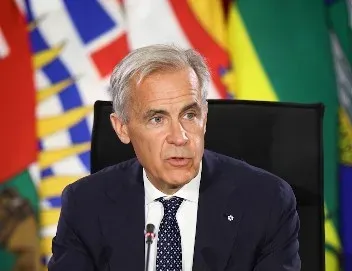
British PM Andy Burnham , French President Emmanuel Macron , and Canadian PM Mark Carney issued a joint statement on Tuesday backing a two-state solution .
The three governments declared Israeli settlements 'illegal under international law' and condemned the E1 settlement project and rising settler violence.
All three countries announced a ban on imports of goods from Israeli settlements and targeted measures against those who facilitate or profit from them.
UN Secretary-General Antonio Guterres expressed alarm over Israeli military strikes in southern Lebanon , including attacks on hospitals and restrictions on humanitarian access.
UNIFIL recorded a significant increase in Israeli military activity in Lebanon, including ground operations, airstrikes, and airspace violations.
British Prime Minister Andy Burnham, French President Emmanuel Macron, and Canadian Prime Minister Mark Carney issued a joint statement on Tuesday affirming their collective commitment to a two-state solution to the Israeli-Palestinian conflict, warning that the systematic expansion of Israeli settlements in the West Bank poses a direct and urgent threat to regional peace. The declaration, released from Paris, marks one of the sharpest coordinated rebukes of Israeli settlement policy by Western allies in recent years.
What the Joint Statement Says
'A two-state solution to the Israeli-Palestinian conflict is critical for peace, stability and security in the Middle East and beyond,' the three leaders said, adding that settlements 'pose a direct and urgent threat to that vision for peace.' The statement explicitly declared that 'settlements are illegal under international law' — language that goes further than many previous Western communiqués.
The leaders specifically condemned the Israeli government's latest decision to advance the E1 settlement project, as well as what they described as a 'dramatic increase in settler violence' against Palestinians in the West Bank.
Concrete Measures: Trade Bans and Targeted Sanctions
Beyond rhetoric, the three governments announced tangible steps. They said they would ban the importation of goods originating from Israeli settlements and enforce targeted measures against settlements and individuals who facilitate or profit from them. Notably, the United Kingdom, France, and Canada are among Israel's most consequential Western trading partners and diplomatic interlocutors, giving the measures meaningful weight.
At the same time, the three leaders reaffirmed their broader relationship with Israel. 'We support a safe and secure Israel, living alongside a safe and secure Palestine,' they said, signalling that the measures are framed as pro-peace rather than anti-Israel.
UN Chief Raises Alarm Over Lebanon Operations
The joint statement came on the same day that UN Secretary-General Antonio Guterres expressed deep concern over escalating Israeli military operations in southern Lebanon. His spokesperson, Stephane Dujarric, said Guterres was 'particularly alarmed by reports of Israeli strikes affecting hospitals, healthcare workers and public institutions, along with restrictions on humanitarian access.'
Dujarric said the UN chief's concern centred on attacks over the weekend through Monday, particularly in the Nabatieh governorate. The operations reportedly killed civilians, displaced thousands, and destroyed a hospital, according to the spokesperson.
The UN Interim Force in Lebanon (UNIFIL) said the attacks occurred outside its direct area of operations but that it monitored developments closely. UNIFIL reportedly recorded a significant increase in Israeli military activity, including ground operations, projectile fire, airstrikes, and violations of Lebanon's airspace.
Broader Context and What It Means
This comes amid prolonged diplomatic strain between Israel and several Western governments over its military campaign in Gaza and expanding settlement activity in the West Bank. The E1 settlement corridor, if fully developed, would effectively bisect the West Bank and is widely considered by international observers to be one of the most consequential obstacles to a contiguous Palestinian state.
The coordinated stance by London, Paris, and Ottawa signals a potential realignment among traditionally Israel-friendly governments, and could increase pressure on other Western capitals to sharpen their own positions. Whether the trade bans and targeted measures will be implemented swiftly or face domestic political headwinds remains to be seen.
Point of View
Which Western governments have historically hedged in deference to Israel. The simultaneous alarm from the UN over Lebanon operations suggests the conflict's regional footprint is widening faster than diplomatic frameworks can contain it. Whether Washington follows London, Paris, and Ottawa — or distances itself — will likely determine how much actual pressure these measures generate.
NationPress
24 Oct 2026
Frequently Asked Questions
What did the UK, France, and Canada say about the two-state solution?
The three countries issued a joint statement calling a two-state solution 'critical for peace, stability and security in the Middle East and beyond.' They declared Israeli settlements illegal under international law and warned that their expansion poses a direct and urgent threat to peace.
What concrete actions are the three countries taking against Israeli settlements?
The three governments announced a ban on importing goods originating from Israeli settlements and said they would enforce targeted measures against settlements and those who facilitate or profit from them. The measures translate diplomatic condemnation into economic enforcement.
What is the E1 settlement and why is it controversial?
The E1 settlement is a planned Israeli construction corridor in the West Bank that, if fully developed, would effectively bisect the territory. It is widely regarded by international observers as one of the most significant obstacles to a contiguous, viable Palestinian state, and was specifically condemned in the joint statement.
What did the UN say about Israeli military operations in Lebanon?
UN Secretary-General Antonio Guterres expressed deep concern over escalating Israeli military operations in southern Lebanon, with his spokesperson citing alarm over strikes on hospitals, healthcare workers, and public institutions. UNIFIL reported a significant increase in Israeli military activity including airstrikes, ground operations, and violations of Lebanese airspace.
Do the UK, France, and Canada still support Israel despite these measures?
Yes. The joint statement explicitly reaffirmed a desire for a 'close and productive partnership' with Israel. The three leaders said they support 'a safe and secure Israel, living alongside a safe and secure Palestine,' framing the measures as pro-peace rather than adversarial.