UN chief urges de-escalation in Middle East and Ukraine at UNGA
Synopsis
With the UN General Assembly's high-level week opening, Secretary-General António Guterres placed de-escalation at the top of the global agenda — simultaneously urging a ceasefire in Ukraine's fifth year of war and warning against further escalation in the Middle East. Russian Foreign Minister Lavrov, in the same news cycle, threatened that Western boots on Ukrainian soil would mean direct war — underscoring just how far apart the parties remain.
Key Takeaways
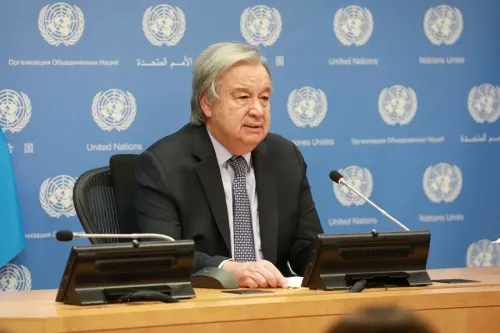
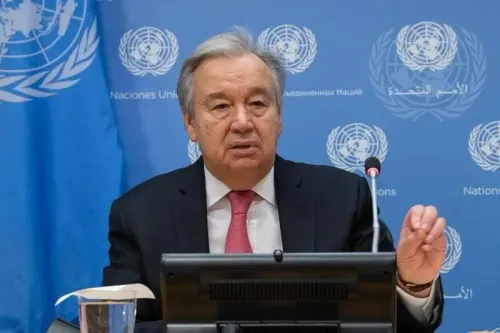
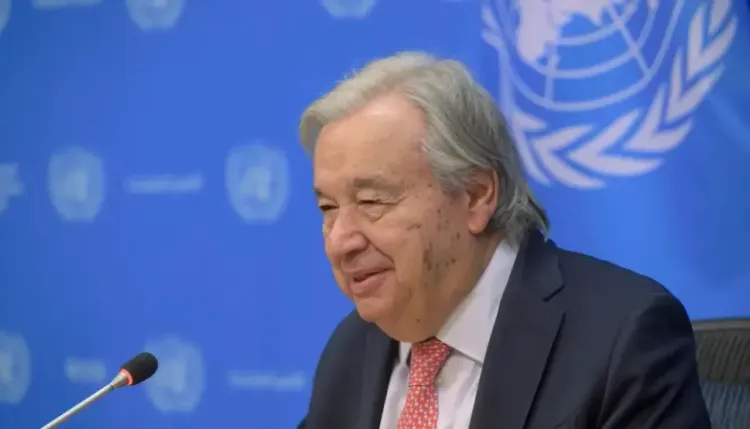
UN Secretary-General António Guterres on 17 September 2026 called de-escalation in the Middle East 'priority one, priority two and priority three' at a press conference before UNGA's high-level week.
Guterres demanded an immediate ceasefire in Ukraine , now in its fifth year of conflict, as a first step toward a 'just, lasting and comprehensive peace.' He called for full implementation of a Gaza peace plan with unrestricted humanitarian aid and an end to the 'creeping annexation of the West Bank .' Navigational rights through the Strait of Hormuz and Bab al-Mandab must be 'fully restored,' Guterres said, in line with international law.
Russian Foreign Minister Sergei Lavrov warned that Western troop deployment in Ukraine would be treated as a 'declaration of direct war,' while stating Moscow remains open to diplomacy.
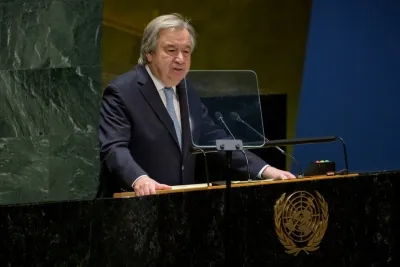
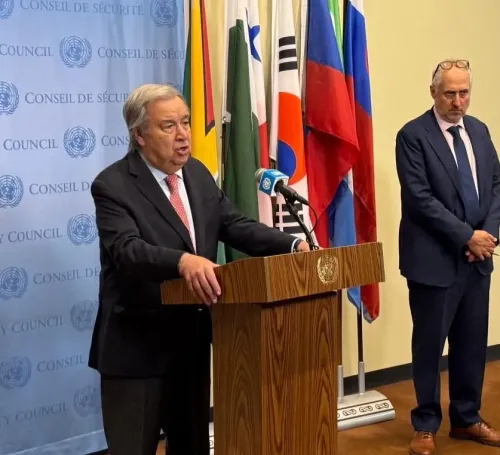
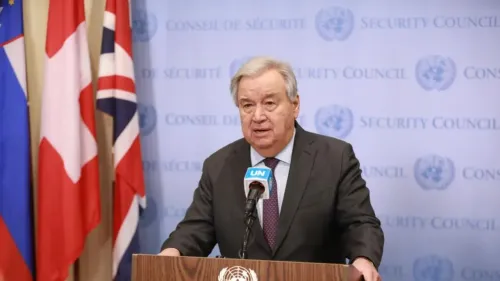
UN Secretary-General António Guterres on Wednesday, 17 September 2026, issued an urgent call for de-escalation across both the Middle East and Ukraine, speaking at a press conference ahead of the high-level week of the UN General Assembly (UNGA) in New York. His remarks came as global diplomacy faces mounting pressure with two of the world's most consequential conflicts showing no clear path to resolution.
Guterres on the Middle East
'At this crucial moment in the Middle East, de-escalation must be priority one, priority two and priority three,' Guterres said, calling on all parties to halt actions that endanger civilians and allow humanitarian operations to proceed without obstruction. He stressed that navigational rights and freedoms through the Strait of Hormuz and Bab al-Mandab must be 'fully restored and respected by all, in accordance with international law.'
On the question of Gaza, the Secretary-General said a peace plan must be implemented with unrestricted humanitarian access, and warned that the 'creeping annexation of the West Bank must stop.' He reaffirmed his long-standing position: 'There will be no peace in the Middle East without realising the two-state solution.'
Call for Ceasefire in Ukraine
Turning to the conflict in Ukraine, now in its fifth year, Guterres said it is time for an 'immediate ceasefire as a first step toward a just, lasting and comprehensive peace, in line with the UN Charter, international law and relevant UN resolutions.' He acknowledged that the war has caused immense civilian suffering, with cascading global consequences and, as he put it, 'no end in sight.'
This comes amid sustained international pressure on both Kyiv and Moscow to engage in dialogue, though substantive negotiations have remained elusive. Guterres pledged to continue pressing for de-escalation in direct contacts with world leaders.
Lavrov's Warning on Western Troops
Meanwhile, Russian Foreign Minister Sergei Lavrov issued a pointed warning at the International Festival of Youth in Yekaterinburg on Wednesday, stating that any deployment of Western troops on Ukrainian territory would be viewed by Russia as 'a declaration of direct war.' He added that such a conflict would be 'a completely different war, and it will be very short.'
Lavrov nonetheless indicated that Moscow remains open to a diplomatic settlement, including through a trilateral format that the United States had proposed. However, he maintained that any resolution must address what Russia considers the root causes of the conflict, including the protection of 'the rights of Russian people, their right to their native language and Orthodox faith.' He framed Russia's objectives as those 'formulated by President Vladimir Putin' and said achieving them would benefit stability across the 'entire Eurasian continent.'
What the UNGA High-Level Week Could Decide
The high-level segment of the General Assembly typically draws heads of state and government, and this year's edition arrives at a particularly fraught moment globally. Notably, Guterres's dual appeal signals that the UN Secretariat views both theatres — the Middle East and Ukraine — as interconnected crises demanding simultaneous diplomatic attention. With UNGA providing a rare convening moment for adversarial parties, observers will watch whether back-channel contacts translate into any shift in either conflict's trajectory.
The coming days will test whether Guterres's diplomatic urgency can catalyse any concrete movement, or whether the world body's limitations in enforcement leave these appeals as calls heard but not heeded.
Point of View
Not its binding authority. What is notable is the simultaneity: by linking Gaza, West Bank annexation, Hormuz-Mandab navigation, and the Ukraine ceasefire in a single press appearance, the Secretary-General is signalling that these are not isolated crises but a connected breakdown in the rules-based order. Lavrov's near-simultaneous warning about Western troops underlines the gap between diplomatic language in New York and ground-level posturing in Moscow — a gap that UNGA week rarely closes.
NationPress
17 Sept 2026
Frequently Asked Questions
What did UN Secretary-General Guterres say about the Middle East?
Guterres said de-escalation in the Middle East must be 'priority one, priority two and priority three,' urging all parties to protect civilians and allow humanitarian operations. He also called for the full implementation of a Gaza peace plan, an end to West Bank annexation, and the restoration of navigational rights through the Strait of Hormuz and Bab al-Mandab.
What did Guterres say about the Ukraine conflict?
Guterres called for an immediate ceasefire in Ukraine as a first step toward a comprehensive peace aligned with the UN Charter and international law. He noted the conflict is now in its fifth year with immense civilian suffering and no end in sight.
What warning did Russian Foreign Minister Lavrov issue?
Lavrov said that Russia would consider the deployment of Western troops on Ukrainian territory a declaration of direct war, describing any such conflict as 'a completely different war, and it will be very short.' He spoke at the International Festival of Youth in Yekaterinburg on Wednesday.
Is Russia open to negotiations on Ukraine?
Lavrov indicated that Moscow remains open to a diplomatic settlement, including in a trilateral format proposed by the United States. However, he stressed that any deal must address what Russia calls the root causes of the conflict, including objectives set at the outset of its military operation.
Why is the UN General Assembly high-level week significant this year?
The high-level week draws world leaders to New York and arrives at a moment when both the Middle East and Ukraine are in acute crisis, making it a rare convening opportunity for diplomatic back-channel contacts. Guterres used the pre-session press conference to place de-escalation at the top of the global agenda for the gathering.