US Fed launches AI task force to assess economic, policy impact
Synopsis
The US Federal Reserve has done something no major central bank has done before — created a formal AI task force to assess how the technology could reshape the economy and future monetary policy. With inflation above target for five years, rates now at 3.75–4%, and hyperscalers flooding capital markets, Fed Chair Kevin Warsh is signalling that AI is no longer a peripheral concern for monetary policymakers.
Key Takeaways
The US Federal Reserve established an AI task force on 17 September 2026 to study the technology's economic and monetary policy implications.
The task force is expected to report by end of 2026 ; membership, research scope, and publication plans were not disclosed.
The FOMC unanimously raised its benchmark rate by 0.25 percentage points to 3.75–4 per cent at the same meeting.
US inflation has remained above the Fed's 2 per cent PCE target for more than five years , according to Warsh.
Warsh cited a surge in hyperscaler capital expenditure as a key driver of rising US Treasury yields .
Warsh maintained the Fed does not need to damage employment to bring inflation back to target.
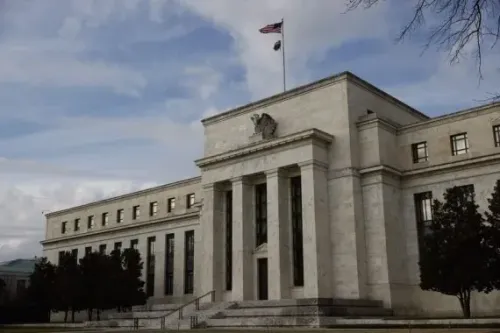
The US Federal Reserve has set up a dedicated task force to study how artificial intelligence could reshape the American economy and guide future monetary policy, with a report expected before the end of 2026, Fed Chair Kevin Warsh confirmed on 17 September 2026. The announcement places the central bank among the first major global monetary authorities to formally institutionalise AI scrutiny within its policy framework.
What Warsh Said
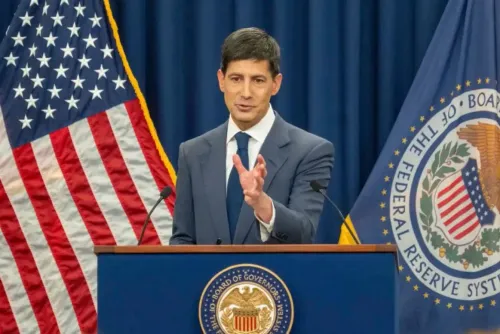
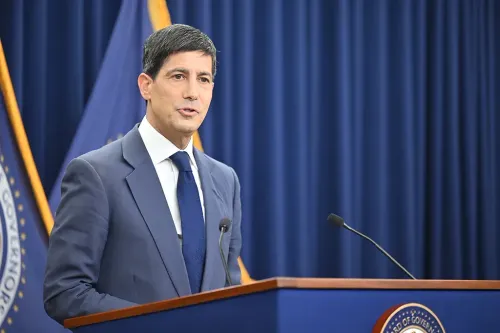
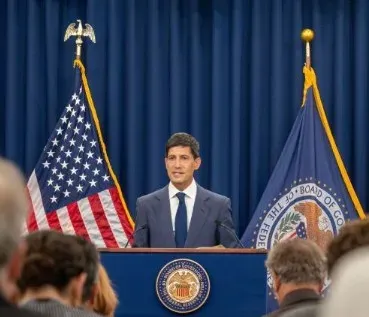
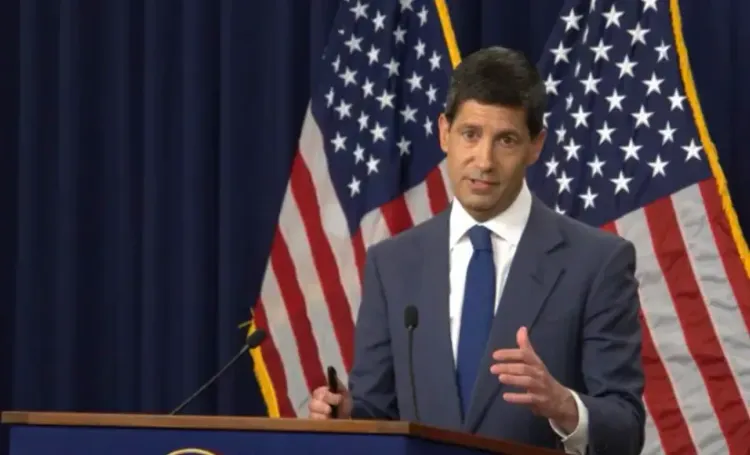
Speaking at a news conference following the Federal Open Market Committee (FOMC) meeting, Warsh said the Fed was examining AI's effects on both the demand and supply sides of the US economy. He framed the task force as a direct response to the technology's growing footprint in economic activity.
'I care so much, I think it's so important, that we established a task force that should report by the end of the year to help us think about the implications for our future policy conjecture,' Warsh said.
He was responding to questions about warnings from AI industry leaders regarding the risk of losing control of the technology and the potential for economic disruption. Warsh declined to directly assess those warnings, instead clarifying the Fed's boundaries: 'The policy decisions that are made about the risks and rewards, the challenges and opportunities, those are decisions made by other parts of the government.'
Rate Hike Backdrop
The AI task force announcement came alongside a significant monetary policy decision — the FOMC unanimously voted to raise its benchmark interest rate by a quarter of a percentage point, bringing it to a range of 3.75–4 per cent. Warsh described the broader US economy as resilient, citing strong domestic spending, robust productivity growth, and elevated capital investment.
He also flagged a surge in capital expenditure by large technology infrastructure operators — commonly referred to as hyperscalers — as a factor behind rising longer-term US Treasury yields. 'The surge in capital expenditures, which I referenced in my remarks, is real and the so-called hyperscalers are out in the market raising funding,' he said. He listed economic strength and geopolitical developments as two additional explanations for higher yields.
Inflation and Employment Context
The AI review arrives at a delicate moment for the Fed. Warsh acknowledged that inflation had remained above the Fed's 2 per cent target — measured by the annual change in the personal consumption expenditures (PCE) price index — for more than five years. The labour market, he said, was broadly consistent with full employment.
Asked whether AI-driven economic activity complicated the inflation fight, Warsh offered no separate assessment of the technology's direct effects. He did, however, assert that he did not believe the Fed needed to harm employment to bring inflation to target — a significant signal given ongoing market sensitivity to rate trajectory.
What Remains Unknown
Warsh provided no details on the task force's membership, the specific research questions it would pursue, or whether its findings would be made public. He offered no estimate of AI's contribution to economic growth or inflation, leaving markets and observers to await the year-end report for substantive guidance.
This comes amid a broader global conversation about AI's macroeconomic implications, with central banks and international institutions increasingly grappling with whether existing monetary frameworks are equipped to handle productivity shocks driven by transformative technology. The Fed's findings, when published, are expected to influence how other central banks — including the Reserve Bank of India (RBI) — frame their own AI-and-economy assessments.
Point of View
But the opacity around it — no members named, no research questions disclosed, no publication commitment — makes it hard to assess whether this is substantive institutional work or a holding response to political pressure about AI risks. More telling is the conjunction with a rate hike: the Fed is tightening into an AI-driven capital spending boom, and it does not yet have a framework to distinguish AI-fuelled productive capacity from inflationary demand. Until that distinction is credible, monetary policy is effectively flying partially blind on one of the biggest structural shifts in the US economy. For India, a Fed that is still working out AI's supply-side effects means the rate-cut timeline — already uncertain — becomes harder to read.
NationPress
17 Sept 2026
Frequently Asked Questions
What is the US Federal Reserve's AI task force?
It is a newly formed body within the US Federal Reserve, announced on 17 September 2026 by Chair Kevin Warsh, tasked with examining how artificial intelligence could affect the US economy and shape future monetary policy. Its findings are expected by the end of 2026.
Why did the Federal Reserve create an AI task force?
Warsh said the Fed wants to assess AI's implications for both the demand and supply sides of the economy, particularly as the technology becomes a more significant driver of capital investment and productivity. The move follows growing concern among AI industry leaders about the risks of losing control of the technology.
What interest rate decision did the FOMC make on 17 September 2026?
The Federal Open Market Committee unanimously voted to raise the benchmark interest rate by a quarter of a percentage point to a range of 3.75–4 per cent. The decision reflected the Fed's ongoing effort to bring inflation — above its 2 per cent target for over five years — back under control.
How does the Fed's AI review affect India?
The Fed's AI assessment has indirect but significant implications for India, as its monetary policy trajectory influences global capital flows, the rupee, and RBI rate decisions. Uncertainty about when the Fed might pivot on rates — compounded by the unresolved question of AI's inflationary or deflationary impact — complicates India's own macro outlook.