Trump backs Fed Chair Warsh, accuses board of political rate hikes
Synopsis
Trump publicly backed Fed Chair Kevin Warsh even as he accused the rest of the Fed board of hiking rates out of political spite — without evidence. The remarks, made at a North Carolina airport on the day of a rate decision, intensify the White House's most direct attack on central bank independence since Trump's return to power.
Key Takeaways
President Trump expressed confidence in Fed Chair Kevin Warsh on 16 September 2026 while alleging other board members raised rates to damage him politically.
Trump offered no evidence for the political-motive allegation.
He claimed he advised Warsh to 'vote with the board' as the majority could not be overcome.
Trump simultaneously said he wanted Warsh to act independently .
The FOMC sets rates collectively via 12 voting members ; the chair holds just one vote.
Trump cited over $21 trillion in US investment inflows but provided no breakdown or timeframe.
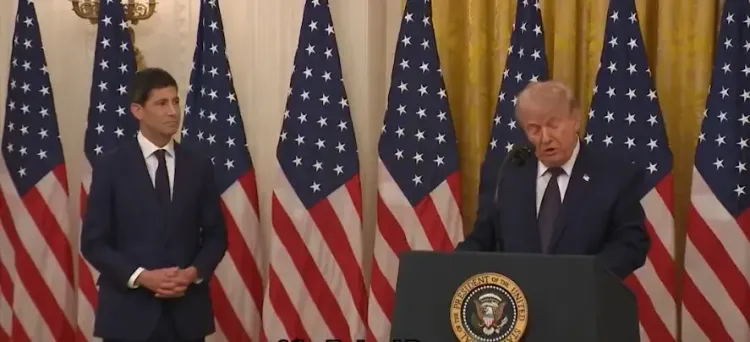
US President Donald Trump on 16 September 2026 expressed continued confidence in Federal Reserve Chair Kevin Warsh while levelling unsubstantiated allegations that other Fed policymakers were raising interest rates deliberately to damage him politically. Trump made the remarks to reporters at Charlotte Douglas International Airport in North Carolina, where he had arrived to campaign for Republican Michael Whatley.
What Trump Said
Speaking after the Fed's latest interest rate decision, Trump portrayed Warsh as a sympathetic figure hemmed in by an adversarial board. 'I do. I mean, I'm relying on Kevin, but he's got a very tough board. He's got a board that was put there by a lot of other people. And the interest rates are too high. They're not appropriate,' Trump said.
Trump claimed he had personally counselled Warsh to stop fighting the majority. 'I told Kevin, I said, you might as well vote with the board because it's just not going to matter. The board is very hostile. They're very political. They're doing the wrong thing. They're a bunch of politicians. They are people put on by politicians.'
Political Motive Alleged Without Evidence
When pressed by a reporter on whether the rate decision was linked to rising prices connected to the Iran conflict, Trump pivoted to a political accusation. 'They're raising the rates to make Trump do as bad as he can possibly do,' he said, offering no supporting evidence. He went on to claim the US economy was delivering record investment inflows of over $21 trillion, though he did not provide a breakdown or timeframe for the figure.
Notably, Trump simultaneously said he wanted Warsh to act independently. Asked whether Warsh had acted on the basis of their conversation, Trump rejected the suggestion. 'No, I don't think so. I think I want him to be independent, but my opinion, I'm very good at this stuff. Interest rates are too high,' he said.
How the Fed Actually Works
US monetary policy is set collectively through the Federal Open Market Committee (FOMC), which comprises the seven Federal Reserve governors, the New York Fed president, and four rotating regional Reserve Bank presidents. The chair casts one vote and cannot unilaterally dictate policy — a structural reality that directly contradicts Trump's framing of the chair as an isolated ally fighting a hostile bloc.
The Fed's own policy statement, the precise size of the rate change, and any official response to Trump's allegations were not made available in the material at hand.
Broader Economic Claims
Trump argued that the United States, by virtue of its credit strength, deserved the world's lowest interest rates. 'We should be paying the lowest interest rate anywhere in the world because we have the strongest credit,' he said. He also suggested that restructuring trade arrangements could help eliminate deficits and reduce national debt, though he did not outline a specific proposal or quantify the projected savings.
With Trump publicly pressuring the Fed on the same day as a rate decision, the friction between the White House and the central bank is set to remain a live fault line in US economic policy debates.
Point of View
He is laying a political foundation to deflect blame for any economic slowdown onto an institution that legally answers to Congress, not the White House. The allegation of politically motivated rate hikes, offered without evidence on the day of an FOMC decision, is not a new tactic — but the escalation is notable. Markets and central bankers abroad will read this as pressure, whatever Trump's stated intent.
NationPress
17 Sept 2026
Frequently Asked Questions
What did Trump say about the Federal Reserve on 16 September 2026?
Trump said he retained confidence in Fed Chair Kevin Warsh but accused the broader Fed board of raising interest rates deliberately to damage him politically, without providing any evidence. He made the remarks to reporters at Charlotte airport in North Carolina after the Fed announced its latest rate decision.
Does the Fed chair have the power to set interest rates alone?
No. US monetary policy is decided collectively by the Federal Open Market Committee, which has 12 voting members — including seven governors, the New York Fed president, and four rotating regional Fed presidents. The chair holds one vote and cannot override the committee majority.
Why did Trump say he told Warsh to 'vote with the board'?
Trump said he advised Warsh to stop opposing the majority because the votes simply were not there to prevail. He portrayed the rest of the board as politically hostile, though this characterisation contradicts the FOMC's legally mandated independence from political direction.
Did Trump say he wanted the Fed to be independent?
Yes, in the same remarks Trump said he wanted Warsh to act independently and denied that Warsh's decision was influenced by their conversation. This stood in apparent tension with his broader criticism of the board and his claim that they were acting out of political motivation.
What was Trump's claim about US investment inflows?
Trump claimed that over $21 trillion was being invested in the United States — describing it as five times more than ever before. He did not provide a source, timeframe, or breakdown for the figure during the exchange.