Fed chief Warsh: AI will create jobs, boost US productivity long-term
Synopsis
Fed Chairman Kevin Warsh went before the Senate Banking Committee and made his most direct case yet that AI is not a job-killer — it is a long-term job creator. With high-tech investment up 25% in Q1 and the Fed standing up a dedicated AI task force, the world's most powerful central bank is now formally in the business of tracking how artificial intelligence reshapes prices, wages, and employment.
Key Takeaways
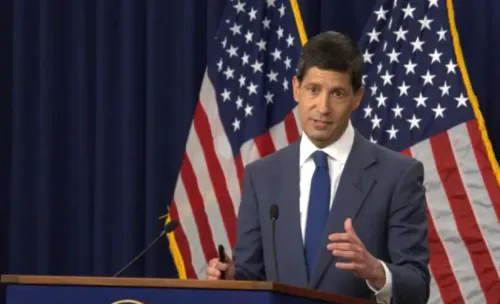
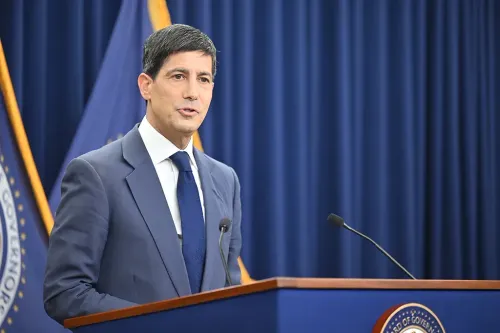
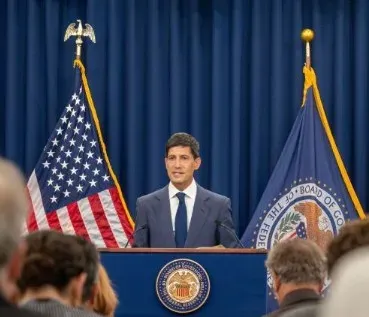
Federal Reserve Chairman Kevin Warsh testified before the Senate Banking Committee on 16 July , his first semiannual monetary policy hearing since taking office.
Warsh called AI 'the most consequential change to the US and global economy' in his lifetime and predicted it will be a long-term job creator .
US high-tech investment grew approximately 25 per cent in the first quarter , driven by AI infrastructure, data centres, and related equipment.
The Federal Reserve has launched one of five internal task forces to study AI's impact on productivity, employment, and inflation, with findings expected as early as September .
Warsh acknowledged short-term disruption but said he could offer 'no guarantee or comfort' to workers whose jobs may be at risk during the transition.
Federal Reserve Chairman Kevin Warsh told the Senate Banking Committee on Wednesday, 16 July that the United States is experiencing the largest wave of business investment in a generation, fuelled primarily by artificial intelligence (AI), and predicted the technology would ultimately create jobs, lift productivity, and reinforce the American economy — even as it causes short-term disruption.
Warsh's Opening Case for AI
Appearing before the committee for his first semiannual monetary policy hearing since taking office seven weeks ago, Warsh positioned AI as a structural economic opportunity rather than a labour market threat. 'I can't think of a more consequential change to the US and global economy in my adult lifetime than the surge of investment and the potential in and around AI,' he told lawmakers.
He argued that AI's impact would touch both pillars of the Fed's dual mandate — stable prices and maximum employment — making it a central concern for monetary policymakers going forward.
The Investment Boom Driving the Economy
Warsh identified business investment in AI infrastructure, data centres, and related equipment as the most striking feature of the current US economy. He noted that high-tech investment grew roughly 25 per cent in the first quarter, driven by surging demand for AI-related hardware and software.
'The rapid pace of CapEx reflects in large part the construction of infrastructure, including in and around AI and the immense demand for AI-related equipment and software,' he said. 'What is now called AI investment will soon just be called investment.'
On Jobs: Disruption Now, Creation Later
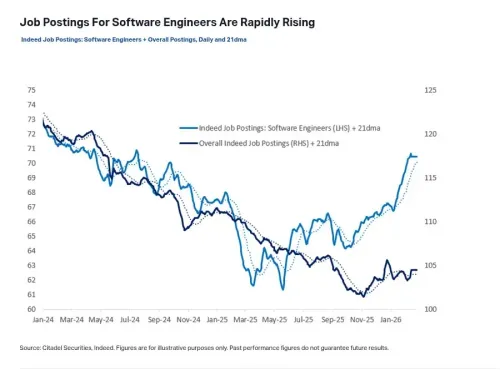
Warsh acknowledged that AI would be disruptive in the near term but firmly rejected the notion of catastrophic, permanent job destruction. 'My best guess is that this will improve American productivity and will improve the real wages, and will help us on full employment,' he said, while conceding that the transition period could place some workers' livelihoods at risk.
When pressed on whether AI could eliminate jobs at a catastrophic scale, Warsh replied: 'Over the long term absolutely not. I believe that this is a long-term job creator. But will it be disruptive, and will some people have their jobs at jeopardy because of the new technologies? On that, I can't offer any sort of guarantee or comfort.'
Fed's Internal AI Task Force
Warsh revealed that the Federal Reserve has established one of five new internal task forces specifically to study AI's effects on productivity, employment, and inflation. The groups have been given six months to deliver recommendations, with early findings potentially reaching policymakers as soon as September.
He was careful to clarify that the task force serves an advisory function. 'We haven't outsourced this decision,' he said. 'You're talking to one of the deciders.' The Federal Open Market Committee (FOMC) will retain final authority over monetary policy after reviewing the task force's input.
US Positioned to Lead the Global AI Race
Warsh expressed confidence that the United States holds a structural advantage in the global AI competition. 'I think the United States is extremely well positioned to be at the cutting edge and extract more productivity than any other country in the world,' he said. 'The United States will be a winner.'
The broader AI investment boom — with technology companies committing hundreds of billions of dollars to data centres, semiconductor manufacturing, and advanced computing — has become a key driver of US economic growth, while simultaneously raising questions about electricity demand, labour market disruption, and inflationary pressure. How the Fed navigates those competing forces will be closely watched in the months ahead.
Point of View
The Fed's dual mandate of maximum employment and price stability could pull in opposite directions simultaneously. Warsh's 'the US will be a winner' framing also sidesteps the distributional question — which Americans win, and on what timeline.
NationPress
15 Oct 2026
Frequently Asked Questions
What did Fed Chair Kevin Warsh say about AI and jobs?
Warsh said he believes AI is a long-term job creator that will improve American productivity and real wages, though he acknowledged it will be disruptive in the short term. He told the Senate Banking Committee on 16 July that he could not offer 'any sort of guarantee or comfort' to workers whose jobs may be at risk during the transition.
Why is the Federal Reserve setting up an AI task force?
The Federal Reserve has established one of five new internal task forces to study how AI affects productivity, employment, and inflation — the core variables that drive monetary policy. Early findings are expected to reach policymakers as soon as September, with full recommendations due within six months.
How fast is AI-related investment growing in the US?
According to Warsh's testimony, high-tech investment in the United States grew approximately 25 per cent in the first quarter, driven by spending on AI infrastructure, data centres, and related equipment and software. He described this as the biggest wave of business investment in a generation.
Does the Fed control monetary policy or does the AI task force?
The Federal Open Market Committee (FOMC) retains full authority over monetary policy. Warsh clarified that the AI task force is advisory, saying 'We haven't outsourced this decision' and describing himself as 'one of the deciders.' The task force will inform, not replace, FOMC deliberations.
How does AI affect the Federal Reserve's dual mandate?
Warsh said AI will affect both sides of the Fed's dual mandate — stable prices and maximum employment. On employment, it poses short-term disruption risks but long-term creation potential. On prices, the productivity gains AI could deliver may help contain inflation over time, though the investment boom itself raises questions about electricity demand and cost pressures.