KOSPI rises 0.1% as Seoul stocks shrug off first Fed rate hike since 2023
Synopsis
Seoul stocks opened higher even as Wall Street fell on the Fed's first rate hike in over three years — lifting rates to 3.75–4%. The resilience was underpinned by a separate data point: foreign investors returned as net buyers of South Korean equities in August for the first time since January, snapping a seven-month selling streak worth tens of billions of dollars.
Key Takeaways
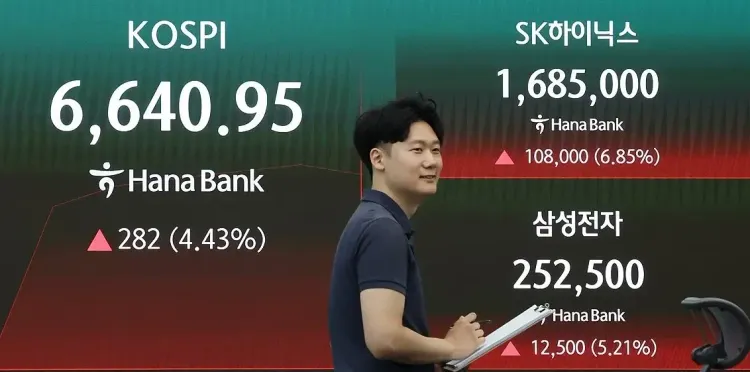
KOSPI opened up 6.49 points at 6,724.46 on 17 September , despite overnight Wall Street losses.
The US Federal Reserve raised its base rate by 0.25 percentage points to a range of 3.75%–4% — its first hike since 2023 .
Samsung Electronics gained 0.3% ; SK Hynix fell 0.8% ; KB Financial rose 1.47% .
Foreign investors were net buyers of South Korean stocks in August , purchasing a net $0.4 billion after selling $20.7 billion in July.
Foreign bond outflows accelerated to $4.53 billion in August, up from $0.96 billion the previous month.
The Korean won stood at 1,374.3 won per dollar in early Thursday trade, up 2.7 won from the prior session.
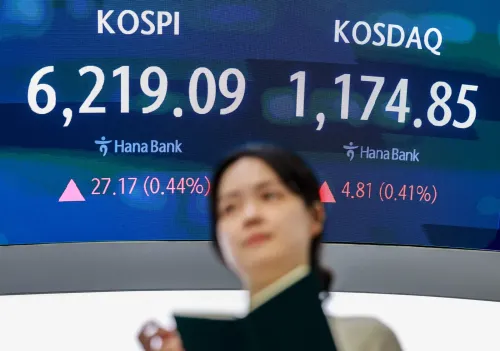
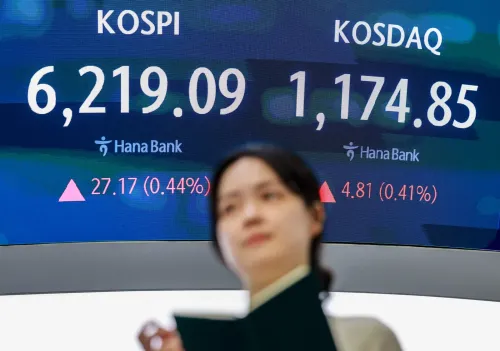
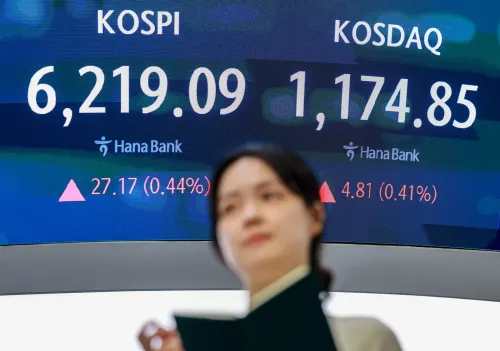
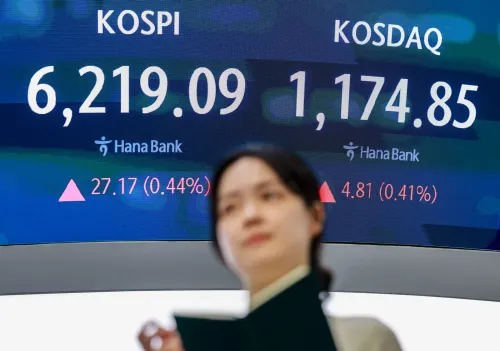
The Korea Composite Stock Price Index (KOSPI) opened 6.49 points higher at 6,724.46 on Thursday, 17 September, as tech-sector gains helped Seoul stocks defy the US Federal Reserve's first interest rate increase in over three years. The early resilience came even as Wall Street indices closed in the red overnight following the Fed's decision.
The Fed's Rate Move and Market Reaction
The Federal Reserve raised its benchmark rate by a quarter percentage point, lifting it to a range of 3.75% to 4% — the first such hike since 2023 — in a move aimed at curbing persistent inflationary pressures. Major US indices fell in response, reflecting investor unease over tighter monetary conditions. Despite that overseas pressure, Seoul's opening session held firm.
Han Ji-young, an analyst at Kiwoom Securities, cautioned that the calm may be short-lived. 'Local stocks are expected to suffer volatility, as investors digest the hawkish Federal Open Market Committee meeting,' she said.
Stock Movers in Early Trade
Among blue-chip names, market heavyweight Samsung Electronics added 0.3%, partially offset by a 0.8% decline at rival chipmaker SK Hynix. LG Energy Solutions, the battery manufacturer, dipped 0.82%. On the gainers' side, financial group KB Financial rose 1.47%, while defence conglomerate Hanwha Aerospace advanced 1.14%. The Korean won traded at 1,374.3 won per US dollar as of 9:14 am, strengthening by 2.7 won from the previous session's close.
Foreign Investors Return as Net Buyers
Separately, data released on Thursday by the Bank of Korea (BOK) showed that foreign investors turned net buyers of South Korean equities in August, ending a seven-month selling streak. Offshore investors purchased a net US$0.4 billion worth of local stocks last month, reversing a massive net sell-off of $20.7 billion in July.
The BOK attributed the turnaround to improved sentiment, driven by strong earnings from major US technology companies, even as Middle East tensions persisted and concerns over excessive investment in artificial intelligence (AI) infrastructure lingered. Foreign investors had been consistent net sellers of South Korean stocks since January this year.
Bond Outflows Persist Despite Equity Reversal
The equity rebound was not mirrored in the bond market. Foreign investors sold off $4.53 billion worth of South Korean bonds in August, accelerating from a $0.96 billion net sell-off the previous month. The won closed August at 1,368.6 won per dollar, firmer than the 1,424.0 won recorded at the end of July, reflecting some easing in currency pressure even as bond outflows continued.
With the Fed now firmly in rate-hiking mode, markets will be watching whether foreign equity inflows into South Korea can hold — or whether tighter US monetary policy eventually overwhelms the tech-earnings tailwind that drew buyers back in August.
Point of View
And South Korean markets — heavily weighted toward export-driven tech — are acutely exposed to US demand slowdown risk. The August foreign equity inflow of just $0.4 billion, against July's $20.7 billion outflow, is a tentative reversal at best. Bond outflows accelerating to $4.53 billion in the same month suggests offshore capital is not yet comfortable with South Korean fixed income, and a hawkish Fed could easily reignite the seven-month selling streak that only just ended.
NationPress
17 Sept 2026
Frequently Asked Questions
Why did Seoul stocks rise despite the Fed rate hike?
The KOSPI opened higher on 17 September because gains in tech stocks — led by Samsung Electronics — offset the negative signal from the Fed's rate increase. Analysts warned that volatility could follow as investors fully digest the hawkish Federal Open Market Committee outcome.
What did the US Federal Reserve decide on interest rates?
The Fed raised its benchmark rate by a quarter percentage point to a range of 3.75% to 4%, marking its first rate hike since 2023. The move was aimed at combating persistent inflationary pressures and triggered a decline in major Wall Street indices overnight.
Did foreign investors buy or sell South Korean stocks in August?
Foreign investors turned net buyers of South Korean equities in August, purchasing a net $0.4 billion worth of local stocks after a $20.7 billion net sell-off in July. This ended a seven-month streak of net selling that had run from January through July.
How did Samsung Electronics and SK Hynix perform in early trade?
Samsung Electronics rose 0.3% in early Thursday trade, while rival chipmaker SK Hynix fell 0.8%. LG Energy Solutions dipped 0.82%, while KB Financial gained 1.47% and Hanwha Aerospace rose 1.14%.
What happened to South Korean bond flows in August?
Foreign investors sold $4.53 billion worth of South Korean bonds in August, accelerating from a $0.96 billion net sell-off the previous month. This suggests that while equity sentiment improved, appetite for South Korean fixed income remained weak.