KOSPI gains 81 points as Fed rate-hike fears ease, Samsung leads rally
Synopsis
South Korea's KOSPI jumped over 81 points on Friday after Fed Governor Christopher Waller signalled caution on further rate hikes — a relief rally amplified by a 39th straight month of current account surplus and $2 billion in fresh US investment commitments into South Korea's semiconductor and advanced materials sectors.
Key Takeaways
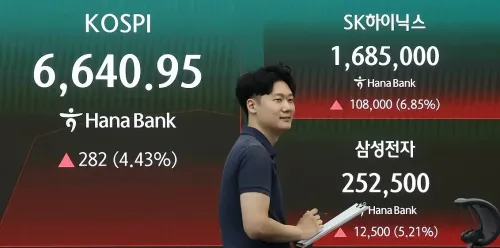
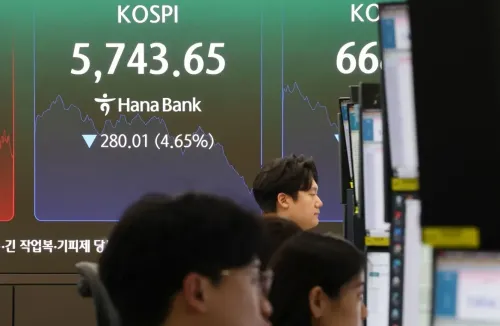
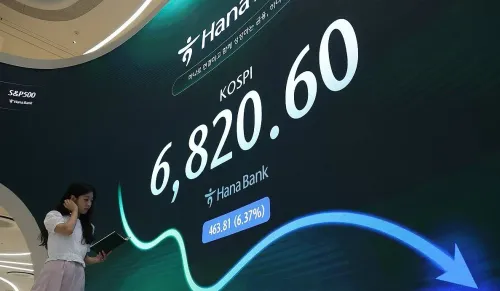
KOSPI was up 81.74 points at 6,661.22 as of 11:20 am on 4 September .
Fed Governor Christopher Waller signalled caution on further rate hikes, reviving risk appetite.
Samsung Electronics gained 1.8% ; SK Hynix advanced 2.57% .
South Korea logged its 39th consecutive month of current account surplus in July, driven by AI-related exports.
Four US firms — including Air Products , Axcelis , and Corning — committed a combined 2.8 trillion won ($2 billion) to South Korea's semiconductor and advanced materials sectors.
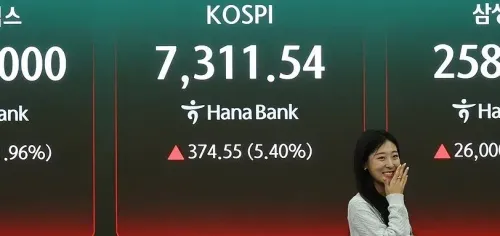
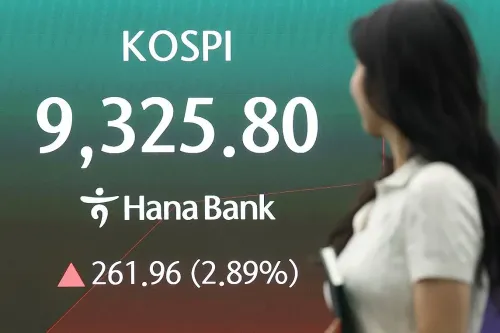
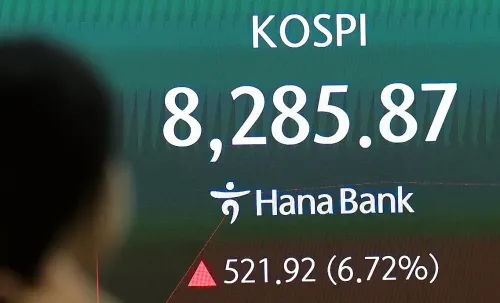
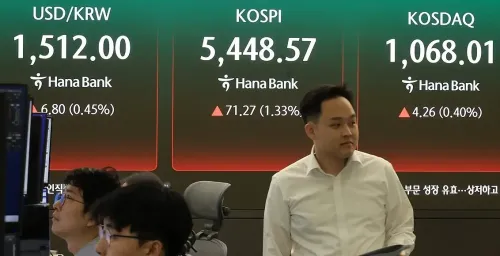
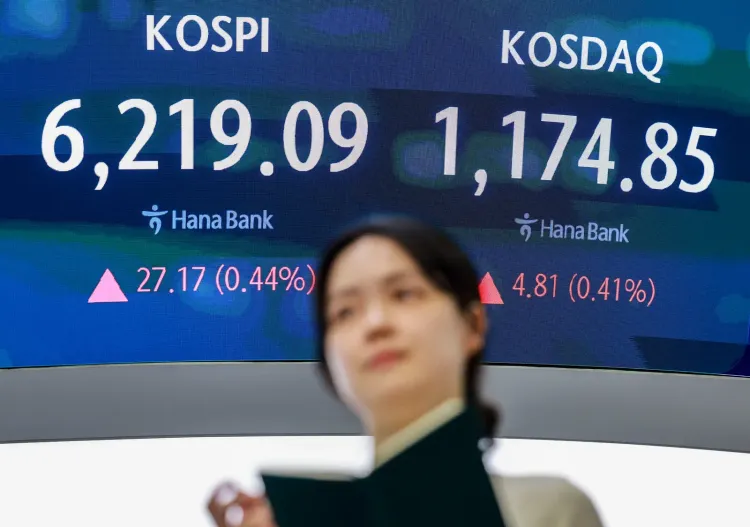
The Korea Composite Stock Price Index (KOSPI) was trading 81.74 points higher at 6,661.22 as of 11:20 am local time on Friday, 4 September, as remarks from a US Federal Reserve governor tempered fears of additional interest rate increases and revived risk appetite across Asian markets.
What Drove the Rally
Federal Reserve Governor Christopher Waller signalled a cautious stance on further rate hikes, offering markets a degree of reassurance that the tightening cycle may be nearing its end. The comments were enough to shift sentiment, pushing the benchmark index firmly into positive territory by late Friday morning.
Adding to the optimistic mood, South Korea recorded its 39th consecutive month of current account surplus in July, according to data released by the Bank of Korea. Strong exports, driven in large part by the global artificial intelligence (AI) boom, underpinned the surplus.
Top Gainers and Laggards
Semiconductor stocks led the advance. Chip giant Samsung Electronics climbed 1.8%, while industry rival SK Hynix advanced 2.57%. Most large-cap names were in positive territory by mid-morning.
However, not all sectors participated in the rally. Top carmaker Hyundai Motor slid 0.26%, battery maker LG Energy Solutions fell 1.64%, and financial firm KB Financial dipped 2.53%. The Korean won was quoted at 1,358.1 won against the US dollar as of 11:20 am, down 0.6 won from the previous session's close.
US Firms Pledge ₩2.8 Trillion in South Korea Investment
Separately, four US companies have committed to investing a combined 2.8 trillion won (approximately $2 billion) in South Korea across the semiconductor, advanced materials, and energy sectors, according to the country's industry ministry.
The Ministry of Trade, Industry and Resources announced the investment commitments at a ceremony co-hosted by the Korea Trade-Investment Promotion Agency (KOTRA) in Washington on 3 September, attended by Industry Minister Kim Jung-kwan.
Which Companies Are Investing and Where
Air Products, a US industrial gases supplier, plans to expand its semiconductor gas production facilities in Pyeongtaek, south of Seoul. Chip equipment maker Axcelis intends to scale up production of ion implantation systems in South Korea, reinforcing the country's role as an export hub for the Asia-Pacific market.
Specialty materials company Corning will strengthen its manufacturing capabilities and invest in equipment for advanced materials used in next-generation mobile devices and semiconductors. The fourth company was not individually named in the ministry's statement.
The investment pledges arrive as South Korea intensifies efforts to deepen its semiconductor supply chain ties with the United States, and come days after the KOSPI's AI-driven export momentum showed up in the July current account data. Whether the inflows translate into on-ground capacity expansion will be closely watched in the months ahead.
Point of View
However, is the $2 billion US investment commitment: it reflects a deliberate effort by Washington-aligned firms to deepen semiconductor supply chain exposure in South Korea, a strategic hedge against China-linked risk. South Korea's 39-month surplus streak, powered by AI chip demand, gives it rare negotiating leverage in that dynamic. The risk is complacency — if AI capex cycles turn, both the surplus and the foreign investment narrative could deflate quickly.
NationPress
19 Oct 2026
Frequently Asked Questions
Why did the KOSPI rise on 4 September?
The KOSPI gained 81.74 points to 6,661.22 after Federal Reserve Governor Christopher Waller signalled a cautious stance on further interest rate hikes, easing investor concerns and reviving risk appetite. South Korea's 39th consecutive month of current account surplus also supported sentiment.
Which stocks gained and which fell on the KOSPI?
Samsung Electronics rose 1.8% and SK Hynix advanced 2.57%, leading the gains. On the losing side, KB Financial fell 2.53%, LG Energy Solutions dropped 1.64%, and Hyundai Motor slid 0.26%.
What is driving South Korea's current account surplus?
South Korea's current account remained in surplus for the 39th straight month in July, according to Bank of Korea data, driven largely by strong exports linked to global demand for artificial intelligence-related semiconductor products.
Which US companies pledged to invest in South Korea, and in what sectors?
Four US companies committed a combined 2.8 trillion won (approximately $2 billion) in South Korea. Air Products will expand semiconductor gas facilities in Pyeongtaek; Axcelis will scale up ion implantation equipment production; and Corning will invest in advanced materials for next-generation mobile devices and semiconductors. The investments span semiconductor, advanced materials, and energy sectors.
What was the Korean won's exchange rate on 4 September?
The Korean won was quoted at 1,358.1 won per US dollar as of 11:20 am on 4 September, down 0.6 won from the previous session's close.