Seoul KOSPI hits record 8,896 despite hawkish Fed rate hike signal
Synopsis
Seoul's KOSPI hit a fresh record at 8,896.98 on Thursday even as Wall Street fell on Fed Chair Kevin Warsh's rate-hike hint and US-Iran deal ambiguity. With Samsung down 4.3% and SK Hynix up 3.29%, large-caps are diverging sharply — and analysts warn the five-session rally is running hot, even if the fundamentals still justify the direction.
Key Takeaways
The KOSPI opened at a record 8,896.98 on 18 June , up 32.74 points (0.37%) as of 9:18 am .
Fed Chair Kevin Warsh signalled a possible rate hike this year after a fourth consecutive freeze at 3.5%–3.75% .
Samsung Electronics fell 4.3% ; rival SK Hynix gained 3.29% .
Analyst Han Ji-young of Kiwoom Securities flagged short-term correction risk after five straight sessions of gains.
The Korean won weakened to 1,524.2 won per US dollar, down 10.8 won on the day.
President Donald Trump released a US-Iran memorandum of understanding but stressed it is not a final deal.
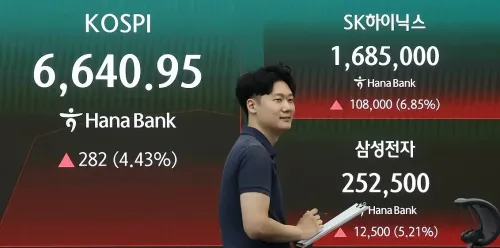
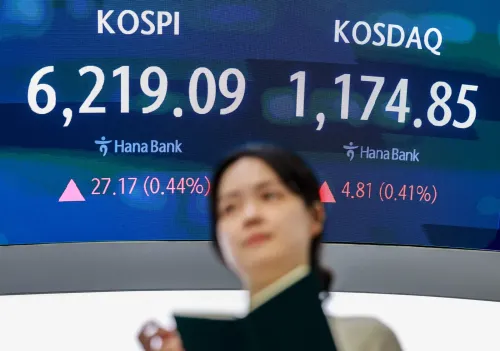
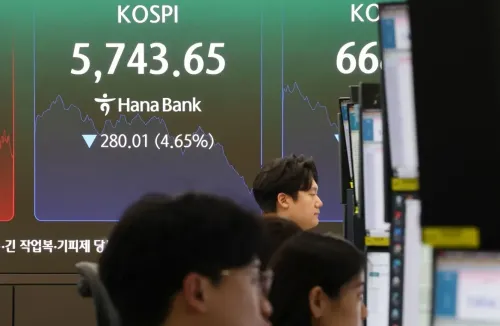
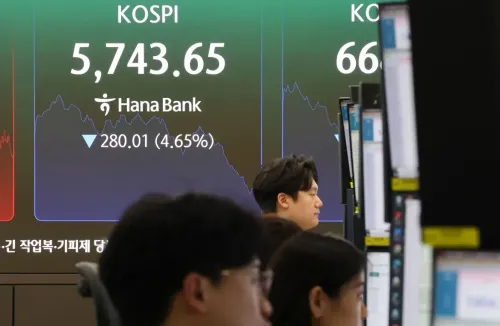
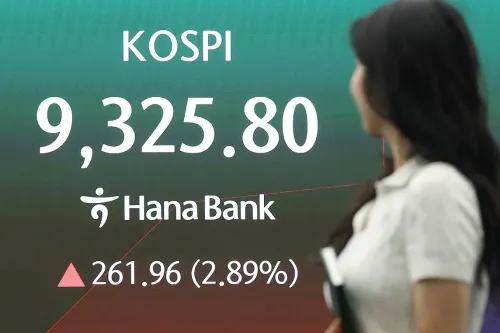
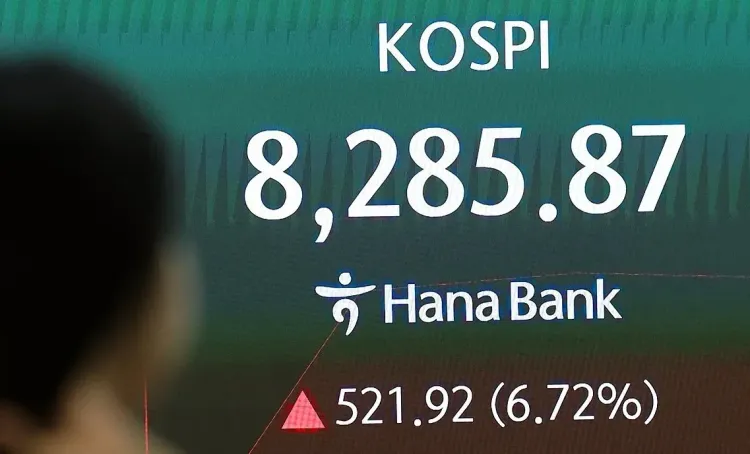
The Korea Composite Stock Price Index (KOSPI) opened at a fresh record high on Thursday, 18 June, climbing 32.74 points, or 0.37 percent, to 8,896.98 as of 9:18 am local time — defying overnight losses on Wall Street triggered by a hawkish signal from the US Federal Reserve and lingering uncertainty around a US-Iran peace agreement.
Why Seoul Surged Against the Grain
The KOSPI's advance came even as major US indices closed lower after Fed Chair Kevin Warsh hinted at a possible rate hike later this year to stabilise inflation. The two-day Federal Open Market Committee (FOMC) meeting — the first under Warsh's leadership — concluded with a fourth consecutive rate freeze, holding the benchmark range at 3.5 percent to 3.75 percent. Despite the freeze, Warsh's forward guidance rattled global markets, with major US technology stocks including Microsoft, Apple, and Alphabet all closing in the red overnight.
Analyst View: Correction Risk, but Fundamentals Hold
Han Ji-young, an analyst at Kiwoom Securities, cautioned that the KOSPI could face short-term correction pressure following a rapid rise across the past five consecutive sessions. However, Han was measured in her assessment. 'But the issue is merely the matter of pace, as the current market is backed by valuation appeal and profit momentum,' she said. The broader read from Seoul's trading community is that the rally has legs, even if the pace needs to moderate.
Large-Cap Stocks Trade Mixed
Among top-cap shares, Samsung Electronics slipped 4.3 percent, while semiconductor rival SK Hynix gained 3.29 percent. Automaker Hyundai Motor fell 1.78 percent and battery manufacturer LG Energy Solution dipped 1.92 percent. Defence conglomerate Hanwha Aerospace bucked the mixed trend, rising 0.41 percent. The Korean won weakened, trading at 1,524.2 won against the US dollar, down 10.8 won from the previous session.
US-Iran Deal Adds to Market Uncertainty
On the geopolitical front, the Trump administration released a memorandum of understanding with Iran, but President Donald Trump underscored that the agreement was not a final deal. Trump warned that the United States could resume attacks if 'they don't behave,' adding a layer of uncertainty that weighed on global sentiment even as Seoul traders chose to focus on domestic fundamentals.
What to Watch Next
Markets will track further Fed commentary for clearer signals on the timing of any rate hike, as well as developments in the US-Iran negotiations. Any deterioration on either front could test the KOSPI's resilience, particularly if the five-session rally attracts profit-booking at elevated levels.
Point of View
Not broad-based confidence. Warsh's hawkish tilt is a structural overhang that markets are currently discounting; if a rate hike materialises sooner than expected, the KOSPI's five-session run could unwind sharply. The US-Iran MOU adds geopolitical fog that Seoul is, for now, choosing to ignore — a bet that may not age well.
NationPress
18 Sept 2026
Frequently Asked Questions
Why did the KOSPI hit a record high on 18 June despite Wall Street losses?
The KOSPI rose 0.37% to a record 8,896.98 on 18 June, driven by domestic valuation appeal and profit momentum, even as Wall Street fell on hawkish signals from Fed Chair Kevin Warsh. Analysts at Kiwoom Securities noted that South Korean equities were supported by strong fundamentals independent of the overnight US sell-off.
What did Fed Chair Kevin Warsh signal about US interest rates?
Warsh hinted at a possible rate hike later in 2025 to stabilise inflation, following a fourth consecutive freeze that held the benchmark rate at 3.5%–3.75%. The two-day FOMC meeting was the first under his leadership, and his forward guidance rattled global markets.
How did individual stocks perform on the KOSPI on 18 June?
Large-cap performance was mixed: Samsung Electronics fell 4.3%, Hyundai Motor dropped 1.78%, and LG Energy Solution dipped 1.92%, while SK Hynix gained 3.29% and Hanwha Aerospace rose 0.41%.
What is the status of the US-Iran deal and how did it affect markets?
The Trump administration released a memorandum of understanding with Iran, but President Trump clarified it was not a final deal and warned the US could resume attacks if Iran did not comply. The ambiguity added to global uncertainty and weighed on overnight Wall Street sentiment.
Is the KOSPI rally at risk of a correction?
According to Kiwoom Securities analyst Han Ji-young, the KOSPI could face short-term correction pressure after five consecutive sessions of gains. She noted, however, that 'the issue is merely the matter of pace,' with underlying valuation and profit momentum still supportive of the market's direction.