UN Women condemns Taliban's Decree 18, warns of child marriage risk in Afghanistan
Synopsis
The Taliban's Decree 18, gazetted on 14 May 2026, sets no minimum marriage age and makes it harder for women to seek separation — a direct reversal of pre-2021 Afghan law. UN Women's Special Representative Susan Ferguson says it risks normalising child marriage. With Afghanistan nearing five years under Taliban rule, the decree has drawn condemnation from the UK's Afghanistan envoy and British lawmakers on X.
Key Takeaways
The Taliban's Ministry of Justice gazetted Decree No.
18 on 14 May 2026 , setting conditions for spousal separation.
The decree sets no minimum age of marriage , reversing pre-2021 Afghan laws that criminalised forced and child marriage.
UN Women Special Representative Susan Ferguson warned the decree risks normalising child marriage and imposes unequal legal barriers on women seeking separation.
UK Special Envoy Richard Lindsay and lawmaker Hamish Falconer both condemned the decree on X , calling for it to be rescinded.
The decree comes as Afghanistan approaches five years since the Taliban takeover in 2021.
UN Women has warned that a new family law decree issued by the Taliban authorities in Afghanistan on 14 May 2026 represents a serious regression in the rights and safety of Afghan women and girls, raising alarm that it could normalise child marriage and erect higher legal barriers for women seeking to leave unwanted marriages. The criticism comes as Afghanistan approaches five years since the Taliban's return to power.
What Decree 18 Says
Decree No. 18, gazetted by the Taliban's Ministry of Justice on 14 May 2026, sets out the conditions under which women may petition for judicial separation from a spouse. Crucially, the decree sets no minimum age of marriage. Instead, it outlines how a child marriage may be invalidated, or how a child forced into marriage could seek annulment after reaching puberty — a provision that, according to UN Women, implicitly permits child marriage in the first place.
Prior to the 2021 Taliban takeover, Afghan law established a minimum age of marriage and criminalised both forced and child marriage. Decree 18 marks a clear break from those protections, critics say.
UN Women's Assessment
Susan Ferguson, UN Women's Special Representative in Afghanistan, said in an official statement that the decree raises 'serious concerns around child marriage and women's consent.' She noted that the law imposes more complex legal barriers on women than on men when seeking separation, including requirements for multiple witness testimonies to support a petition.
'In some cases, a husband can override his wife's separation claim through a statement or withholding consent,' Ferguson said. She stressed that Afghan women and girls are entitled to 'dignity, safety, freedom of movement and participation in public life,' and that legal frameworks must ensure 'meaningful access to justice without discrimination.'
UN Women called on the Taliban authorities to align all laws and policies with Afghanistan's commitments under international human rights treaties and conventions.
International Condemnation
Richard Lindsay, the United Kingdom's Special Envoy for Afghanistan, echoed those concerns on X, describing Decree 18 as 'yet another oppressive measure that must be rescinded.' He said he shared the concerns raised by the United Nations Assistance Mission in Afghanistan (UNAMA) and British lawmaker Hamish Falconer.
Falconer also posted on X: 'I'm appalled by reports of new Taliban laws permitting child marriages in Afghanistan. Girls should be protected, not forced into harm. Child marriage is always and everywhere a breach of basic human rights.'
Broader Context
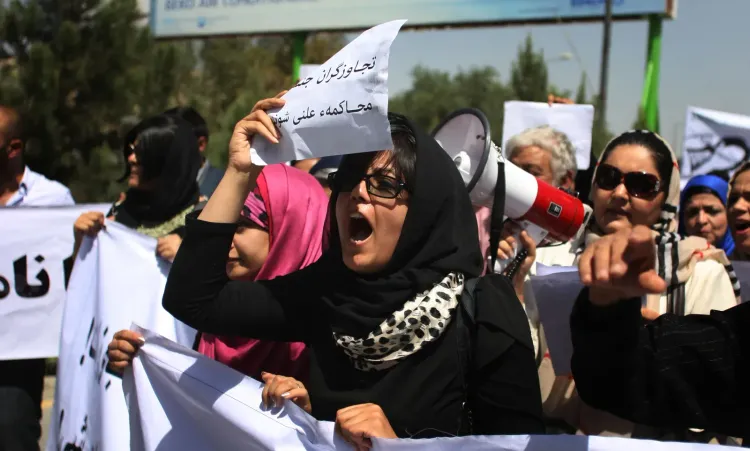
The decree is the latest in a series of Taliban edicts that have progressively curtailed Afghan women's rights since August 2021 — from bans on secondary and university education to restrictions on employment and freedom of movement. Rights groups argue that each successive measure deepens the structural exclusion of women from Afghan public and civic life. This comes amid ongoing international debate over whether diplomatic engagement or isolation is a more effective lever for influencing Taliban policy.
With the five-year mark of the Taliban's return approaching, pressure on the international community to respond more forcefully to the erosion of women's rights in Afghanistan is expected to intensify.
Point of View
Effectively lending legal cover to child marriage. The international community's response — strongly worded statements and X posts — has so far done little to alter Taliban behaviour, raising the question of whether the current diplomatic posture is adequate. As the five-year mark approaches, the gap between international condemnation and on-the-ground accountability in Afghanistan has never been wider.
NationPress
24 Sept 2026
Frequently Asked Questions
What is Taliban Decree 18 in Afghanistan?
Decree No. 18 is a family law regulation gazetted by the Taliban's Ministry of Justice on 14 May 2026, which sets out the conditions under which women may petition for judicial separation from a spouse. Critically, it sets no minimum age of marriage and implies that child marriages are permissible, reversing protections that existed under pre-2021 Afghan law.
Why is UN Women concerned about the Taliban's new family law?
UN Women warns that Decree 18 risks normalising child marriage by failing to set a minimum marriage age, and makes it harder for women to leave unwanted marriages by requiring multiple witness testimonies and allowing husbands to override separation claims. The organisation says it marks a serious setback for Afghan women's rights and safety.
How does Decree 18 differ from Afghanistan's previous laws on marriage?
Before the Taliban takeover in 2021, Afghan law set a minimum age of marriage and criminalised both forced and child marriage. Decree 18 removes those protections entirely, instead only outlining how a child marriage could be invalidated after the fact — a reversal that rights groups say legitimises the practice.
Who has condemned the Taliban's Decree 18?
UN Women Special Representative Susan Ferguson issued a formal statement condemning the decree. UK Special Envoy for Afghanistan Richard Lindsay and British lawmaker Hamish Falconer both posted condemnations on X, with Falconer calling child marriage 'always and everywhere a breach of basic human rights.' The UN Assistance Mission in Afghanistan (UNAMA) also raised concerns.
What has UN Women called on the Taliban to do?
UN Women has urged the Taliban authorities to ensure all laws and policies protect the rights of women and girls, in line with Afghanistan's commitments under international human rights treaties and conventions. It has specifically called for legal frameworks that uphold equality before the law and ensure meaningful access to justice without discrimination.