Baloch National Movement Appeals to UNHRC on Pakistan's Human Rights Violations
Synopsis
The Baloch National Movement has called upon the international community to intervene against severe human rights abuses in Balochistan, alleging the Pakistani government’s systematic oppression and targeting of civilians. The situation demands urgent global attention.
Key Takeaways
Baloch National Movement highlights severe human rights abuses in Balochistan.
The Pakistani government is accused of weaponizing laws to suppress dissent.
Documented cases include 1355 enforced disappearances and 225 extrajudicial killings .
Women-led movements face suppression in the region.
International intervention is urged to address these violations.
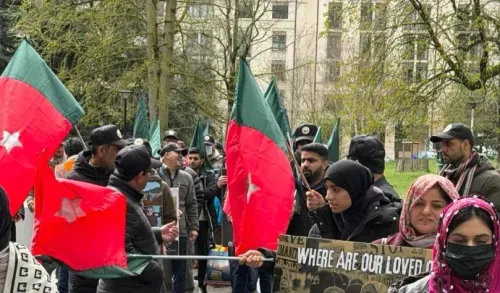
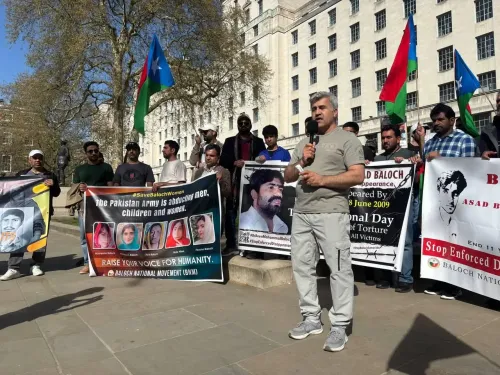
Geneva, March 20 (NationPress) The Baloch National Movement (BNM) has urgently appealed to the global community to address the alarming human rights violations occurring in Balochistan, accusing the Pakistani government of manipulating legal frameworks to quash dissent, target innocent civilians, and systematically silence voices within the region.
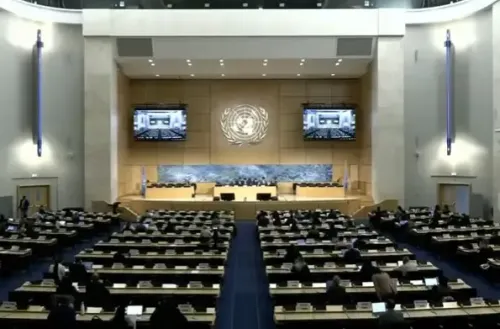
During the 61st session of the United Nations Human Rights Council, BNM representatives brought attention to critical issues such as enforced disappearances, extrajudicial killings, and severe restrictions on freedom of expression, all part of a systematic campaign to suppress the Baloch populace.
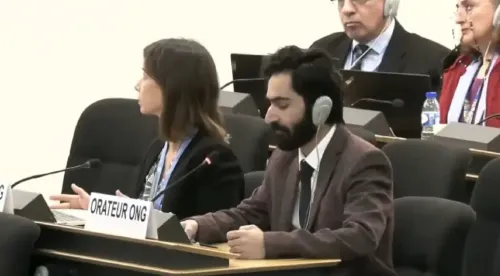
Speaking at the session, Mahra Baloch, a member of the BNM, stated that the civilian population is facing collective punishment merely for their existence.
“In Balochistan, an entire community faces punishment for simply existing. The Pakistani state has weaponized law under the pretext of counterterrorism, criminalizing dissent, erasing lives, and silencing an entire nation. The Anti-Terrorism Act in Pakistan has been misappropriated to brand Baloch students, activists, and human rights advocates as so-called proscribed individuals. This designation strips them of their freedom, denies their right to travel, and subjects them to ongoing threats,” Mahra emphasized.
She reported that in 2025 alone, Paank, the Human Rights Department of BNM, documented 1355 cases of enforced disappearances and 225 instances of extrajudicial killings throughout Balochistan.
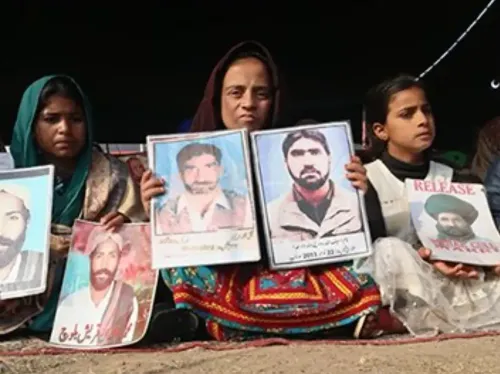
Mahra insisted that these figures are not mere statistics; they represent real people taken from their homes, students abducted from educational institutions, and bodies returned as grim warnings.
She also highlighted the plight of Baloch Yakjehti Committee (BYC) leadership, stating, “Mahrang Baloch, a nominee for the Nobel Peace Prize, has been unjustly arrested, denied necessary medical care, and targeted solely for his peaceful advocacy efforts.”
“Internet blackouts, extensive surveillance, and collective punishments have become commonplace, crafted to prevent the world from witnessing the ongoing situation in Balochistan,” Mahra added.
Stressing that silence permits these atrocities to continue, Mahra urged the international community to demand that Pakistan halt these violations, release all arbitrarily detained Baloch activists, and initiate independent and transparent investigations into enforced disappearances and extrajudicial killings.
Earlier on Wednesday, Jamal Baloch, media coordinator of the human rights body Paank, remarked that the abuses are intensifying, particularly in relation to projects associated with the China-Pakistan Economic Corridor.
“I stand before this council to highlight the systematic human rights abuses in Balochistan orchestrated by Pakistan and exacerbated by China's strategic involvement. In Balochistan, enforced disappearances have become a state policy. The Pakistani military operates beyond legal boundaries, abducting students, educators, journalists, and political activists,” Jamal stated.
Affirming that “peaceful dissent is equated to terrorism,” he noted that women-led civil rights movements like BYC are being suppressed, and all districts in Balochistan are subjected to internet blackouts to hide military operations and silence victims.
“These violations have intensified alongside projects linked to the China-Pakistan Economic Corridor, aimed at securing strategic interests and resource extraction. The Pakistani military has ramped up repression and militarized civilian life,” Jamal concluded.
Point of View
Emphasizing the systematic oppression faced by civilians under Pakistani governance. The situation draws attention to the need for global scrutiny and intervention to protect fundamental human rights.
NationPress
22 Sept 2026
Frequently Asked Questions
What are the main human rights violations reported in Balochistan?
The main human rights violations reported include enforced disappearances, extrajudicial killings, and restrictions on freedom of expression, as highlighted by the Baloch National Movement.
What role does the Pakistani government play in these violations?
The Pakistani government is accused of weaponizing the law to suppress dissent and systematically target civilians in Balochistan.
How many cases of enforced disappearances were documented in 2025?
In 2025, 1355 cases of enforced disappearances were documented by the Human Rights Department of BNM.
What is the significance of the China-Pakistan Economic Corridor in this context?
The China-Pakistan Economic Corridor is linked to intensifying human rights violations, with claims that it exacerbates repression in Balochistan.
What actions does the BNM urge from the international community?
The BNM calls for immediate action to end human rights violations, release detained activists, and conduct independent investigations into these abuses.