Is the Bangladesh Government Responsible for Attacks on Hindus?
Click to start listening
Synopsis
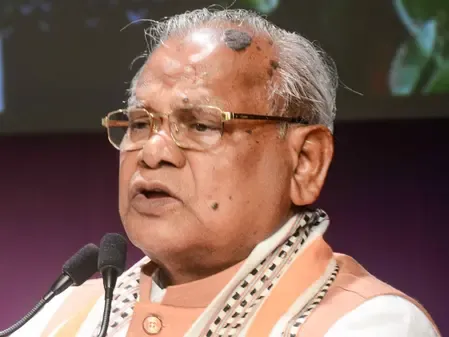
Union Minister Jitan Ram Manjhi has raised concerns about the safety of Hindus in Bangladesh, condemning the government for its failure to protect minorities. He also discusses the liquor prohibition policy in Bihar, emphasizing the need for accountability among officials. This critical stance invites national and international attention.
Key Takeaways
- Government Accountability: Every government must protect its citizens, especially minorities.
- International Involvement: Global pressure is needed to address violence against Hindus in Bangladesh.
- Liquor Policy Concerns: Bihar's liquor prohibition enforcement is criticized for being inequitable.
- Gujarat Model: Bihar should adopt a practical approach to effectively implement liquor prohibition.
- Social Justice: Protecting the rights of all socioeconomic classes is crucial.
Patna, Dec 26 (NationPress) Union Minister and Hindustani Awam Morcha (HAM) Chief Jitan Ram Manjhi criticized the Bangladeshi government on Friday regarding the recent acts of violence against the Hindu community in the South Asian nation, placing the responsibility of minority safety squarely on the interim government.
Manjhi stated that it is the fundamental responsibility of any government to safeguard its citizens. The present sense of insecurity among Hindus in Bangladesh signifies a severe governance failure.
He pointed out that, similar to the peaceful coexistence of minorities in India, it is imperative for the people and government of Bangladesh to take action to protect the Hindu community.
Addressing India's stance on this critical issue, Manjhi noted that the Indian government has taken a decisive and transparent position.
He highlighted that India has voiced serious concerns about the escalating situation in Bangladesh, asserting that when a specific community faces targeted violence, the matter transcends internal affairs.
He called for the international community to intervene and apply pressure to resolve the ongoing crisis.
Additionally, Manjhi adopted a firm position on Bihar's liquor prohibition policy, recognizing that the intentions behind the ban by Chief Minister Nitish Kumar were well-founded. However, he expressed grave concerns regarding its execution.
According to him, the current enforcement strategies disproportionately affect the poor and economically disadvantaged, while those truly responsible remain unscathed.
Manjhi stated that over half of the individuals incarcerated under the liquor prohibition laws in Bihar belong to the lower economic strata of society.
He urged the Bihar government to demonstrate that the real test of the liquor ban lies in holding senior officials accountable for alcohol consumption and combating the liquor mafia.
He criticized the arrest of minor offenders and the presentation of statistics as mere self-praise, all while major offenders operate without consequence.
Referring to the governance model in Gujarat, Manjhi proposed that Bihar should implement a more practical and effective strategy for liquor prohibition.
He asserted that adopting similar laws would prevent unnecessary harassment of ordinary citizens while still achieving the goals of prohibition.
Point of View
We believe that the plight of minorities is a matter of universal concern. Jitan Ram Manjhi’s remarks shed light on the responsibilities of governments to safeguard all citizens, regardless of their faith. This situation demands attention not only from the Indian government but also from the global community.
NationPress
08/01/2026
Frequently Asked Questions
What did Jitan Ram Manjhi say about the Bangladesh government?
He criticized the government for its inability to protect Hindus in Bangladesh and emphasized the government's duty to ensure minority safety.
What is the stance of the Indian government on this issue?
The Indian government has expressed serious concern over the situation and believes that targeted violence against a community cannot be treated as an internal matter.
What are the main issues with Bihar's liquor prohibition policy?
Union Minister Manjhi highlighted that the enforcement primarily targets the economically weaker sections while ignoring major offenders.