UNSC monitors pin Red Fort blast on AQIS, warn of rising South Asia threat

Synopsis
The UN Security Council's own terrorism monitors have now formally pinned the Red Fort suicide bombing — which killed 11 people — on AQIS, and the details are alarming: a professorial suicide bomber, doctors as co-conspirators, and a group deliberately restructuring into small urban cells designed to evade detection. The warning about Bangladesh as a potential new base adds a regional dimension that goes well beyond India.
Key Takeaways
The UN Security Council Analytical Support and Sanctions Monitoring Team has officially attributed the Red Fort suicide car bombing to Al-Qaida in the Indian Subcontinent (AQIS) .
The attack killed 11 people ; the suicide bomber, Umar-un-Nabi , was an assistant professor of general medicine at a Faridabad university.
At least four doctors were charged in connection with the bombing, marking a new pattern of professional radicalisation in India.
AQIS is reportedly shifting to decentralised small cells and urban guerrilla tactics, particularly in countries where large-scale operations are not viable.
The report warns AQIS is 'trying to exploit Bangladesh ' to establish cells, amid political instability following the exile of PM Sheikh Hasina .
The 1267 Committee remains without a chair due to a stand-off over Pakistan 's bid to lead it, delaying the report's release by weeks.
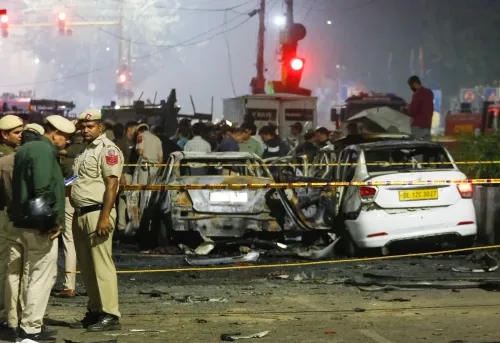
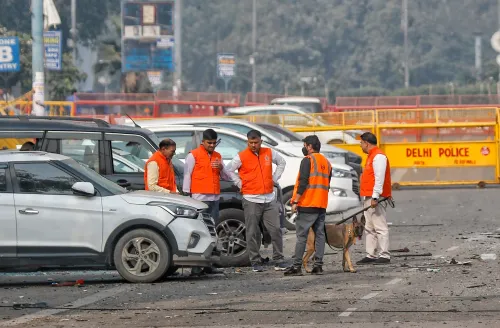
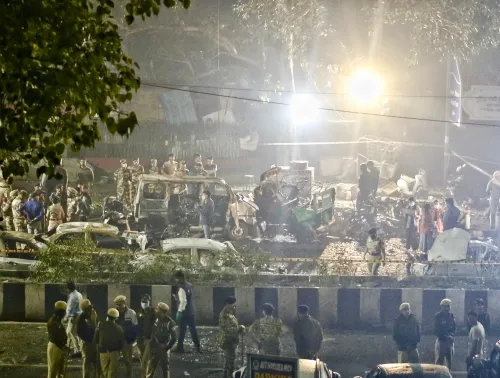
A United Nations Security Council terrorism monitoring team has officially attributed the deadly Red Fort suicide car bombing — which killed 11 people — to Al-Qaida in the Indian Subcontinent (AQIS), warning that the group is rapidly expanding its operational footprint across South Asia. The finding, published in a report by the Analytical Support and Sanctions Monitoring Team, marks the most authoritative international attribution of the attack to date.
Key Findings of the UN Report
The report states that the Red Fort attack, which occurred last November, 'was officially attributed to AQIS.' Crucially, the team warned that AQIS has evolved from a fragmented collection of cells into a structured regional terrorist entity. According to the report, AQIS 'continued to evolve from a fragmented group into a regional terrorist entity; it established logistics and financial networks, working in decentralised small, scattered cells instead of large units.'
This shift in organisational structure is significant. In countries such as India, where large-scale war-like operations are not feasible, analysts note that AQIS is increasingly adopting urban guerrilla tactics — a model designed to evade conventional counter-terrorism frameworks.
Bangladesh as a Potential AQIS Foothold
The report expressed particular concern over AQIS 'trying to exploit Bangladesh to establish cells there.' This warning comes against the backdrop of significant political upheaval in Bangladesh, where democratically elected Prime Minister Sheikh Hasina was forced into exile following an uprising in which Islamist elements reportedly played a leading role. Security analysts have since raised fears that the resulting power vacuum could provide fertile ground for extremist recruitment and logistics.
Earlier Attribution and the JeM Link
An earlier report by the same monitoring team, released in February, had noted that Jaish-e-Mohammed (JeM) 'was reported to be linked to an attack on the Red Fort.' The new report appears to directly attribute the bombing to AQIS. Notably, according to the 1267 Committee — the Security Council's sanctions body for Al-Qaida and the Islamic State — JeM 'has had close ties' with Al-Qaida, suggesting the two attributions may not be mutually exclusive.
AQIS was founded in 2014 by Al-Qaida leader Ayman al-Zawahiri.
A Disturbing New Pattern: Professionals Turned Terrorists
The Red Fort attack set a troubling precedent, with at least four doctors charged in connection with the bombing. The suicide bomber himself — Umar-un-Nabi — was an assistant professor of general medicine at a university in Faridabad. Investigators and security experts have flagged this as a new and deeply concerning pattern of highly educated professionals being radicalised and directly involved in terrorism on Indian soil.
The Report's Delayed Release and Committee Deadlock
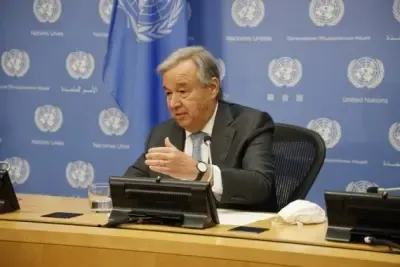
The report's path to publication was itself mired in institutional friction. The 1267 Committee currently has no chair, owing to a stand-off: Pakistan has sought to lead the committee, but several Council members have objected given Islamabad's reported ties to some groups sanctioned by the panel. In the absence of a chair, the team's coordinator, Colin Smith, submitted the report directly to the Council president during Colombia's tenure. It remained unactioned through July under the Democratic Republic of Congo's presidency before being released by Denmark's Permanent Representative Christina Markus Lassen, who assumed the rotating presidency this month.
The report also flagged that Tehrik-e-Taliban Pakistan (TTP) is restructuring within Pakistan, including the creation of a new division focused on Kashmir and the Gilgit region, currently under Pakistani occupation. With terrorist threats across South Asia described as having 'intensified,' the findings carry urgent implications for regional security cooperation.
Point of View
Doctors as alleged co-conspirators. This signals a radicalisation pipeline that India's counter-terrorism architecture was not designed to detect. The Bangladesh warning compounds the concern: political instability on India's eastern flank, combined with a deliberately decentralised AQIS structure, creates a threat geometry that bilateral intelligence-sharing alone cannot address. The 1267 Committee's chairmanship deadlock — with Pakistan blocking the process — is a structural failure of the UN system that directly impedes the sanctions regime meant to constrain these very groups.
NationPress
13 Aug 2026
Frequently Asked Questions
Who carried out the Red Fort suicide car bombing according to the UN?
The UN Security Council's Analytical Support and Sanctions Monitoring Team has officially attributed the Red Fort suicide car bombing to Al-Qaida in the Indian Subcontinent (AQIS). The attack killed 11 people; the bomber was Umar-un-Nabi, an assistant professor of general medicine at a Faridabad university.
What is AQIS and when was it founded?
Al-Qaida in the Indian Subcontinent (AQIS) is a regional terrorist organisation founded in 2014 by Al-Qaida leader Ayman al-Zawahiri. The UN report warns it has evolved from a fragmented group into a structured regional entity operating through decentralised small cells.
Why is Bangladesh mentioned in the UN terrorism report?
The report warns that AQIS is 'trying to exploit Bangladesh to establish cells there.' This concern follows the forced exile of Prime Minister Sheikh Hasina after an uprising in which Islamist elements reportedly played a role, raising fears of a power vacuum that extremist groups could exploit.
Was Jaish-e-Mohammed also linked to the Red Fort attack?
An earlier February report by the same UN monitoring team noted that Jaish-e-Mohammed (JeM) 'was reported to be linked to an attack on the Red Fort.' The new report directly attributes the bombing to AQIS. The 1267 Committee has separately noted that JeM 'has had close ties' with Al-Qaida.
Why was the UN report delayed in its release?
The 1267 Committee — the Security Council's sanctions body for Al-Qaida and the Islamic State — has no chair due to a stand-off over Pakistan's bid to lead it. With no chair to formally circulate the report, it was eventually released by Denmark's Permanent Representative Christina Markus Lassen upon assuming the rotating Council presidency this month.