US military to test laser weapons against drones for 365 days
Synopsis
The US Army is moving beyond lab tests — it wants real service members running laser and microwave weapons against drones for a full year on an active military base. The 365-day trial will answer whether directed-energy systems can replace conventional counter-drone methods, and the findings could reshape how the US military defends its installations in an era of cheap, proliferating unmanned aircraft.
Key Takeaways
The US military will conduct a 365-day operational trial of high-energy lasers and high-power microwaves to counter hostile drones.
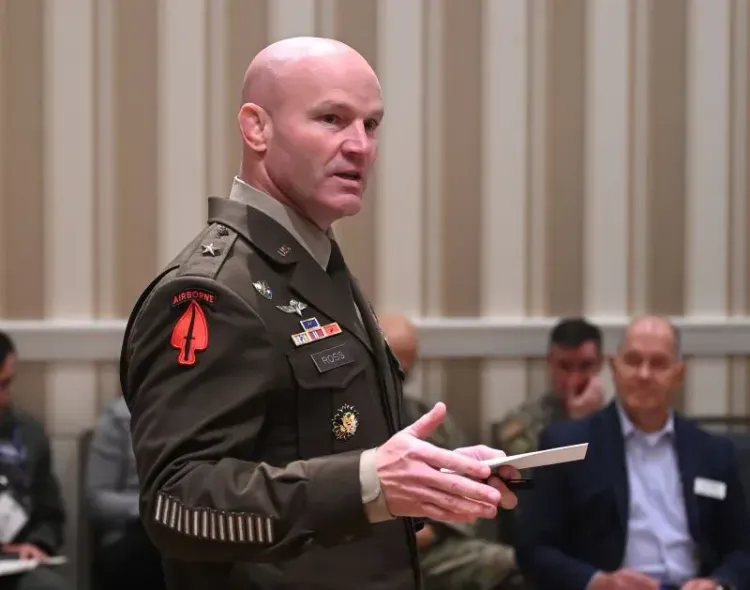
Brigadier General Matt Ross of Joint Interagency Task Force 401 confirmed the pilot on 25 August .
Systems will be operated and maintained by active service members at a military installation — not lab technicians.
The trial will measure power requirements , maintenance costs , operational availability , and airspace compatibility.
Findings will be used to compare directed-energy systems with conventional counter-drone methods for future procurement.
The growing use of low-cost drones in conflicts such as Ukraine has accelerated global interest in such technologies.
The US military is set to launch a year-long operational trial of high-energy lasers and high-power microwaves designed to neutralise hostile drones, a senior Army official confirmed on 25 August. The pilot programme marks a significant step toward deploying directed-energy weapons as a reliable, cost-effective counter-drone solution at military installations.
What the Trial Involves
Brigadier General Matt Ross, director of Joint Interagency Task Force 401, said the systems would be stationed at a military installation and operated entirely by service members for 365 days. The goal is to assess real-world performance under sustained operational conditions — not just controlled laboratory settings.
'It's a directed energy pilot,' Ross said at a media roundtable that included officials from the Army, the Federal Bureau of Investigation (FBI), and the Department of Homeland Security (DHS). 'When we say directed energy, we use that term to be inclusive of all novel technologies, but what we're really focused on right now is high-energy lasers and high-power microwaves,' he added.
Key Questions the Pilot Will Answer
While laboratory tests have already confirmed that both laser and microwave systems can destroy or disable drones, Ross said the critical unknowns remain operational. 'We have a number of systems, and we've proven that the science works,' he said. 'But we need to figure out how to use them successfully in an operational context.'
The trial will evaluate power consumption, maintenance demands, operating costs, and the number of days each system remains mission-ready versus requiring repair. Officials will also assess when specialised technicians are needed, and whether the weapons can be operated without disrupting normal aviation activity around the base. 'I don't want to shut down the airspace as I use those systems,' Ross noted.
The Drone Threat Driving Urgency
The accelerating use of low-cost unmanned aircraft in conflicts — most visibly in Ukraine — has sharpened international focus on counter-drone technology. High-energy lasers can engage individual targets with precision, while high-power microwave systems can potentially disrupt the electronics of multiple drones simultaneously, offering a broader area-effect capability.
Steve Willoughby, a DHS official, acknowledged the dual-use nature of drone technology. 'Drones and the use of drones protect people, protect our assets, save lives, and really allow us to do more with less,' he said. 'On the counter side, it's about how we enable the good while preventing the bad.' He cited the FIFA World Cup as a case study, where authorities managed authorised media, delivery, and public-safety drones while enforcing strict flight restrictions around stadiums and critical infrastructure.
Broader Mission and What Comes Next
Joint Interagency Task Force 401 works with federal, state, and local agencies to protect military bases, public gatherings, and critical infrastructure. Its mandate spans drone detection, mitigation, explosives safety, forensics, intelligence, and investigations.
Findings from the year-long pilot will allow the military to directly compare the cost and effectiveness of directed-energy systems against conventional counter-drone methods, potentially shaping procurement decisions for years ahead.
Point of View
And it is overdue. Directed-energy programmes have a long history of promising lab results that collapse under field conditions — cost overruns, cooling failures, and airspace conflicts have killed previous iterations. A 365-day, troops-operated trial is more honest than a demonstration event, but the military has not yet named the installation, the specific systems, or the independent evaluation body — details that will determine whether the results are credible or self-serving. The Ukraine variable is real: cheap drone swarms have exposed the limits of kinetic interceptors, and a cost-per-shot advantage for lasers could be decisive. But that advantage only materialises if uptime is high, and uptime is precisely what this trial must prove.
NationPress
9 Oct 2026
Frequently Asked Questions
What is the US military's directed-energy drone trial?
It is a 365-day operational pilot in which high-energy laser and high-power microwave systems will be deployed at a military installation and operated by service members to test their real-world effectiveness against hostile drones. The trial was announced by Brigadier General Matt Ross of Joint Interagency Task Force 401 on 25 August.
What is the difference between high-energy lasers and high-power microwaves for counter-drone use?
High-energy lasers engage individual drone targets with precision, effectively burning or disabling them. High-power microwave systems emit broad-area energy bursts that can disrupt the electronics of multiple drones simultaneously, offering a wider defensive coverage but less precision.
Why is the US military running this test now?
The rapid proliferation of low-cost unmanned aircraft — particularly their battlefield use in Ukraine — has accelerated global interest in affordable, scalable counter-drone systems. Conventional interceptor missiles are often far more expensive than the drones they destroy, making directed-energy alternatives strategically attractive.
What will the year-long trial measure?
The pilot will assess power consumption over 365 days, maintenance requirements, operating costs, the number of days each system is mission-ready versus under repair, and whether the weapons can function without disrupting normal aviation activity around the installation.
Which agencies are involved in Joint Interagency Task Force 401?
The task force brings together the US Army, the Federal Bureau of Investigation (FBI), and the Department of Homeland Security (DHS), and it coordinates with federal, state, and local agencies to protect military bases, public gatherings, and critical infrastructure from drone threats.