Trump signs AI national security directive for US military and intel
Synopsis
Trump's AI national security directive isn't just a policy update — it's a strategic acceleration. By scrapping the Biden-era framework for a multi-vendor, four-pillar model and ordering a weapon-systems autonomy review within 90 days, the administration is signalling that the race for AI military dominance is now a top-tier national security priority.
Key Takeaways
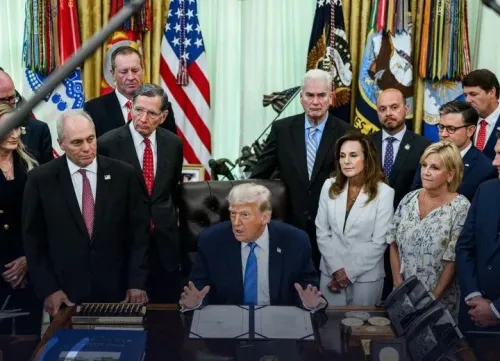
President Donald Trump signed a National Security Presidential Memorandum on 6 June directing accelerated AI adoption across the US military and intelligence community .
The directive establishes four pillars: adoption, adaptation, assurance, and accountability .
It rescinds and replaces the Biden-era National Security Memorandum-25 , citing excessive bureaucracy and single-vendor dependence.
An AI National Security Strategic Reserve of non-governmental experts will be created under the new framework.
The Secretary of War has been directed to issue an updated weapon-systems autonomy directive within 90 days .
The memorandum explicitly bars use of AI for censorship, ideological bias, or unauthorised surveillance of American citizens.
President Donald Trump on 6 June signed a sweeping National Security Presidential Memorandum directing the accelerated adoption of artificial intelligence across the US military and intelligence community, establishing a new framework for oversight, security, and accountability. The directive represents the most comprehensive federal policy on AI in national security since the Biden-era framework it now replaces.
What the Directive Establishes
The memorandum creates a four-pillar framework — adoption, adaptation, assurance, and accountability — to guide AI integration across national security agencies. Under these pillars, agencies are instructed to rapidly deploy AI technologies, adapt commercial and open-source systems for government missions, ensure systems are reliable and secure, and maintain human accountability for AI-assisted decisions.
The White House described the directive's central goal as placing 'the most advanced AI capabilities in the hands of American warfighters and intelligence professionals while ensuring their responsible use.' The memorandum explicitly states that no commercial entity or adversary should possess the capability to disable, degrade, or modify — without federal knowledge and approval — any AI system that US personnel depend on for their missions.
Key Provisions and Safeguards
The directive calls for rapidly onboarding advanced AI models from multiple vendors, expanding secure computing infrastructure, and building an AI National Security Strategic Reserve of non-governmental experts. It also directs agencies to deepen partnerships with private-sector companies to secure cutting-edge American AI technologies.
On civil liberties, the memorandum states that AI used by national security agencies will not be employed to 'censor free speech, embed ideological bias, or conduct unauthorised or unlawful surveillance activities.' It further stipulates that use of AI 'must always be consistent with United States civil liberties and protections afforded by the Constitution.'
Trump additionally directed the Secretary of War to issue an updated directive on autonomy in weapon systems within 90 days, with annual reviews to keep pace with AI advances.
Why It Replaces the Biden-Era Policy
The memorandum rescinds and replaces National Security Memorandum-25, issued under the Biden administration. The White House argued the previous framework burdened AI adoption with unnecessary bureaucracy and created dependence on single vendors — a structural vulnerability, according to the administration, in an era of intensifying strategic competition.
In the memorandum, Trump stated that artificial intelligence 'will be among the most transformative technologies to national security in the history of the United States,' adding that when adopted appropriately, AI can 'protect our warfighters during peacetime and on the battlefield, enable precise operations that minimise harm to civilians, and ensure the United States continues to maintain technical overmatch against our adversaries and strategic competitors.'
Broader Strategic Context
The directive arrives as governments worldwide race to integrate AI into military, intelligence, and cybersecurity operations. The United States has increasingly identified AI as a critical technology area with direct implications for national security, economic competitiveness, and strategic rivalry — particularly with China. This memorandum signals a deliberate acceleration of that integration, with accountability guardrails built in to address longstanding concerns about autonomous systems in warfare.
The annual review mechanism and the multi-vendor mandate suggest the administration is attempting to avoid the lock-in and bureaucratic drag it attributed to its predecessor's approach. How swiftly agencies operationalise the framework will be closely watched by both industry and strategic rivals.
Point of View
With significant procurement implications. The civil liberties language is notable but untested: pledging that AI will not be used for unauthorised surveillance is easier to write than to enforce across a sprawling intelligence community. The 90-day weapon-systems autonomy review is a ticking clock that could produce the most consequential sub-policy of this entire memorandum. And by framing AI as potentially 'the most transformative technology to national security in US history,' Trump has set an expectation benchmark that will be measured against battlefield and intelligence outcomes — not just procurement numbers.
NationPress
21 Oct 2026
Frequently Asked Questions
What is the AI national security directive signed by Trump?
It is a National Security Presidential Memorandum signed on 6 June directing US military and intelligence agencies to accelerate AI adoption under a four-pillar framework of adoption, adaptation, assurance, and accountability. It replaces the Biden-era National Security Memorandum-25, which the administration said created unnecessary bureaucracy and single-vendor dependence.
What are the four pillars of the new AI framework?
The directive establishes four guiding pillars: adoption (rapid deployment of AI technologies), adaptation (tailoring commercial and open-source systems for government missions), assurance (ensuring systems are reliable and secure), and accountability (maintaining human responsibility for AI-assisted decisions).
Does the directive address civil liberties concerns?
Yes. The memorandum explicitly states that AI used by national security agencies will not be employed to censor free speech, embed ideological bias, or conduct unauthorised surveillance. It requires all AI use to remain consistent with US civil liberties and constitutional protections.
What is the AI National Security Strategic Reserve?
It is a body of non-governmental experts called for by the memorandum to support national security AI operations. The directive also instructs agencies to strengthen partnerships with private-sector companies to secure cutting-edge American AI technologies.
What happens with weapon systems autonomy under this directive?
Trump directed the Secretary of War to issue an updated directive on autonomy in weapon systems within 90 days of the memorandum's signing. The guidance will be reviewed annually to keep pace with advances in AI technology.