US lawmakers reintroduce bill to ban federal facial recognition use
Synopsis
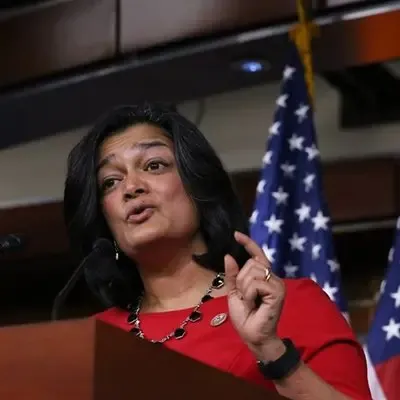
A coalition of Democratic lawmakers led by Indian-American Congresswoman Pramila Jayapal has reintroduced a bill that would freeze all federal use of facial recognition and biometric surveillance — citing research that Black, Brown and Asian individuals may be up to 100 times more likely to be misidentified. With ICE and CBP already deploying mobile facial-recognition tools, the stakes are high — but so is the legislative mountain to climb.
Key Takeaways
Pramila Jayapal and four Democratic colleagues reintroduced the Facial Recognition and Biometric Technology Moratorium Act on 26 September 2026 .
The bill would ban federal agencies from using biometric systems including facial recognition, voice and gait identification.
Research cited by lawmakers indicates nearly half of all American adults' faces are already stored in facial-recognition databases.
Black, Brown, and Asian people may be up to 100 times more likely than white men to be wrongly identified by these algorithms, according to cited research.
ICE and CBP mobile facial-recognition applications are specifically called out as targets of the moratorium.
The bill must pass both chambers of Congress in identical form before becoming law — a significant hurdle given the current legislative environment.
Indian-American Congresswoman Pramila Jayapal and four fellow Democratic lawmakers have reintroduced the Facial Recognition and Biometric Technology Moratorium Act, a sweeping bill that would prohibit federal agencies from deploying facial recognition and other biometric surveillance technologies across the United States. The legislation was reintroduced on 26 September 2026, targeting systems that identify individuals through faces, voices, gait, or other permanent physical characteristics.
What the Bill Proposes
Under the proposed law, federal agencies would be barred from using or funding biometric surveillance systems. Any prohibition could only be lifted through a fresh act of Congress — meaning executive agencies could not unilaterally reinstate these tools. The bill would also ban the use of federal money to purchase or operate such systems, and would tie certain federal grants to state and local governments — including law enforcement grants — to the adoption of parallel moratoriums at the state level.
Critically, any biometric data collected in violation of the proposed law could not be admitted as evidence in judicial proceedings. Individuals whose biometric information was unlawfully used would be entitled to bring private legal actions, while state attorneys general would receive independent enforcement authority.
Who Is Behind the Legislation
In the Senate, Edward Markey and Jeff Merkley introduced the bill, with cosponsors including Ron Wyden and Elizabeth Warren. In the House, Jayapal was joined by Representatives Rashida Tlaib and Ayanna Pressley. House cosponsors include Greg Casar, Judy Chu, Jim McGovern, Eleanor Holmes Norton, Delia Ramirez, and Jan Schakowsky.
Civil liberties organisations backing the bill include the American Civil Liberties Union (ACLU), the Electronic Frontier Foundation, the Electronic Privacy Information Center, Access Now, and the Leadership Conference on Civil and Human Rights.
Why Lawmakers Say the Bill Is Urgent
The lawmakers cited the expanded deployment of a mobile facial-recognition application by Immigration and Customs Enforcement (ICE) and Customs and Border Protection (CBP), which they say has been used to target immigrants, protesters, and minority communities. Research cited by the lawmakers suggests that the faces of nearly half of all American adults are already stored in facial-recognition databases.
'We have to stop the constant, nonconsensual state of surveillance that we live in, and that starts with placing a moratorium on our government's use of facial recognition technology,' Jayapal said. She added that 'Black and Brown people are more likely to be misidentified and wrongfully put in jail because of this unregulated technology.'
Senator Markey characterised the technology as a tool of authoritarianism. 'Agencies such as ICE and CBP are using this technology to track, target, intimidate and surveil communities across the country,' he said. Senator Merkley argued that 'every American who values their right to privacy, stands against discrimination, and believes people are innocent until proven guilty should be concerned about facial recognition technology fueling a national surveillance state.'
The Accuracy Gap and Racial Bias Concern
A central argument in the bill rests on documented algorithmic disparities. The lawmakers pointed to research indicating that Black, Brown, and Asian people could be up to 100 times more likely than white men to be incorrectly identified by facial-recognition algorithms. Representative Tlaib said the technology is 'racist, misidentifying Black, Brown, and Asian residents and pinning them as suspects in crimes they did not commit.'
What Happens Next
Reintroduction alone does not make the proposal law. The bill must pass both the House of Representatives and the Senate in identical form before being sent to the president for signature. The United States currently lacks a single comprehensive federal statute governing facial-recognition technology, with rules varying widely across federal agencies, states, and municipalities. This is the latest in a series of similar legislative attempts by this group of lawmakers, reflecting a sustained but so far unsuccessful push to establish a federal floor on biometric surveillance. Whether the current political composition of Congress provides any more favourable ground remains to be seen.
Point of View
And the current Congress offers little obvious path to passage. What the exercise does accomplish is keeping algorithmic racial bias and warrantless biometric surveillance in the public record ahead of any broader federal privacy legislation. The real pressure point is the ICE and CBP mobile application: executive agencies expanding surveillance tools without congressional authorisation is precisely the accountability gap this bill targets, and that gap remains wide open regardless of whether the moratorium passes.
NationPress
26 Sept 2026
Frequently Asked Questions
What is the Facial Recognition and Biometric Technology Moratorium Act?
It is a proposed US federal law that would prohibit government agencies from using facial recognition and other biometric surveillance technologies — including systems that identify people by voice, gait, or other physical characteristics. The ban could only be reversed by a new act of Congress, not by executive action.
Who introduced the facial recognition moratorium bill?
The House version was introduced by Congresswomen Pramila Jayapal, Rashida Tlaib, and Ayanna Pressley. The Senate version was introduced by Senators Edward Markey and Jeff Merkley, with Ron Wyden and Elizabeth Warren as cosponsors.
Why are lawmakers concerned about facial recognition technology?
Lawmakers argue the technology enables mass surveillance without consent and is prone to racial bias. Research they cited suggests Black, Brown, and Asian individuals may be up to 100 times more likely than white men to be incorrectly identified, raising serious concerns about wrongful arrests and targeting of minority communities.
How does the bill affect ICE and CBP?
The bill would directly target Immigration and Customs Enforcement (ICE) and Customs and Border Protection (CBP), which have deployed mobile facial-recognition applications that lawmakers say have been used to track and target immigrants and protesters.
Will the bill become law?
Not automatically. Reintroducing a bill begins the legislative process but does not guarantee passage. The proposal must pass both the House and the Senate in identical form before reaching the president for signature — a considerable hurdle in the current Congress.