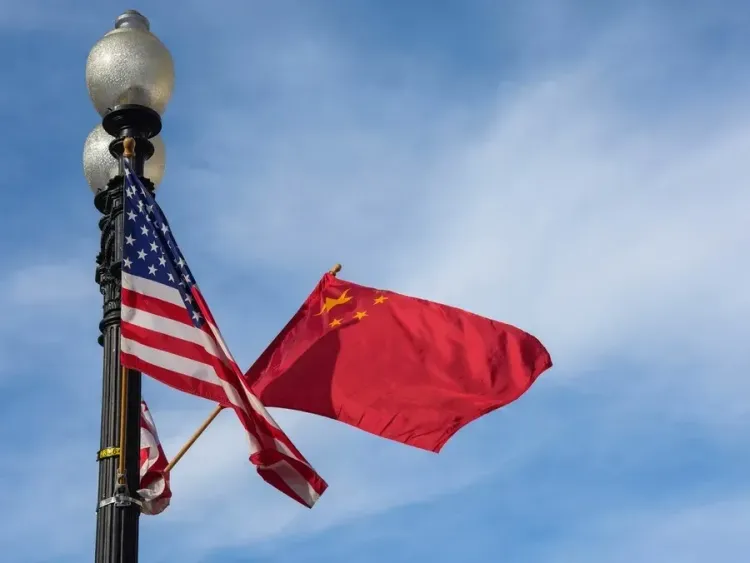
US deepens Southeast Asia security push to counter China in Indo-Pacific
Synopsis
The Trump administration has repositioned Coast Guard assets to the Philippines and Guam, stepped up freedom of navigation operations near Taiwan, and moved to map Vietnam's rare earth reserves — all to build a supply chain and security architecture that bypasses China. The dual-track strategy signals Washington's most concrete Indo-Pacific moves in years.
Key Takeaways
Assistant Secretary of State Michael G.
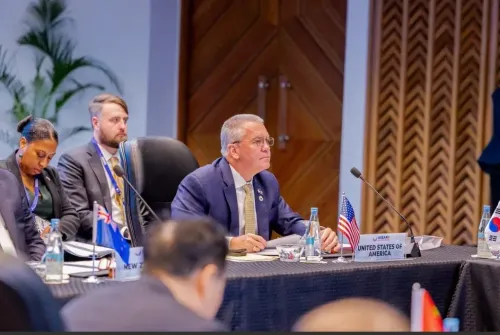
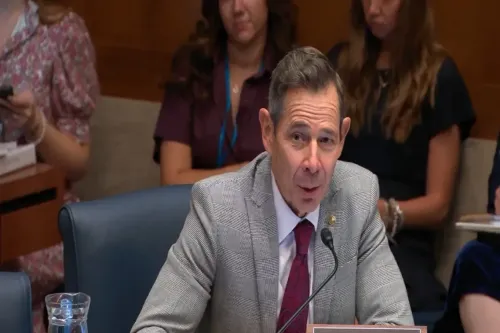
DeSombre testified before the House Foreign Affairs Subcommittee on 26 June , outlining US strategy to counter China in the Indo-Pacific.
The US has relocated Coast Guard ships to the Philippines and added vessels to Guam to strengthen regional presence.
Washington is conducting freedom of navigation operations 'quite frequently in and around Taiwan ' with allies and partners.
Vietnam's rare earth reserves — among the world's largest but currently unmapped — are a priority for US supply chain diversification away from China.
Growing trilateral cooperation among Japan , Australia , and the Philippines was cited as an encouraging development by DeSombre.
The US says it continues to privately raise human rights concerns with Hanoi even as it deepens economic engagement.
The Trump administration has moved to intensify security cooperation with key Southeast Asian partners, particularly the Philippines and Vietnam, as Washington seeks to check China's expanding military and economic footprint across the Indo-Pacific. The strategy was laid out before the House Foreign Affairs Subcommittee on East Asia and the Pacific on 26 June, underscoring the centrality of the region to US foreign policy under the current administration.
Key Developments at the Congressional Hearing
Michael G. DeSombre, Assistant Secretary of State for East Asian and Pacific Affairs, told lawmakers that Beijing's conduct in the South China Sea remained Washington's foremost concern in the region. 'The activities of China in the South China Sea... are of utmost concern to us,' DeSombre said. He added that the United States was working 'with our allies and partners... to ensure that we have deterrence along the first island chain' while preserving 'peace and stability in the Indo-Pacific.'
Congresswoman Young Kim opened the hearing by accusing Beijing of expanding its military footprint in the South China Sea and ratcheting up pressure on Taiwan. She charged that China continued 'its campaign to turn the South China Sea into a Chinese communist lake' by converting disputed features into military installations and broadening its maritime claims.
US Repositions Coast Guard Assets Toward Philippines and Guam
Among the most concrete disclosures at the hearing, DeSombre confirmed that the United States had 'recently relocated some Coast Guard ships to the Philippines' and deployed additional Coast Guard vessels to Guam to reinforce the American presence in the western Pacific. The Philippines was described by Kim as a vital treaty ally enduring 'constant gray zone coercion' from the Chinese Coast Guard.
DeSombre noted a recent visit to Manila and highlighted what he called an encouraging pattern of trilateral cooperation involving Japan, Australia, and the Philippines. 'You're absolutely right. They are the recipient of significant pressure from China,' he said of Manila. Washington is also conducting freedom of navigation operations 'quite frequently in and around Taiwan, along with our allies and partners,' he said.
Vietnam's Rare Earth Reserves in Focus
Lawmakers also turned attention to reducing US dependence on China for critical minerals. Vietnam — home to one of the world's largest rare earth reserves — emerged as a key opportunity. DeSombre acknowledged that while Vietnam holds significant mineral resources, they are 'currently unmapped.' He said Washington hoped to assist Hanoi in identifying those deposits so the country could integrate into 'a supply chain that doesn't run through China.'
On the question of balancing economic engagement with human rights concerns, DeSombre said the United States continues to 'privately raise with Vietnam those issues related to human rights,' while arguing that stronger economic growth would contribute to greater freedom over time.
Broader Strategic Context
The hearing reflects a broader US effort to consolidate its alliance architecture in the Indo-Pacific at a time when China's naval activity and economic leverage in the region are at historically elevated levels. This comes amid ongoing diplomatic friction between Washington and Beijing over trade, technology, and territorial disputes in the South China Sea. The repositioning of Coast Guard assets and the push to map Vietnamese mineral reserves signal a dual-track approach — military deterrence paired with supply chain decoupling — that analysts say is likely to define US Indo-Pacific strategy in the near term.
Point of View
But steady asset placement and alliance-building that changes the facts on the water. The rare earth angle is equally telling: the US is not just trying to deter China militarily but to structurally reduce the leverage Beijing derives from controlling critical mineral supply chains. The challenge is that Vietnam's reserves are unmapped, Manila faces domestic political pressures, and trilateral formats with Japan and Australia, while promising, remain untested under real coercive pressure. The strategy is coherent on paper; execution across multiple sovereign partners with competing interests is where it will be tested.
NationPress
26 Jun 2026
Frequently Asked Questions
Why is the US deepening security ties with the Philippines and Vietnam?
The US is strengthening ties with the Philippines and Vietnam to counter China's expanding military presence in the South China Sea and its growing economic leverage across the Indo-Pacific. Washington views both nations as critical partners in maintaining freedom of navigation and building supply chains that do not run through China.
What did the US relocate to the Philippines?
Assistant Secretary of State Michael G. DeSombre confirmed that the United States recently relocated Coast Guard ships to the Philippines and added more Coast Guard vessels to Guam. The move is aimed at reinforcing the American military presence in the western Pacific amid what lawmakers described as constant gray zone coercion by China.
What is the significance of Vietnam's rare earth reserves?
Vietnam holds one of the world's largest rare earth reserves, making it a strategic partner for the US as it seeks to diversify critical mineral supply chains away from China. DeSombre noted the reserves are currently unmapped and said Washington hopes to help Hanoi identify them so Vietnam can join a supply chain independent of China.
What is the 'first island chain' and why does it matter?
The first island chain refers to a string of archipelagos stretching from Japan through Taiwan and the Philippines to Borneo, forming a geographic barrier to Chinese naval expansion into the Pacific. DeSombre said the US and its allies are working to ensure deterrence along this chain to maintain stability in the Indo-Pacific.
How is the US balancing human rights concerns with economic engagement in Vietnam?
DeSombre said Washington privately raises human rights issues with Hanoi while arguing that stronger economic growth contributes to greater freedom over time. The approach reflects a pragmatic calculation that supply chain integration and security cooperation take precedence, with rights concerns handled through diplomatic back-channels rather than public conditionality.