Africa is new global terror epicentre, US generals warn Congress
Synopsis
US generals told Congress that Africa has overtaken the Middle East as the world's terrorism epicentre — and the warning came bundled with a bombshell: a joint US-Nigeria operation has killed ISIS's global operations leader. With China mining the continent and Russia treating it as a war chest, Africa is now simultaneously the world's biggest terror front and its most contested great-power arena.
Key Takeaways
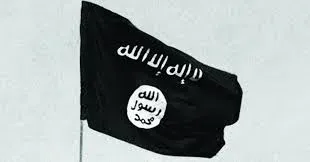
General Dagvin Anderson of US Africa Command told the House Armed Services Committee that Africa is now 'the epicentre of global terrorism.' ISIS and al-Qaeda affiliates are rapidly expanding in West Africa and the Sahel , with groups seizing territory in Mali , Niger , and Burkina Faso .
A joint US-Nigeria operation killed Bilal al-Maliki , ISIS's global operations leader, underscoring the value of regional partnerships.
Anderson accused China of treating Africa as 'its second continent' and described Africa as ' Putin's purse ' amid Russian resource extraction.
US withdrawals from Niger have created what Anderson called a 'growing black hole of intelligence in the Sahel.' India 's expanding African investments and naval presence in the western Indian Ocean make the continent's security trajectory directly relevant to New Delhi.
Senior US military commanders told the House Armed Services Committee on 20 May that Africa has become the world's primary hub of terrorist activity, with ISIS and al-Qaeda affiliates rapidly expanding across the continent and posing direct threats to American and allied interests. The warning marks one of the most explicit congressional acknowledgements of Africa's shifting role in global security.
Key Developments at the Hearing
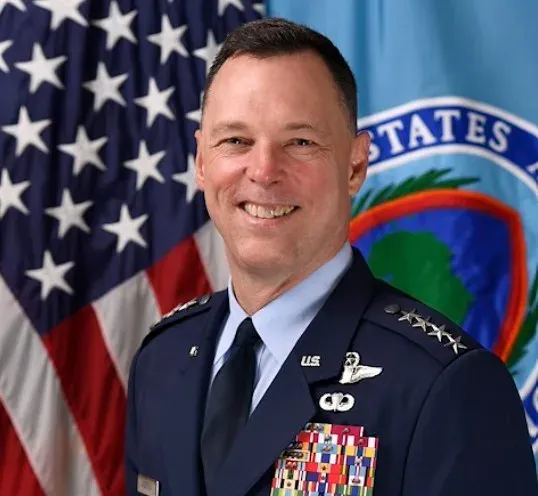
General Dagvin Anderson, Commander of US Africa Command, told lawmakers bluntly: 'Today, the epicentre of global terrorism is in Africa.' He said ISIS leadership structures and al-Qaeda's financial networks had become deeply entrenched across the continent, particularly in West Africa and the Sahel region.
Anderson flagged growing instability in Mali, Niger, and Burkina Faso, warning that terrorist groups were seizing territory and exploiting weak governance. 'The capture of a capital city would provide al-Qaeda with all the trappings of a nation state to sponsor global terrorism,' he cautioned.
ISIS Operations Leader Killed in Joint Strike
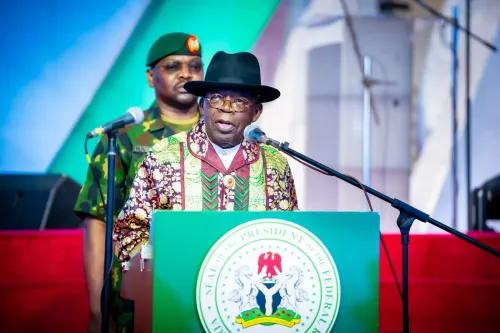
The hearing also revealed that the US military recently conducted a joint operation with Nigerian forces that killed Bilal al-Maliki, described as ISIS's global operations leader. Anderson credited the success to sustained regional intelligence cooperation. 'The Nigerians have been instrumental throughout the last several months developing the target, helping us with the intelligence and providing support,' he said.
China, Russia and the Contest for Africa
Beyond terrorism, the hearing surfaced deep US anxiety over expanding Chinese and Russian influence across the continent. Anderson accused Beijing of treating Africa as 'its second continent,' securing strategic control over critical minerals and infrastructure. He described Africa as 'Putin's purse,' alleging that Russia was exploiting regional instability to extract resources and manpower for its war effort.
Notably, this framing positions Africa not merely as a counterterrorism theatre but as a front line in broader great-power competition — a significant escalation in how Washington is publicly characterising the continent's strategic importance.
Intelligence Gaps and the Sahel Black Hole
Representative Austin Scott raised concerns that US military withdrawals from Niger had cost Washington critical intelligence access in West Africa. Anderson acknowledged the risk directly: 'The biggest concern I have is the growing black hole of intelligence in the Sahel.' Several lawmakers warned that reduced Western engagement was creating openings for China, Russia, and extremist groups to deepen their foothold.
What This Means for India
India has steadily expanded its defence cooperation and development partnerships across Africa over the past decade, with growing investments in mining, energy, pharmaceuticals, and infrastructure in both East and West Africa. Indian naval deployments have also increased in the western Indian Ocean and Gulf of Aden amid concerns over piracy, terrorism, and maritime security.
The hearing's findings carry direct implications for New Delhi, which now operates in a continent where great-power competition, terrorist expansion, and governance fragility are converging. As the US, China, Russia, Turkey, Gulf states, and India all compete for influence through trade, infrastructure, and strategic partnerships, Africa's security trajectory will increasingly shape India's own regional calculus. US officials warned that the continent's rapidly growing population, weak governance structures, and expanding extremist networks could reshape global security if left unaddressed.
Point of View
China, and Russia are actively competing. Anderson's 'Putin's purse' and 'China's second continent' language is unusually direct for congressional testimony and signals a strategic reorientation that goes well beyond counterterrorism. For India, the subtext is consequential: New Delhi's African partnerships — built on soft power and development finance — are now operating in a theatre where hard-power dynamics are rapidly intensifying. The intelligence black hole in the Sahel, created partly by Western withdrawal, is precisely the kind of vacuum that historically accelerates both terrorist consolidation and rival-power entrenchment.
NationPress
20 Sept 2026
Frequently Asked Questions
Why are US generals warning about Africa as a terrorism threat?
Senior US military commanders, led by General Dagvin Anderson of US Africa Command, told the House Armed Services Committee that ISIS and al-Qaeda affiliates have deeply embedded themselves across Africa — particularly in West Africa and the Sahel — and that both groups have the 'will and intent to strike our homeland.' The warning reflects a significant geographic shift in how Washington assesses global terror risk.
Who is Bilal al-Maliki and why does his death matter?
Bilal al-Maliki was described by US officials as the global operations leader of ISIS. He was killed in a joint operation between US forces and the Nigerian military, which Anderson cited as evidence of the effectiveness of regional intelligence partnerships in countering terrorist networks.
What role are China and Russia playing in Africa according to US officials?
General Anderson accused China of treating Africa as 'its second continent,' securing control over critical minerals and infrastructure. He described Russia as exploiting African instability to extract resources and manpower, calling Africa 'Putin's purse.' Lawmakers warned that reduced US engagement risks ceding ground to both rivals.
What is the intelligence black hole in the Sahel?
Following US military withdrawals from Niger, Representative Austin Scott and General Anderson both acknowledged that Washington has lost significant intelligence access in parts of West Africa. Anderson called this 'the growing black hole of intelligence in the Sahel,' warning it limits the US ability to track and pre-empt terrorist activity.
How does Africa's security situation affect India?
India has expanded defence cooperation, naval deployments, and investments across Africa over the past decade, with stakes in mining, energy, pharmaceuticals, and infrastructure. Growing terrorist activity, great-power competition, and governance fragility on the continent directly affect the security of Indian assets, personnel, and strategic partnerships in the region.