US sanctions ISIS finance network spanning France, Syria, Nigeria
Synopsis
The Trump administration has sanctioned nine targets — three individuals and six entities — across four countries for bankrolling ISIS. The sweep is notable for its geographic breadth: from a France-based explosives facilitator to Nigeria-based currency exchanges, it maps how ISIS has rebuilt its financial plumbing after losing its caliphate, leaning on crypto and hawala networks to stay solvent.
Key Takeaways
The U.S. sanctioned 3 individuals and 6 entities on 22 June for financing ISIS operations across borders.
Targets span France , Syria , Türkiye , and Nigeria , covering cryptocurrency channels and informal money exchange businesses.
Miloud Abderrahmane (France), Abdelhakim Boukich (Syria), and Mukhtar Adamu Muhammad (Nigeria) were the three individuals designated.
Six sanctioned entities include two Türkiye -based trading firms, one Syria -based crypto exchange, and three Nigeria -based currency bureaus.
A joint US-Nigeria operation on 16 May 2026 had earlier killed Abu-Bilal al-Minuki , ISIS's reported second-in-command.
The action reflects growing US concern over ISIS's pivot to decentralised, crypto-enabled financial networks.
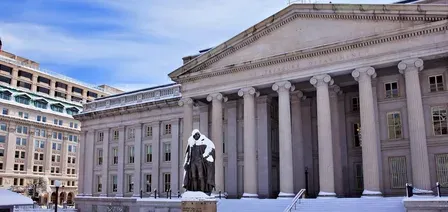
The United States on Monday, 22 June imposed sanctions on three individuals and six entities operating across Europe, the Middle East, and West Africa, targeting a cross-border financial network that Washington says has been sustaining Islamic State (ISIS) operations globally. The designations, announced jointly by the U.S. State Department and the Treasury Department, cover a web stretching from France and Syria to Türkiye and Nigeria.
Key Designations
Miloud Abderrahmane, based in France, was identified as a facilitator who allegedly provided information on the use of explosives to ISIS supporters and operated digital currency channels linked to the group. Abdelhakim Boukich, based in Syria, was accused of using cryptocurrency to transfer funds on behalf of ISIS associates operating across multiple countries, including the United States. The third individual, Mukhtar Adamu Muhammad, a Nigerian national, was identified as a facilitator for ISIS-West Africa, with his money exchange businesses allegedly serving as conduits for terrorist financing.
Entities Targeted
The Treasury Department simultaneously sanctioned six entities linked to the network. Two Türkiye-based firms — Alkaram Danismanlik Gayrimenkul Ic ve Dis Genel Ticaret Limited Sirketi and Spider Gayrimenkul ve Genel Ticaret Limited Sirketi — were designated for their alleged roles in ISIS money transfers. A Syria-based cryptocurrency exchange, Bitcoin Exchange Agent Idlib's No.1 Coin Exchange, was also sanctioned for its reported links to ISIS financial activity. Three Nigeria-based currency exchange firms — Generation Currency Bureau De Change Limited, Manhattan Bureau De Change Limited, and Nine to Nine Exchange Bureau De Change Limited — were added to the list for their alleged ties to Muhammad.
What the State Department Said
State Department Spokesperson Tommy Pigott said the action reflects the administration's intent to dismantle ISIS's financial infrastructure. 'Under the leadership of President Trump, the United States is dismantling ISIS's ability to finance terrorism around the world,' Pigott said. He added: 'We are cutting off the financial lifelines from around the world that enable ISIS to fund attacks, support its regional affiliates, and threaten civilians, including religious minorities.'
Pigott also noted that ISIS has been adapting its methods: 'These actions reflect the United States' unrelenting pressure on ISIS, which continues to decentralise its operations and rely on financial intermediaries to connect its global network.'
US-Nigeria Counterterrorism Cooperation
The announcement highlighted deepening counterterrorism ties between Washington and Abuja. The State Department reaffirmed its partnership with Nigeria, noting that a joint operation on 16 May 2026 resulted in the killing of Abu-Bilal al-Minuki, described as the number two official in ISIS. The latest sanctions build on that operational momentum, signalling that the Trump administration is broadening its counter-ISIS strategy to include financial interdiction alongside kinetic action.
Broader Context
The designations come as ISIS increasingly relies on decentralised networks, cryptocurrency channels, and informal money exchange businesses — known as hawala-style systems — to move funds across jurisdictions that are difficult to monitor. This is not the first round of such sanctions; the U.S. has periodically targeted ISIS financial intermediaries since the group's territorial collapse in Syria and Iraq in 2019. The inclusion of West African nodes reflects the group's expanding footprint in the Sahel and Lake Chad Basin regions, where ISIS-West Africa has grown in operational capacity. Pigott said Washington would continue using 'every diplomatic and legal tool available to hold ISIS and its supporters accountable — wherever they operate and however they move money.'
Point of View
Two continents, and both crypto and cash channels — underscores how thoroughly ISIS has rebuilt its financial architecture since the caliphate's collapse. What is striking is the West Africa angle: including Nigerian currency bureaus signals that the U.S. now views the Lake Chad Basin as a tier-one ISIS financing node, not a peripheral concern. The reliance on cryptocurrency is a known vulnerability, but sanctioning individual exchanges is a game of whack-a-mole unless coordinated with host-country regulators — and the absence of any mention of EU or Nigerian regulatory action in this announcement is a gap worth watching.
NationPress
21 Sept 2026
Frequently Asked Questions
Who did the US sanction for ISIS financing on 22 June 2026?
The U.S. sanctioned three individuals — Miloud Abderrahmane (France), Abdelhakim Boukich (Syria), and Mukhtar Adamu Muhammad (Nigeria) — along with six entities in Türkiye, Syria, and Nigeria. All were accused of helping ISIS move money across borders to sustain its global operations.
Why did the US target entities in Nigeria?
Three Nigeria-based currency exchange firms were sanctioned for their alleged ties to Mukhtar Adamu Muhammad, identified as a facilitator for ISIS-West Africa. The move also reflects deepening US-Nigeria counterterrorism cooperation, following a joint operation on 16 May 2026 that killed ISIS's reported number two, Abu-Bilal al-Minuki.
How is ISIS moving money according to US authorities?
According to the State Department, ISIS has increasingly decentralised its financial operations, relying on cryptocurrency channels, informal money exchange businesses, and intermediaries across multiple jurisdictions. The latest sanctions target both crypto exchanges and hawala-style currency bureaus used to transfer funds internationally.
What role did cryptocurrency play in the ISIS network targeted?
Two of the designated individuals — Miloud Abderrahmane and Abdelhakim Boukich — were specifically accused of using digital currency and cryptocurrency to move funds for ISIS. A Syria-based crypto exchange, Bitcoin Exchange Agent Idlib's No.1 Coin Exchange, was also among the six entities sanctioned.
What is the significance of the Abu-Bilal al-Minuki operation mentioned in the sanctions announcement?
Abu-Bilal al-Minuki was described by the State Department as the number two official in ISIS. A joint US-Nigeria operation on 16 May 2026 resulted in his killing. The reference in the sanctions announcement signals that the US views Nigeria as a key partner in its broader counter-ISIS strategy, combining kinetic operations with financial interdiction.