US-India soybean AI research gets $528,137 NSF grant for precision breeding
Synopsis
A $528,137 NSF grant to a University of Memphis professor, in partnership with India's MeitY and institutions including IIT Delhi, will fund a three-year AI-powered smart sensor network to transform soybean breeding — a quiet but significant step in US-India scientific cooperation with direct implications for global food security.
Key Takeaways
Xiaolei Huang of the University of Memphis has been awarded $528,137 by the National Science Foundation (NSF) for AI-driven soybean research.
The project is a joint NSF-MeitY collaboration running from 1 October 2025 to 30 September 2029 .
Six institutions are involved, including IIT Delhi , Sher-e-Kashmir University of Agricultural Sciences and the ICAR National Soybean Research Institute .
The SoyWatch system will combine AI, drone-based sensing and NextG wireless communications to monitor crops and soil in real time.
The research targets soybean challenges including pests, crop diseases and climate-driven weather unpredictability in both the US and India.
The project is also expected to support student training across agriculture, engineering and artificial intelligence disciplines.
A University of Memphis computer science professor has secured a $528,137 grant from the National Science Foundation (NSF) for a three-year collaborative research project with India's Ministry of Electronics and Information Technology (MeitY) aimed at developing AI-powered precision soybean breeding technologies. The project, titled 'SoyWatch: Smart Sensing Network for Precision Soybean Breeding', will run from 1 October 2025 to 30 September 2029 and brings together institutions from both countries to address mounting food security challenges.
What the SoyWatch Project Covers
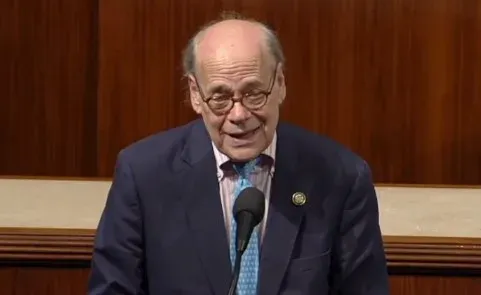
Dr. Xiaolei Huang, professor of computer science at the University of Memphis, is the grant recipient, as announced by Congressman Steve Cohen of Tennessee. The award falls under a joint NSF-MeitY collaboration programme, reflecting the growing alignment between American and Indian science and technology institutions.
The research is structured around three principal components. The first focuses on developing sensor arrays capable of measuring soil nutrients, moisture and environmental conditions. The second targets energy-efficient wireless communication systems using drone-supported data collection and passive sensing technologies for large-scale field monitoring. The third will develop multimodal large language models that integrate sensor data, drone imagery and environmental information to support crop phenotyping, pest management and yield forecasting.
Institutions Involved
The project draws on expertise from six institutions across both countries: the University of Memphis, the University of Missouri, Kennesaw State University, the Indian Institute of Technology (IIT) Delhi, Sher-e-Kashmir University of Agricultural Sciences and Technology of Kashmir, and the Indian Council of Agricultural Research's National Soybean Research Institute. This multi-institutional structure is designed to ensure the technologies developed are applicable to farming conditions in both the United States and India.
Why It Matters for Food Security
Soybean is among the world's most critical agricultural commodities, serving as a primary source of protein for food, animal feed and edible oil. Farmers in both countries face escalating pressures from pests, crop diseases and increasingly unpredictable weather driven by climate change. The SoyWatch system is intended to give breeders real-time, data-driven insights to make better decisions throughout the breeding cycle.
Congressman Cohen, announcing the award, pointed to India's historical role in agricultural innovation. 'I congratulate Professor Huang for being awarded this prestigious National Science Foundation funding. His research efforts will improve soyabean yields and productivity, which will help feed the ever-growing population of our planet. It is especially encouraging that this work is being done in collaboration with the government of India which pioneered the green revolution in the 1960s and averted future famines,' he said.
Broader India-US Scientific Cooperation
This grant is part of a broader pattern of deepening India-US scientific collaboration that has expanded steadily over the past two decades, spanning agriculture, clean energy, semiconductors and artificial intelligence. Beyond the immediate agricultural applications, the NSF noted that the project is expected to strengthen interdisciplinary research, workforce development and bilateral scientific ties, while supporting student training across agriculture, engineering and AI disciplines.
The technologies developed under SoyWatch will ultimately be integrated into a unified toolkit combining sensing, wireless communications and AI to generate actionable insights for farmers and researchers alike. Successful outcomes could accelerate the development of high-yielding, pest-resistant soybean varieties with direct implications for rural economies and food security in both nations.
Point of View
Indian agricultural science institutions and a government-to-government funding channel in a single project. What makes it worth watching is not the sum but the template: NSF-MeitY co-funding for applied AI research is a replicable model that could scale well beyond soybeans. India's chronic underinvestment in precision agriculture technology, combined with its vast smallholder farming base, means the real test will be whether the sensor-and-AI toolkit developed in this project can eventually reach farmers who operate on less than two hectares — not just research stations.
NationPress
14 Sept 2026
Frequently Asked Questions
What is the SoyWatch project funded by the NSF?
SoyWatch is a three-year US-India collaborative research project awarded $528,137 by the National Science Foundation, running from October 2025 to September 2029. It aims to develop a smart sensing network using AI, drones and NextG wireless communication to support precision soybean breeding.
Who is leading the SoyWatch research?
Dr. Xiaolei Huang, a professor of computer science at the University of Memphis, is the principal grant recipient. The project also involves researchers from the University of Missouri, Kennesaw State University, IIT Delhi, Sher-e-Kashmir University of Agricultural Sciences and Technology of Kashmir, and the ICAR National Soybean Research Institute.
How does the NSF-MeitY collaboration work?
The grant is funded jointly under an NSF-MeitY collaboration programme, linking the US National Science Foundation with India's Ministry of Electronics and Information Technology. This framework enables co-funded, binational research projects that draw on institutional expertise from both countries.
Why is soybean the focus of this US-India research?
Soybean is one of the world's most important agricultural commodities, used for protein, animal feed and edible oil. Farmers in both the US and India face growing threats from pests, disease and climate-driven weather volatility, making improved breeding and real-time crop monitoring a shared priority.
What technologies will the SoyWatch project develop?
The project will develop three integrated technologies: soil and environmental sensor arrays, energy-efficient drone-supported wireless communication systems, and multimodal large language models that combine sensor data and drone imagery for crop phenotyping, pest management and yield forecasting.