Is a Trade Deal Essential to Strengthen US-India Economic Relations?
Synopsis
As the US and India engage in pivotal trade negotiations, Atul Keshap emphasizes the urgency of finalizing a long-awaited agreement. This deal could significantly enhance economic ties and business confidence between the two nations, paving the way for shared prosperity and collaboration in emerging technologies. Discover how this partnership could redefine trade dynamics.
Key Takeaways
The US and India must finalize a long-pending trade agreement.
Atul Keshap emphasizes the need for an ambitious deal.
Negotiations are ongoing with positive proposals from India.
US tariffs on Indian exports have prompted market diversification.
Investment opportunities in emerging technologies are growing.
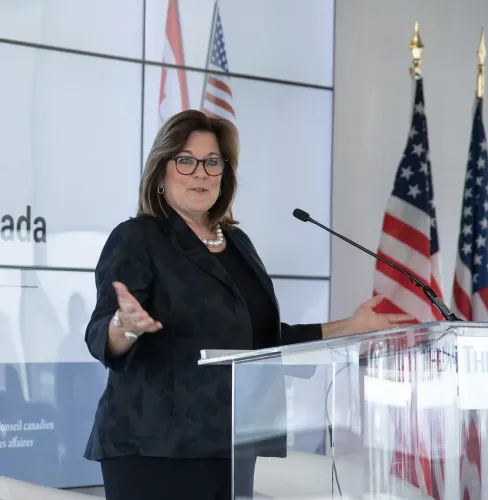
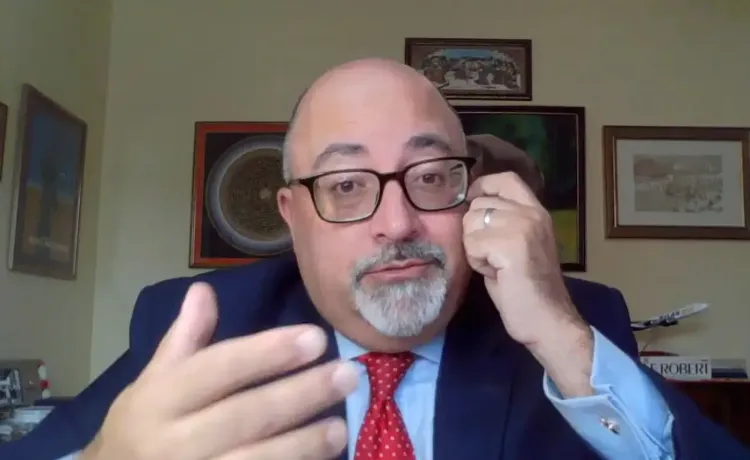
Washington, Dec 23 (NationPress) The United States and India need to finalize a longstanding trade agreement to facilitate greater economic integration and boost business confidence on both fronts, stated Atul Keshap, President of the US-India Business Council (USIBC), after his recent trip to India.
Keshap emphasized that his visit alongside USIBC Chair Ed Knight was aimed at gathering insights from Indian leaders and businesses regarding their perspectives on America, ongoing trade discussions, and investment trends.
“Our goal was to understand the Indian viewpoint on America and the trade deal,” he remarked, calling the trip “incredibly motivating.”
He highlighted that Indian representatives expressed a commitment to the negotiations with Washington, having diligently engaged in multiple discussions.
“From India's standpoint, they have extended an impressive proposal to the United States, and they are optimistic about concluding the trade negotiations,” he noted.
While he refrained from discussing specific details of the discussions, Keshap mentioned that the business sector is unified in its expectations.
“We strongly desire a trade deal. We want it finalized promptly, and it should be ambitious,” he stated, indicating it should act as “the cornerstone for even greater integration of the American and Indian economies.”
On the topic of US tariffs on Indian exports, Keshap pointed out that India is working to diversify its export markets to mitigate the effects.
He observed that India's merchandise exports to the United States had, nevertheless, seen growth in 2025.
“This is part of the ongoing negotiations where both parties are striving to determine the final tariff structure,” he explained.
Keshap emphasized that the uncertainty surrounding tariffs illustrates why businesses are eager for an agreement.
“An agreement would send a vital psychological signal that fosters greater confidence in both directions,” he noted, adding that investment decisions continue even amidst negotiations.
He highlighted significant US investment announcements in India in sectors like data centers and artificial intelligence.
“As leading democracies, the US and India should collaborate on advancing these transformative technologies,” he stated.
Keshap asserted that a deal reducing tariffs would be advantageous for producers and exporters in both nations. “Lower tariffs among allies yield the best outcomes,” he remarked, suggesting that innovative initiatives from India could enhance market access for American exporters.
He also stated that reaching an agreement would expedite progress towards the mutual aim of achieving $500 billion in bilateral trade in goods and services. “Shared prosperity is our ultimate goal,” he said.
The discussions regarding US-India trade occur against the backdrop of strengthening strategic cooperation in defense, supply chains, and technology.
Bilateral trade between the two nations has consistently increased over the last decade, with US companies increasingly recognizing India as a long-term investment hub.
Point of View
This article underscores the importance of international trade agreements in fostering economic growth. The discussions between the US and India highlight a strategic partnership that could lead to increased investments and a stronger economic landscape for both nations. It reflects a proactive approach toward enhancing bilateral relations, significantly benefiting both economies.
NationPress
19 Sept 2026
Frequently Asked Questions
Why is the US-India trade deal important?
The US-India trade deal is crucial for enhancing economic ties, boosting business confidence, and fostering investment opportunities between the two nations.
What are the expectations from the trade negotiations?
Business leaders expect an ambitious trade agreement that serves as a foundation for deeper economic integration.
How have US tariffs affected Indian exports?
US tariffs have prompted India to diversify its export markets, although its merchandise exports to the US have grown.
What sectors are seeing increased US investment in India?
Significant US investments in India are being observed in sectors such as data centers and artificial intelligence.
What is the shared goal of the US and India?
Both nations aim to achieve $500 billion in bilateral trade in goods and services, signifying shared prosperity.