Negotiations Between US and Iran Hit Roadblock Over Nuclear Issues
Synopsis
In a crucial dialogue, US Vice President JD Vance reveals that talks with Iran have encountered significant hurdles, primarily centered around nuclear disarmament demands. Despite progress, the US stands firm on key issues, keeping the future of negotiations uncertain.
Key Takeaways
US-Iran talks have reached a stalemate over nuclear disarmament.
Key US demands include the removal of enriched uranium.
Verification mechanisms are essential for any agreement.
The situation in the Strait of Hormuz is also a critical factor.
Future negotiations depend on Iran's willingness to accept US conditions.
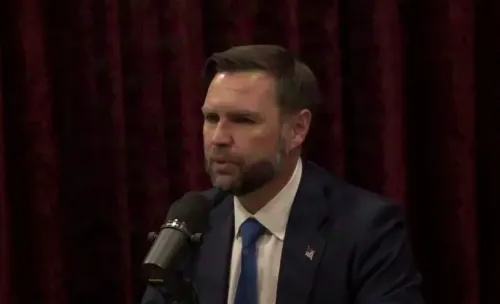
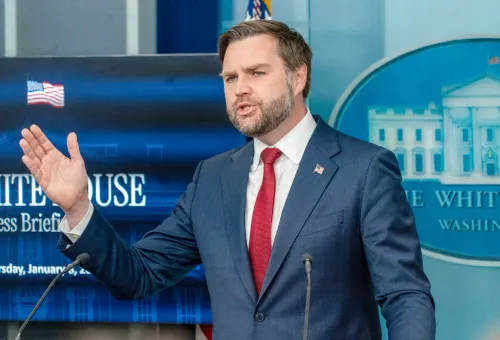
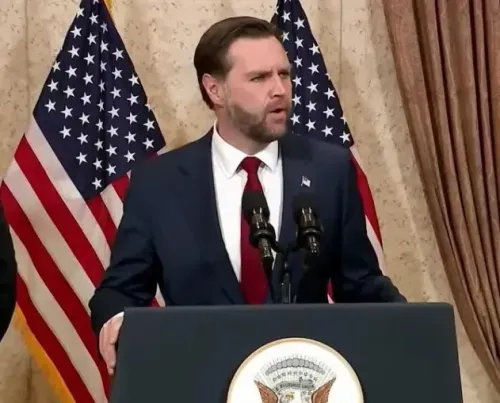
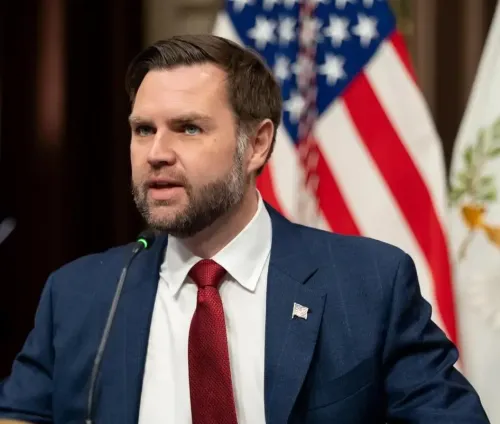
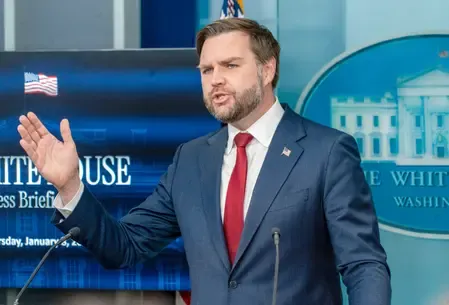
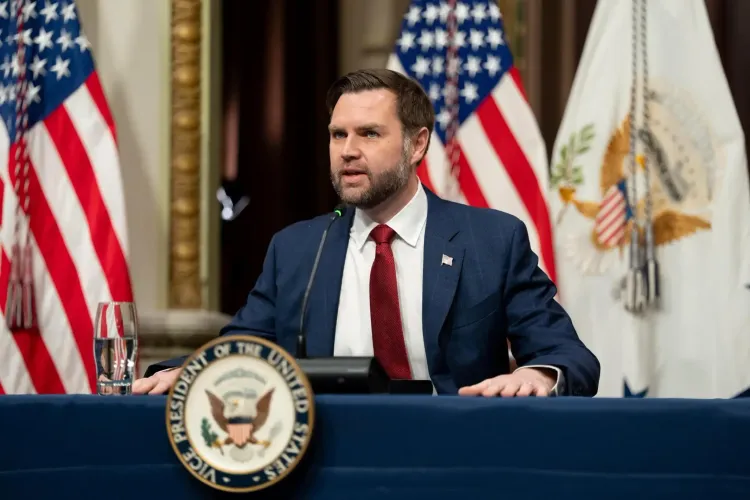
Washington, April 14 (NationPress) US Vice President JD Vance stated that discussions with Iran have achieved significant progress, yet a formal agreement remains elusive as the US maintains its stance on critical demands, such as the extraction of enriched uranium and enforceable limitations on Tehran's nuclear initiatives.
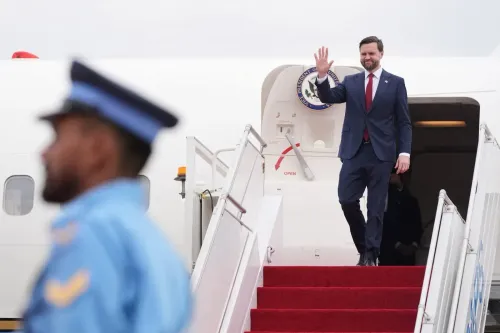
In a conversation with Fox News, Vance explained that the high-level negotiations conducted in Pakistan have highlighted both the areas where flexibility exists and the firm US "red lines".
“I wouldn’t claim that everything went wrong. There were positive developments too. We made substantial progress,” he commented, emphasizing that this marked “the first occasion where the Iranian and US governments engaged at such a high level.”
The primary obstacle, he noted, continues to be Washington’s firm requirement that Iran “must never possess a nuclear weapon,” a fundamental principle guiding all US negotiating strategies.
Vance articulated two essential, non-negotiable conditions. “We need to ensure that the enriched materials are removed from Iran,” referring specifically to uranium reserves. The second demand involves a “decisive commitment to refrain from developing a nuclear weapon,” which must be supported by verification processes.
“While it's one thing for the Iranians to assert that they will never pursue a nuclear weapon… verification is essential,” he stated.
Vance mentioned that Iranian negotiators had made some concessions “in our favor” but “did not go far enough,” leading both parties to pause negotiations and return to their respective capitals.
“The next move is really up to them,” he suggested, indicating that future discussions hinge on Tehran's readiness to accept US stipulations.
He also connected advancements in talks to larger regional matters, such as the reopening of the Strait of Hormuz, a vital global energy corridor.
“We need to see the strait fully operational,” he remarked, accusing Iran of attempting to “shift the goalposts” during negotiations. Despite a “notable increase in traffic,” he pointed out, “we have yet to witness complete reopening.”
Failure to restore full access, he cautioned, could “fundamentally alter the negotiations.”
On enforcement matters, Vance confirmed that US naval operations are targeting not just Iranian-flagged vessels but also ships associated with Iranian ports.
“Any ship we identify as heading to or coming from Iranian ports… we’re aware of,” he stated, referencing US intelligence capabilities.
He accused Iran of committing “economic terrorism against the global community” by threatening shipping routes through the strait, adding: “If Iran continues with its economic terrorism, we will uphold a simple principle: no Iranian vessels will be permitted to depart either.”
In spite of the tensions, Vance expressed optimism for a broader agreement.
“The President… would be pleased if Iran were treated as a conventional nation… if its population could prosper and flourish,” he noted. “However, it must behave like a normal country by not pursuing nuclear weapons… and refraining from terrorism.”
He also recognized that Iranian negotiators might require consent from higher authorities in Tehran before finalizing a deal. “They need to return… and secure approval for the terms we established,” he remarked.
Vance stressed the US's leverage in the negotiations, pointing to “military advantages” and “increased economic pressure… through the blockade.”
“We possess numerous advantages. We hold the leverage,” he concluded.
Point of View
It is essential to present an unbiased perspective on the stalled US-Iran negotiations. This situation underscores the complexities of international diplomacy, particularly concerning nuclear proliferation and regional stability. The outcome hinges on both nations' willingness to navigate their respective demands responsibly.
NationPress
19 Sept 2026
Frequently Asked Questions
What are the primary sticking points in the US-Iran negotiations?
The main issues revolve around the removal of enriched uranium and ensuring Iran's commitment not to develop nuclear weapons, with effective verification mechanisms.
Where are the negotiations currently taking place?
The high-level talks are being conducted in Pakistan.
What role does the Strait of Hormuz play in these discussions?
The reopening of the Strait of Hormuz is critical as it is a vital global energy route influencing broader regional dynamics.
What is the US's stance on Iran's nuclear capabilities?
The US insists that Iran must never possess a nuclear weapon, which is a fundamental principle in the negotiations.
How has Iran responded during the negotiations?
Iranian negotiators have shown some willingness to compromise but have not met US expectations sufficiently.