US, Japan push Quad coordination on maritime security and critical minerals
Synopsis
At their second Free and Open Indo-Pacific dialogue in Tokyo, the US and Japan explicitly invoked the Quad — naming India as a key coordination partner — on maritime security, critical minerals and strategic infrastructure. No funding was committed, but with Japan's updated FOIP vision formally on the table and bilateral defence-industrial ties deepening, the talks signal a significant push to move Quad cooperation from rhetoric to results.
Key Takeaways
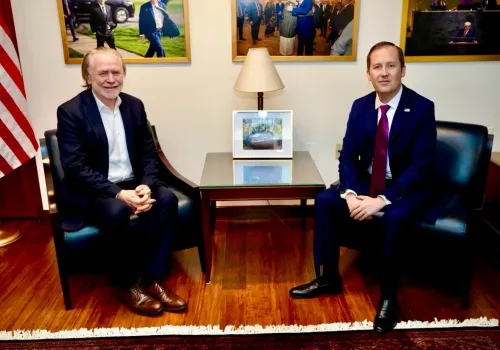
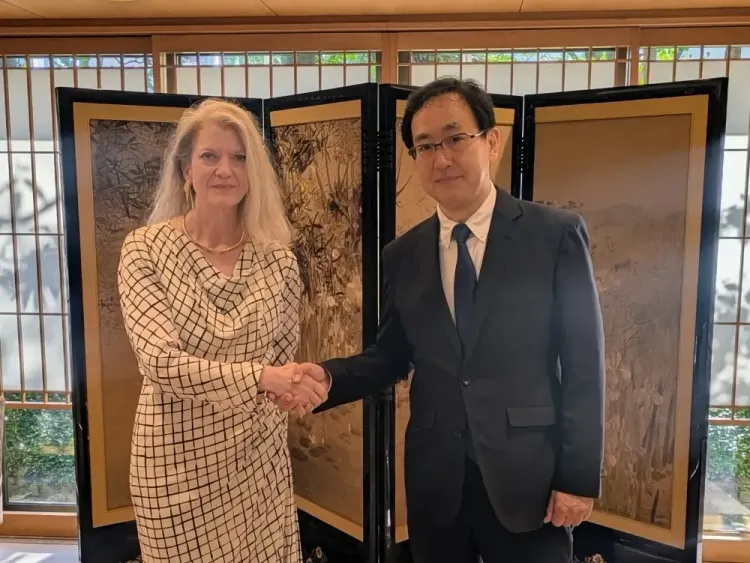
US Under Secretary Allison Hooker and Japanese Senior Deputy Minister Hiroyuki Namazu met in Tokyo for the second Free and Open Indo-Pacific dialogue on 13 October 2025 .
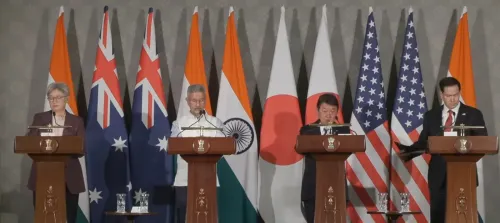
The two sides agreed to advance coordination through the Quad (Japan–Australia–India–US) , as well as groupings involving South Korea and the Philippines .
Strategic priorities discussed included maritime security , critical-mineral supply chains , deep-sea mineral development , digital connectivity , and energy security .
Infrastructure initiatives named included the Luzon Economic Corridor in the Philippines and the Japan–US Mekong Power Partnership .
No new funding, contracts, or timelines were announced; the US release described a progress review only.
Both sides reaffirmed commitment to denuclearisation of North Korea and the resolution of the abductions issue .
The United States and Japan agreed on Monday, 13 October 2025 to deepen coordination with Indo-Pacific partners — including India — on maritime security, critical minerals, and strategic infrastructure, during their second Free and Open Indo-Pacific (FOIP) dialogue held in Tokyo. The talks marked the 10th anniversary of the Free and Open Indo-Pacific vision and underscored Washington and Tokyo's intent to translate strategic alignment into concrete regional outcomes.
Key Developments from Tokyo Talks
US Under Secretary of State for Political Affairs Allison Hooker met Japanese Senior Deputy Minister for Foreign Affairs Hiroyuki Namazu for the milestone bilateral session, according to separate readouts issued by the US State Department and Japan's foreign ministry. The two sides agreed to advance coordination through several multilateral arrangements — most notably the Japan–Australia–India–US (Quad) partnership, as well as groupings involving South Korea and the Philippines.
Notably, India did not participate in Monday's bilateral dialogue. The reference to the four-country Quad grouping appeared in Japan's account of the meeting, not in the US release.
Strategic Infrastructure and Economic Security
Hooker and Namazu discussed aligning foreign assistance behind strategic infrastructure projects in priority countries. The US readout specifically identified the Luzon Economic Corridor in the Philippines and the Japan–US Mekong Power Partnership as initiatives under discussion. Economic-security topics covered critical-mineral supply chains, deep-sea mineral development, digital connectivity, and energy security.
The US release described a review of progress across those areas but did not announce funding amounts, new contracts, or a timetable for particular projects — signalling that the dialogue was directional rather than transactional at this stage.
Maritime Security and Regional Resilience
The officials agreed to coordinate security assistance more closely, particularly in support of maritime security and maritime domain awareness across Southeast Asia and the Pacific Islands. They also discussed closer cooperation with allies and welcomed Japan's growing engagement with NATO, along with progress in bilateral defence-industrial cooperation.
Namazu outlined Japan's updated Free and Open Indo-Pacific approach, announced by Prime Minister Sanae Takaichi in May. The State Department said the two sides noted close alignment between US priorities and Japan's refreshed vision, committing to translate that alignment into tangible results for both their own populations and the broader Indo-Pacific region.
Bilateral Sensitivities: Okinawa and ICC Sanctions
Japan's readout also recorded two sensitive bilateral matters absent from the US release. Namazu reiterated Japan's position on a robbery-murder incident in Okinawa, following a 10 October telephone conversation between Japanese Foreign Minister Toshimitsu Motegi and US Secretary of State Marco Rubio; consultations on the matter are set to continue. He also conveyed Japan's stance on recent US sanctions concerning the International Criminal Court (ICC) — the two sides agreed to maintain close communication, though no resolution was described.
Both official accounts confirmed that the United States and Japan reaffirmed their commitment to the complete denuclearisation of North Korea and the immediate resolution of the abductions issue.
What Comes Next
This comes amid growing strategic competition in the Indo-Pacific, with China's maritime assertiveness and North Korea's weapons programme sustaining pressure on Quad members to operationalise their coordination beyond summitry. With Japan's updated FOIP vision now formally tabled and Quad frameworks explicitly named, the next logical step will be whether India and Australia are brought into concrete project-level discussions. The absence of new funding commitments suggests the harder work of implementation lies ahead.
Point of View
Far harder to fund. For India, the asymmetry is worth watching: its name appears in Tokyo's account but not Washington's, and it was absent from the room entirely. Whether New Delhi translates that reference into concrete participation in the infrastructure and mineral supply-chain initiatives will be the real measure of Quad momentum in this cycle.
NationPress
13 Oct 2026
Frequently Asked Questions
What was agreed at the US–Japan Free and Open Indo-Pacific dialogue in Tokyo?
The US and Japan agreed to strengthen coordination with Indo-Pacific partners, including India through the Quad framework, on maritime security, critical minerals, strategic infrastructure, digital connectivity and energy security. The talks marked the 10th anniversary of the Free and Open Indo-Pacific vision.
What is the Quad and why was it mentioned in these talks?
The Quad is the Japan–Australia–India–US partnership focused on maintaining a free and open Indo-Pacific. It was referenced in Japan's account of the bilateral meeting as one of the key coordination mechanisms both sides agreed to advance, alongside groupings involving South Korea and the Philippines.
Did India participate in Monday's US–Japan dialogue?
No. India did not take part in the bilateral talks between the US and Japan in Tokyo. The reference to the four-country Quad grouping appeared only in Japan's readout of the meeting, not in the US State Department's release.
What specific infrastructure projects were discussed?
The two sides discussed the Luzon Economic Corridor in the Philippines and the Japan–US Mekong Power Partnership. No new funding amounts, contracts, or project timelines were announced at the meeting.
What bilateral tensions between the US and Japan surfaced at the talks?
Japan raised two sensitive matters: its government's position on a robbery-murder incident in Okinawa, following a 10 October call between Foreign Minister Toshimitsu Motegi and Secretary of State Marco Rubio; and Japan's concerns over recent US sanctions on the International Criminal Court. Both sides agreed to maintain close communication without announcing a resolution.