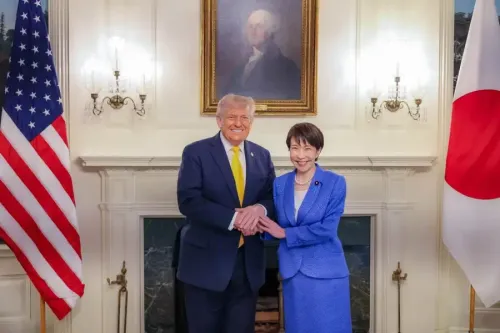
US-Japan Technology Prosperity Deal: AI, quantum and 6G cooperation deepened
Synopsis
Washington and Tokyo have moved their alliance well beyond defence into the technologies that define 21st-century power. The Technology Prosperity Deal now spans AI labelled 'super intelligence,' 6G, quantum, pharma supply chains and space — backed by a $1 billion energy partnership and matched $20 million AI fund. The scale and speed of the expansion signals both allies view technological alignment as a core national-security imperative.
Key Takeaways
The US and Japan outlined progress under their Technology Prosperity Deal in a joint statement on 6 October 2026 , covering AI , quantum , 6G , pharma , biotech and space .
White House science chief Michael Kratsios met Japan's science minister Toshiharu Furukawa in Kyoto on 5 October .
Washington reaffirmed a $20 million AI commitment from the 2025 APEC Summit ; Japan intends to match the contribution.
A $1 billion US Department of Energy–Japan strategic partnership, signed in June , has launched 11 joint scientific teams across 12 US national laboratories and 12 Japanese research institutions.
Japan became the first international partner in President Donald Trump's Genesis Mission .
The two sides signed a protocol on 2 October 2026 indefinitely extending their 1988 science and technology cooperation agreement, with updated intellectual property protections.
The United States and Japan have agreed to significantly expand their technology alliance, deepening cooperation across artificial intelligence, quantum technology, telecommunications, pharmaceuticals, biotechnology and space. A joint statement released by the US State Department on 6 October 2026 outlined concrete progress under the two allies' Technology Prosperity Deal, reinforcing their shared goal of securing strategic supply chains and shaping global standards for emerging technologies.
Key Developments from the Kyoto Talks
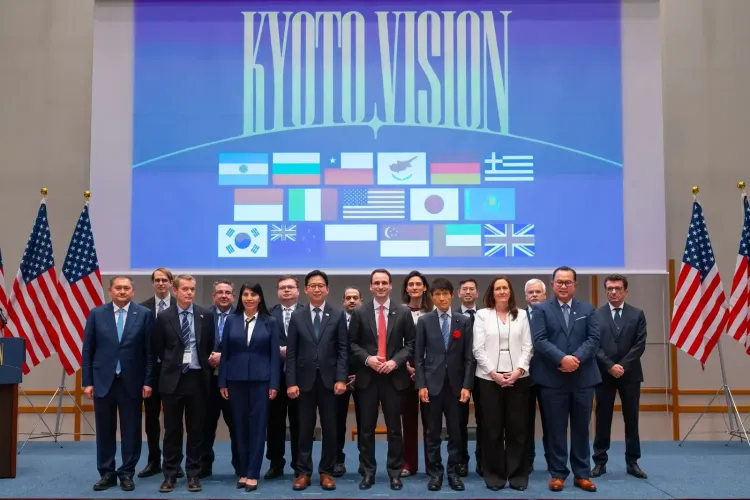
Michael Kratsios, Assistant to the President and Director of the White House Office of Science and Technology Policy, met Japan's Minister of State for Science and Technology Policy Toshiharu Furukawa in Kyoto on 5 October 2026. The talks assessed progress since the two governments signed a memorandum of cooperation on the Technology Prosperity Deal on 28 October 2025.
Both sides reaffirmed the urgency of aligning on strategic science and technology capabilities as innovation accelerates worldwide. The meeting underscored that the partnership has moved well beyond traditional defence ties into the economic and technological domains that now define great-power competition.
Artificial Intelligence and 'Physical SI'
A centrepiece of the expanded deal is artificial intelligence, described in the agreement as 'super intelligence.' Washington and Tokyo committed to enhanced dialogue on AI, working towards best practices for industry standards and a secure innovation ecosystem. They also agreed to promote the adoption of trusted AI technologies and a pro-innovation regulatory environment across the Indo-Pacific.
Washington reaffirmed a $20 million commitment announced at the 2025 APEC Summit, with Japan signalling its intent to match that contribution. The two countries are also expanding cooperation on what they term 'physical SI' — combining Japan's strengths in hardware, industrial robotics and industrial data with US capabilities in AI models — through bilateral exchanges, joint research and development programmes and supply-chain mapping.
Science, Energy and Quantum Priorities
On 2 October 2026, the two governments signed a protocol indefinitely extending their 1988 agreement on cooperation in science and technology research and development, with updated intellectual property protections. Washington and Tokyo also highlighted a $1 billion strategic partnership established in June between the US Department of Energy and Japanese ministries.
Japan became the first international partner in President Donald Trump's Genesis Mission under the initiative. Eleven joint scientific teams have since been launched, bringing together 12 US Department of Energy national laboratories, a DOE Office of Science user facility and 12 Japanese research institutions. Their work covers quantum information science, fusion energy, biotechnology, advanced materials, particle physics and autonomous laboratory systems.
On quantum technology specifically, Washington and Tokyo committed to securing quantum-sector supply chains, strengthening measurement standards and exploring applications of quantum sensing in healthcare.
Telecom, Pharma and Space
Telecommunications forms another significant pillar, with both nations pursuing joint research on Beyond 5G and 6G networks and expanding digital connectivity cooperation across the Indo-Pacific.
On pharmaceuticals, the two sides have identified essential active pharmaceutical ingredients for an initial supply-chain analysis, with US and Japanese regulators establishing an information-sharing platform on advanced pharmaceutical manufacturing and health agencies working towards joint biomedical research.
In space, NASA and the Japan Aerospace Exploration Agency (JAXA) marked the August launch of the Nancy Grace Roman Space Telescope, for which Japan supplied optical elements and established ground stations to receive mission data. US and Japanese researchers are also collaborating on fusion projects including Japan's JT-60SA programme and research at the US DIII-D National Fusion Facility.
Strategic Significance for the Indo-Pacific
The US-Japan technology initiative is part of a wider effort by Washington and Tokyo to align economic and national-security policies around strategically important technologies and resilient supply chains. This comes amid intensifying global competition in semiconductors, AI and clean energy, where both allies have identified supply-chain vulnerabilities exposed by the pandemic and ongoing geopolitical tensions. The breadth of Monday's announcement — spanning at least seven distinct technology domains — signals that the partnership has become a cornerstone of both nations' technology strategies.
With sectoral work programmes now under way and a $1 billion energy partnership already in motion, the coming months will test whether the ambition of the Technology Prosperity Deal translates into measurable supply-chain resilience and shared technical standards.
Point of View
A $1 billion energy partnership and a matched AI fund — confirms that the US-Japan alliance has undergone a structural transformation from a security pact into a comprehensive technology and economic bloc. What is underreported is the 'physical SI' framing: by explicitly combining Japanese industrial robotics and hardware with American AI models, Washington and Tokyo are attempting to build a vertically integrated technology stack that rivals China's. The challenge, as with all such declarations, is execution — joint research programmes and supply-chain mapping exercises have a mixed record of translating into actual resilience. The real test will be whether the pharmaceutical supply-chain analysis and quantum-sector commitments produce measurable outcomes before the next geopolitical stress event reveals the same vulnerabilities.
NationPress
6 Oct 2026
Frequently Asked Questions
What is the US-Japan Technology Prosperity Deal?
The Technology Prosperity Deal is a bilateral framework under which the United States and Japan are deepening cooperation across artificial intelligence, quantum technology, telecommunications, pharmaceuticals, biotechnology and space. The two governments first signed a memorandum of cooperation under the deal on 28 October 2025, and a joint statement on 6 October 2026 outlined significant progress across all agreed domains.
What did the US and Japan agree on AI?
The two countries committed to enhanced dialogue on AI — described in the agreement as 'super intelligence' — and pledged to work towards best practices for industry standards and a secure innovation ecosystem. Washington reaffirmed a $20 million commitment from the 2025 APEC Summit, with Japan intending to match that figure, and both sides agreed to promote trusted AI adoption across the Indo-Pacific.
What is the $1 billion US-Japan energy partnership?
A $1 billion strategic partnership between the US Department of Energy and Japanese ministries was established in June 2026, under which Japan became the first international partner in President Donald Trump's Genesis Mission. Eleven joint scientific teams have been launched, spanning 12 US national laboratories and 12 Japanese research institutions working on quantum science, fusion energy, biotechnology and advanced materials.
How does the Nancy Grace Roman Space Telescope fit into the partnership?
NASA and JAXA marked the August 2026 launch of the Nancy Grace Roman Space Telescope as a milestone in bilateral space cooperation. Japan supplied optical elements for the telescope and established ground stations to receive mission data, exemplifying the hardware-software collaboration model the two allies are extending across other technology domains.
Why does the US-Japan technology partnership matter for the Indo-Pacific?
The two allies are explicitly linking their technology cooperation to the Indo-Pacific region, promoting trusted AI adoption, expanding digital connectivity and pursuing Beyond 5G and 6G research across the region. The partnership is widely seen as part of a broader effort to counter China's technological influence and establish alternative supply chains and standards in strategically critical sectors.