U.S. Trade Report Identifies China as Systemic Economic Adversary
Synopsis
A new U.S. trade report starkly contrasts its approach to India, categorizing China as a systemic adversary with ambitions of global predominance. The findings highlight unresolved issues, including aggressive industrial policies and forced technology transfers.
Key Takeaways
Trade Report: Identifies China as a systemic economic rival.
Industrial Policies: China's strategies aim to dominate key industries.
Technology Transfer: Concerns about forced technology sharing persist.
Trade Relations: U.S. exports to China reached $106.3 billion in 2025.
Navigating Uncertainty: Regulatory measures complicate trade dynamics.
Washington, April 1 (NationPress) In a stark contrast to its cautious stance on India, a recent U.S. trade report depicts China as a deeply rooted and systemic adversary — characterized not merely by trade barriers but by a state-directed approach aimed at achieving global supremacy.
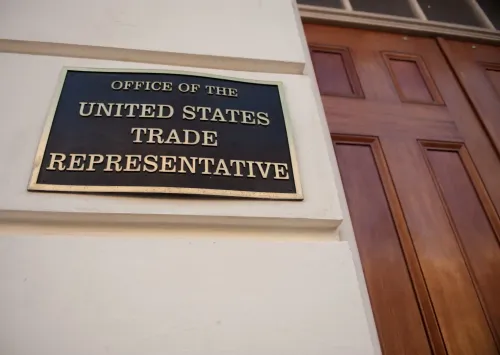
The latest report from the Office of the United States Trade Representative (USTR) indicates that China’s policies extend beyond conventional trade barriers, reflecting a comprehensive strategy to dominate pivotal industries.
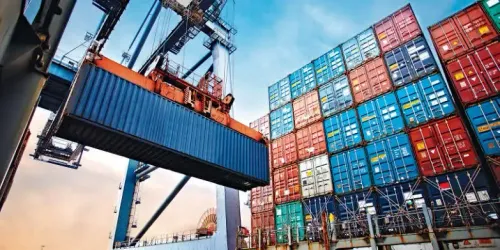
According to the 2026 National Trade Estimate (NTE) report, U.S. exports to China reached $106.3 billion in 2025, yet persistent concerns remain unaddressed.
Central to the critique is China’s industrial policy. The report highlights Beijing's ongoing efforts to substitute foreign technology with domestic options.
These strategies are crafted to increase the market share of Chinese enterprises in both domestic and international arenas.
“China pursues an extensive array of industrial initiatives… that focus on achieving dominance in various sectors for Chinese companies,” the report states.
The USTR labeled these practices as “unreasonable” and detrimental to U.S. commerce.
Furthermore, the report raised alarms regarding enforced technology transfer, noting that U.S. firms still encounter pressure to relinquish technology in exchange for market access.
Concerns regarding intellectual property rights and cyber intrusions persist as well.
The report asserts that China has not fully honored its commitments outlined in the Phase One trade deal signed in 2020.
It pointed out deficiencies in areas like agriculture, market access, and intellectual property.
In agriculture, the report notes that China’s approval process for biotechnology products remains sluggish and ambiguous, with import restrictions being applied inconsistently.
The USTR further indicated that China employs regulatory measures to control imports, including food safety regulations, licensing requirements, and certification processes.
Such tactics can disrupt trade and generate uncertainty for exporters.
In response, Washington has implemented tariffs and initiated investigations in recent years.
The report mentioned new actions aimed at China’s semiconductor industry. It stated that Beijing’s policies in this domain are designed to marginalize foreign competitors and foster global dependency.
Concerns were also expressed regarding China’s involvement in shipbuilding and logistics, where state-sponsored expansion has diminished competition.
China's strategy for establishing technical standards faced criticism, as the report claims Beijing is leveraging its market size to influence global standards to its advantage.
The tone of the report contrasts sharply with the U.S. strategy towards nations like India.
While India is perceived as a challenging yet evolving market, China is characterized as a systemic opponent.
The report asserts that the very economic model of China clashes with established market principles.
Moreover, it emphasized that U.S. trade policy concerning China is now intricately linked to national security considerations.
The findings underscore a significant shift in Washington’s approach. China is no longer viewed merely as a trading partner but as a key economic rival.
Point of View
It is imperative to recognize that the U.S. trade report articulates a significant shift in perspective towards China. The concerns raised reflect a comprehensive view of economic competition intertwined with national security, emphasizing the need for a strategic response.
NationPress
7 Oct 2026
Frequently Asked Questions
What does the U.S. trade report say about China?
The report portrays China as a systemic challenge, emphasizing its state-led model aimed at global dominance and highlighting issues like forced technology transfer and unresolved trade barriers.
How do U.S. exports to China compare?
U.S. exports to China were valued at $106.3 billion in 2025, indicating significant trade but also highlighting ongoing concerns.
What are the main criticisms directed at China's policies?
Criticisms include China's aggressive industrial policies aimed at replacing foreign technology, forced technology transfers, and inconsistent import regulations.
How does the U.S. view its relationship with India compared to China?
The U.S. views India as a challenging yet evolving market, whereas China is seen as a systemic adversary.
What implications does the report have for future trade policies?
The findings suggest that U.S. trade policy towards China will now be closely tied to national security concerns, indicating a possible shift in strategy.