US launches $201 million Trans-Caspian fund to boost Middle Corridor trade
Synopsis
Washington is putting $201 million behind the idea that trade routes can do what diplomacy alone could not — hold a fragile peace together. The Trans-Caspian Enterprise Fund, announced on the first anniversary of the Trump-brokered Armenia-Azerbaijan declaration, is the most concrete signal yet that the US intends to make the Middle Corridor a geopolitical and commercial reality, bypassing Russia and Iran in the process.
Key Takeaways
The US launched the Trans-Caspian Enterprise Fund with $201 million in government capital on 10 August .
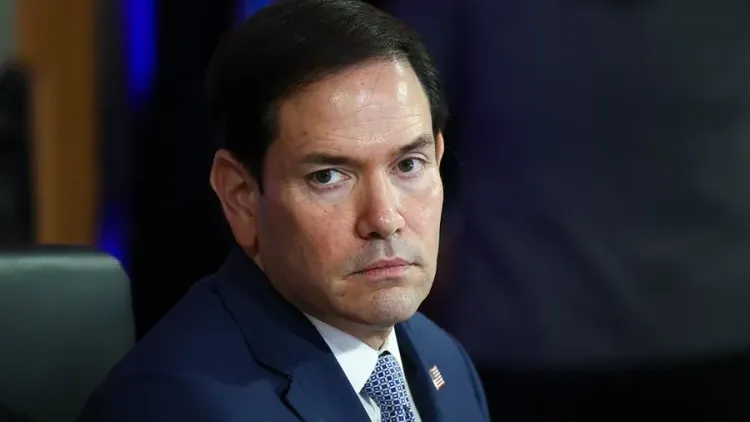
Secretary of State Marco Rubio announced the fund is operational with a newly elected board of directors.
The fund supports the Trump Route for International Peace and Prosperity (TRIPP) , a multimodal corridor covering railways, roads, energy, and digital links across the South Caucasus and Central Asia .
Engineering surveys for the railway section in Armenia are already underway; Azerbaijan is nearing completion of a connecting highway and railway.
The corridor is designed to bypass traditional trade routes through Russia and Iran , connecting Europe and Asia .
Armenia and Azerbaijan fought repeated wars over Nagorno-Karabakh ; Azerbaijan retook the enclave in September 2023 .
The United States has launched the Trans-Caspian Enterprise Fund with $201 million in government capital to accelerate private investment along the Trans-Caspian Trade Route, also known as the Middle Corridor, marking a significant step in Washington's effort to transform a US-brokered peace between Armenia and Azerbaijan into a functioning regional economic corridor.
What the Fund Covers
Secretary of State Marco Rubio announced on 10 August that the fund was operational, led by a newly elected board of directors. 'Today, I am pleased to announce that the Trans-Caspian Enterprise Fund is up and running, led by a newly elected board of directors and capitalized with $201 million in U.S. government funding to spur private sector investment across the Trans-Caspian Trade Route (Middle Corridor) in the South Caucasus and Central Asia,' Rubio said.
The fund is designed to catalyse private-sector participation in a proposed multimodal corridor spanning railways, roads, energy links, and digital infrastructure across the South Caucasus and Central Asia.
The TRIPP Framework and Its Origins
The announcement coincided with the first anniversary of a joint declaration signed at the White House by Armenian Prime Minister Nikol Pashinyan and Azerbaijani President Ilham Aliyev, witnessed by President Donald Trump. The administration says the agreement ended decades of conflict in the South Caucasus and launched the Trump Route for International Peace and Prosperity (TRIPP).
Rubio said engineering surveys for the railway section in Armenia were already underway, while Azerbaijan was nearing completion of a highway and railway designed to connect with Armenia. 'The TRIPP — a multimodal transit route that will modernize rails, road, energy and digital infrastructure — is on its way to becoming a reality,' he said.
Strategic and Geopolitical Significance
The corridor occupies a strategically critical position between Europe and Asia, and its full implementation could meaningfully expand trade flows while bypassing traditional overland routes through Russia and Iran. This comes amid growing Western interest in diversifying Eurasian trade infrastructure, particularly since Russia's 2022 invasion of Ukraine elevated the Middle Corridor's relevance as an alternative supply chain.
Notably, the South Caucasus has historically been one of the world's most contested transit zones. Armenia and Azerbaijan fought repeated wars over Nagorno-Karabakh following the collapse of the Soviet Union. Azerbaijan regained control of the Armenian-populated enclave in September 2023, prompting most of its ethnic Armenian population to flee to Armenia — a displacement that continues to shape the fragility of the current peace.
Washington's Broader Bet on Economic Diplomacy
Rubio framed the fund as proof that economic integration can consolidate political peace. 'This progress reflects a simple truth: peace and prosperity reinforce one another,' he said. 'TRIPP is more than an infrastructure project — it is a vital link in the Trans-Caspian Trade Route, a driver of commercial opportunities for the United States and others, and a model for how economic cooperation can cement peace following the resolution of long-standing disputes.'
Washington said the settlement has also opened the door to stronger American relations with both Yerevan and Baku, with Rubio pledging continued engagement. The corridor's full realisation, however, will depend on sustained cooperation between two nations carrying decades of deep mutual mistrust — a test that infrastructure funding alone cannot resolve.
Point of View
But it is also a political signal: Washington is betting that economic entanglement can lock in a peace that remains structurally fragile. The displacement of ethnic Armenians from Nagorno-Karabakh in 2023 is an unresolved grievance that no railway survey can paper over. More critically, the Middle Corridor's viability as a Russia-and-Iran bypass depends on consistent US engagement — precisely the kind of long-horizon commitment that shifts with administrations. The TRIPP framing is shrewd branding, but the corridor's staying power will be measured not in fund launches but in freight tonnage a decade from now.
NationPress
24 Sept 2026
Frequently Asked Questions
What is the Trans-Caspian Enterprise Fund?
The Trans-Caspian Enterprise Fund is a $201 million US government-backed initiative launched on 10 August to catalyse private investment along the Trans-Caspian Trade Route, also called the Middle Corridor, spanning the South Caucasus and Central Asia. It operates under a newly elected board of directors and was announced by Secretary of State Marco Rubio.
What is the TRIPP corridor and what does it include?
TRIPP — the Trump Route for International Peace and Prosperity — is a proposed multimodal transit corridor linking Armenia and Azerbaijan through railways, roads, energy infrastructure, and digital networks. It is designed to connect Europe and Asia while bypassing traditional routes through Russia and Iran.
How does this relate to the Armenia-Azerbaijan peace deal?
The fund marks the first anniversary of a joint declaration signed at the White House by Armenian Prime Minister Nikol Pashinyan and Azerbaijani President Ilham Aliyev, witnessed by President Donald Trump. The US administration says the agreement ended decades of conflict and the fund is intended to translate that diplomatic breakthrough into economic reality.
How advanced is construction of the corridor?
Engineering surveys for the railway section in Armenia are already underway, according to Rubio. Azerbaijan is reportedly nearing completion of a highway and railway intended to connect with Armenia as part of the broader corridor.
Why is the Trans-Caspian route geopolitically significant?
The Middle Corridor offers an overland trade link between Europe and Asia that bypasses Russia and Iran, making it strategically attractive for Western nations seeking to diversify Eurasian supply chains. Interest in the route has grown sharply since Russia's 2022 invasion of Ukraine disrupted northern transit options.