US Readies Naval Escorts for Commercial Ships in Hormuz Amid Rising Tensions
Synopsis
The US is set to deploy naval escorts in the Strait of Hormuz as tensions escalate in the Middle East, impacting global energy supplies. This proactive measure underscores the commitment to maritime security in a crucial trade route.
Key Takeaways
The US is prepared to provide naval escorts for commercial vessels in the Strait of Hormuz.
Heightened tensions in the Middle East have implications for global energy supplies.
US military actions include neutralizing inactive mine-laying vessels.
India is concerned about the safety of energy shipments through the strait.
Diplomatic efforts are underway to address regional security issues.
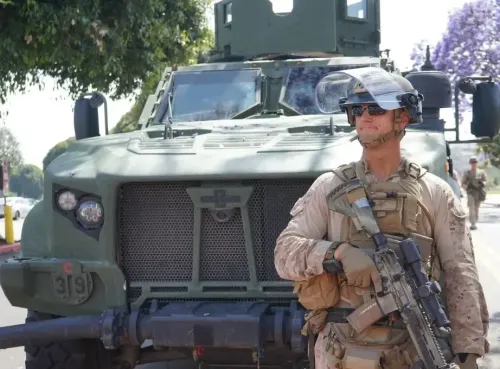
On March 13, Washington (NationPress) announced that the United States is thoroughly equipped to send naval escorts for commercial ships navigating the vital Strait of Hormuz amidst rising tensions in the Middle East, which could significantly impact global energy supply routes.
According to White House Deputy Press Secretary Anna Kelly, President Trump is ready to authorize US Navy escorts through the Strait of Hormuz if deemed necessary. "Our military has successfully neutralized over 20 inactive mine-laying vessels, with more actions anticipated," she stated during an interaction with IANS.
The remarks from the White House come as the US evaluates strategies to secure maritime traffic through this crucial waterway that accounts for a substantial portion of the world's energy trade.
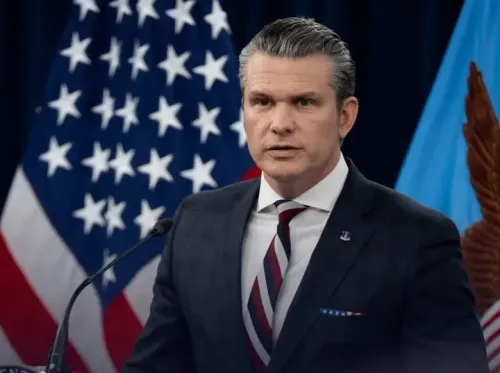
US Treasury Secretary Scott Bessent indicated that the Navy might commence escorting vessels through the strait, potentially in collaboration with an international coalition, once it is deemed safe.
In comments reported by Breaking911, Bessent noted that the US had been preparing for such scenarios for months.
"I believe that as soon as it is militarily feasible, the US Navy, possibly with the support of an international coalition, will be escorting vessels through the region," he remarked.
"We have been conducting scenario analyses for weeks leading up to this point," Bessent added, suggesting that preparations for maritime security initiatives are already in progress.
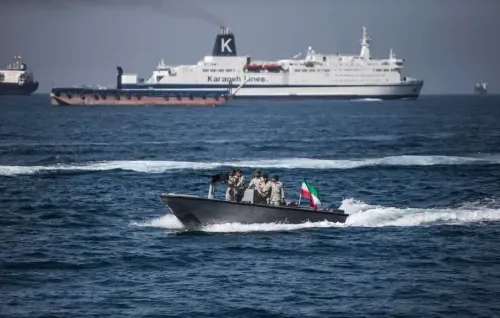
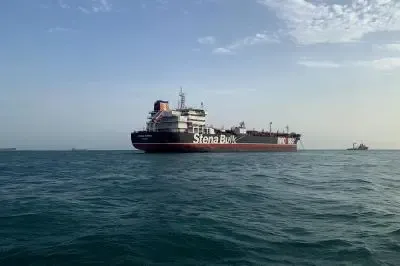
Shipping activities through the Strait of Hormuz have significantly declined following recent attacks on vessels and heightened military tensions in the area. This strait, situated between Iran and Oman, is among the most critical maritime chokepoints for the oil and gas industry.
Reports from maritime alerts in international media indicated that a cargo ship was hit by an "unknown projectile" approximately 50 nautical miles northwest of Dubai, resulting in a fire onboard and necessitating crew evacuation. The UK Maritime Trade Operations center confirmed that all crew members were safe and that investigations are ongoing.
Authorities have cautioned ships operating in this region to remain vigilant and report any suspicious activities.
This disruption has raised alarms for India, which heavily depends on energy shipments transiting through this critical corridor.
Prime Minister Narendra Modi engaged in discussions with Iranian President Masoud Pezeshkian about the escalating situation in the region.
"I had a conversation with Iranian President Dr. Masoud Pezeshkian to address the serious circumstances unfolding in the region," Modi communicated through a post on X.
"I expressed profound concern regarding the rising tensions and the casualties among civilians, as well as the damage inflicted on civilian infrastructure," he added.
"The protection and security of Indian nationals, along with ensuring the uninterrupted transport of goods and energy, remain India's primary concerns. I reiterated our commitment to peace and stability and urged the need for dialogue and diplomacy," the Prime Minister emphasized.
Indian officials noted that this call marked the first direct interaction between the two leaders since the onset of the conflict last month.
In recent days, New Delhi has intensified its diplomatic outreach across West Asia. PM Modi has held discussions with several regional leaders from Oman, Kuwait, Bahrain, Saudi Arabia, the UAE, Jordan, Israel, and Qatar.
External Affairs Minister S. Jaishankar has also engaged with Iranian Foreign Minister Abbas Araghchi on matters concerning maritime security.
"The External Affairs Minister and the Iranian Foreign Minister have had three discussions in recent days, with the latest focusing on shipping safety and India's energy security. Beyond that, I cannot disclose more at this time," External Affairs Ministry spokesperson Randhir Jaiswal stated during a press briefing.
Point of View
Emphasizing the need for international cooperation to ensure the safety of maritime operations and the flow of vital energy supplies.
NationPress
19 Sept 2026
Frequently Asked Questions
What is the significance of the Strait of Hormuz?
The Strait of Hormuz is a critical maritime chokepoint through which a significant portion of the world's oil and gas trade passes, making it essential for global energy security.
Why is the US deploying naval escorts?
The US is deploying naval escorts in response to escalating tensions and recent attacks on vessels in the region, aiming to ensure the safe passage of commercial shipping.
How has the situation affected shipping activities?
Shipping activities in the Strait of Hormuz have declined sharply due to increased military tensions and attacks, raising concerns for countries reliant on energy imports.
What diplomatic efforts is India undertaking?
India is actively engaging in diplomatic discussions with regional leaders to ensure the safety of its nationals and the uninterrupted flow of energy supplies.
What preparations has the US Navy made?
The US Navy has been conducting scenario analyses and preparations for potential maritime security operations in the Strait of Hormuz for several months.