US scam crackdown targets over 800 people in 400-plus cases

Synopsis
The US Justice Department says its scam crackdown reached more than 800 people across over 400 cases, while an FBI operation helped free more than 2,200 forced workers from fraud compounds. Nearly $17 billion was placed under legal restrictions, but the amount returned to victims was not specified.
Key Takeaways
The US Justice Department reported action against more than 800 people in over 400 scam cases since March.
The cases span 85 federal court districts , and 30 people were brought to the United States from other countries to face charges.
Operation Blackout helped free and return home more than 2,200 people forced to work in scam compounds, the FBI said.
The FBI reported placing nearly $17 billion in illicit funds under legal restrictions, without specifying victim repayments.
In Georgia , 14 people were charged in three federal and state cases involving alleged jury-duty scams.
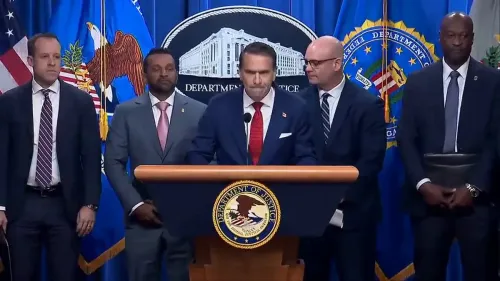
The US Justice Department said on 24 November that a scam crackdown had led to action against more than 800 people in over 400 cases since March. The campaign spans federal court districts across the United States and overseas fraud centres, where investigators helped free people forced to scam victims.
The announcement brings together months of enforcement activity, including charges, extraditions, convictions and prison sentences; it does not mean hundreds of people were arrested on a single day. No year was specified for the announcement.
Enforcement across US courts and overseas
The cases cover 85 federal court districts, according to the department. It said 30 people had been brought to the United States from other countries to face scam-related charges.
American investigators also assisted authorities in more than 10 countries with raids on call centres and compounds targeting Americans. The department described the work as part of a broader response to fraud and cybercrime.
US Attorney General Todd Blanche said: “Predatory scams against the American people will not be tolerated.”
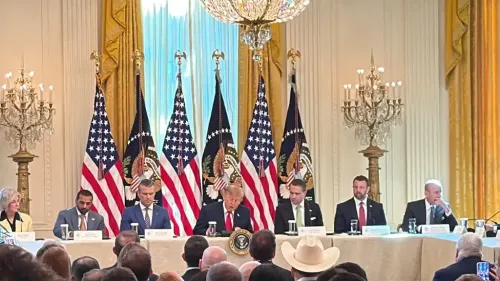
The campaign followed a 6 March executive order by US President Donald Trump directing federal agencies to intensify their response to cybercrime and fraud.
Operation Blackout and forced workers
Under Operation Blackout, the Federal Bureau of Investigation (FBI) said it helped identify, disrupt and dismantle more than 29 scam compounds across Asia, Africa and the Middle East.
Investigators seized more than 14,000 digital devices and helped free and return home more than 2,200 people who had been forced to work in the compounds. The operation led to federal charges against more than 50 people, the department said.
Authorities overseas also arrested or detained more than 320 other people with FBI assistance. The figures describe different enforcement outcomes, rather than a single category of arrests.
Funds restricted and consumer repayments
The FBI reported that nearly $17 billion in illicit funds had been placed under legal restrictions. The announcement did not say how much of that money had been returned to victims or how many people had received payments.
Separately, Federal Trade Commission Chairman Andrew Ferguson said his agency had returned almost $3 billion to consumers harmed by fraud and deception. The release did not provide a matching timeframe or establish whether the amounts overlap, so the two figures cannot be added together.
The distinction matters for people affected by fraud: restricting assets is not the same as returning money, while the commission’s repayment figure was presented separately from the FBI total.
Scam methods and Georgia charges
The cases included fake cryptocurrency investments, inheritance and sweepstakes scams, and payment demands backed by threats of arrest or deportation. Such schemes used different approaches but shared a demand that victims hand over money.
In Georgia, prosecutors accused current and former prison gang members of using smuggled mobile phones to tell victims they had missed jury duty and had to pay fines to avoid arrest. The department said 14 people were charged in three federal and state cases involving those alleged schemes.
Those charges have not been proved in court. The cases will proceed through the legal process, while the announcement leaves open how much of the restricted funding may ultimately reach victims.
Point of View
Extraditions, convictions and sentences, making a single headline figure an incomplete measure of outcomes. Authorities should publish comparable timeframes and repayment data so the public can assess both accountability and recovery.
NationPress
24 Nov 2026
Frequently Asked Questions
How many people were targeted in the US scam crackdown?
The Justice Department said it had taken action against more than 800 people in over 400 scam cases since March. The total combines several types of enforcement action and does not represent arrests on a single day.
What is Operation Blackout?
Operation Blackout is an FBI operation that helped identify, disrupt and dismantle more than 29 scam compounds across Asia, Africa and the Middle East. The FBI said it helped free and return home more than 2,200 people forced to work in the compounds.
How much money was returned to scam victims?
The announcement did not say how much of the nearly $17 billion placed under legal restrictions by the FBI had been returned to victims. Separately, the Federal Trade Commission chairman said his agency had returned almost $3 billion to consumers, without a matching timeframe or clarity on any overlap.
What scams were covered by the US cases?
The cases covered fake cryptocurrency investments, inheritance and sweepstakes scams, and demands backed by threats of arrest or deportation. Prosecutors also alleged a jury-duty fine scheme in Georgia.
What happens next in the Georgia jury-duty scam cases?
The charges against 14 people in three federal and state cases have yet to be proved in court. Prosecutors allege that current and former prison gang members used smuggled phones to demand payments from victims.