FBI seizes $17 billion in global scam raids, frees thousands of trafficked workers
Synopsis
FBI Director Kash Patel told the US Senate that Operation Blackout netted $17 billion from international scam compounds in Southeast Asia and the Middle East — operations that also freed thousands of trafficked workers. With the global fraud industry estimated at $240 billion and growing, the FBI is now pushing Congress to establish dedicated inter-agency teams targeting scams against senior citizens.
Key Takeaways
FBI Director Kash Patel told the Senate Judiciary Committee on 16 September 2026 that the bureau seized $17 billion from international scam centres.
Operations spanned Southeast Asia (including Burma and Thailand ) and an unidentified Middle Eastern country, freeing thousands of trafficked workers and making hundreds of arrests.
Patel estimated the global fraud industry at approximately $240 billion , calling the figure likely conservative.
The FBI's Operation Blackout is described as the only US law enforcement-led initiative focused specifically on cross-border scam compounds.
Six fugitives on the FBI's new Most Wanted Fraudsters list were captured; one was arrested in Vietnam for allegedly defrauding Medicaid of over $100 million .
Patel urged Congress to create dedicated inter-agency teams to combat scams targeting senior citizens .
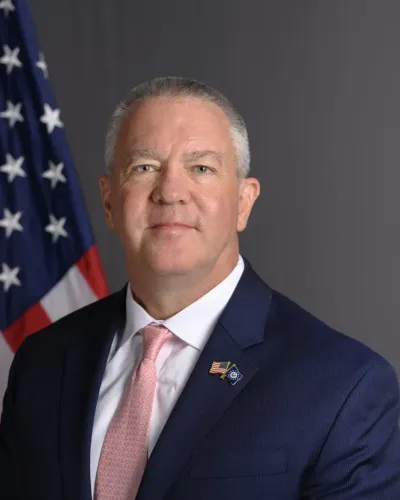
FBI Director Kash Patel told US lawmakers on Tuesday, 16 September 2026 that the bureau had seized $17 billion tied to international scam centres, rescued thousands of trafficked workers, and made hundreds of arrests during joint operations across Southeast Asia and the Middle East. The disclosures came during an oversight hearing of the Senate Judiciary Committee, where Patel painted a stark picture of a global fraud industry he valued at roughly $240 billion annually.
Scale of the Fraud Crisis
Patel described the overall criminal ecosystem as staggering in size. 'The entire enterprise is probably $240 billion in fraud, and that's probably low,' he told senators. He outlined two broad categories of criminal activity: fraud targeting government programmes — including Medicare, Medicaid, food assistance and pandemic-era business relief — and scam centres that directly contact victims by telephone, email or text message.
'They are looking to basically call, email, text you and your constituents across this country and take you for everything you've got, your retirement, your life savings, your kids' college education, what have you,' Patel said, addressing lawmakers directly.
Operation Blackout: Raiding Cross-Border Compounds
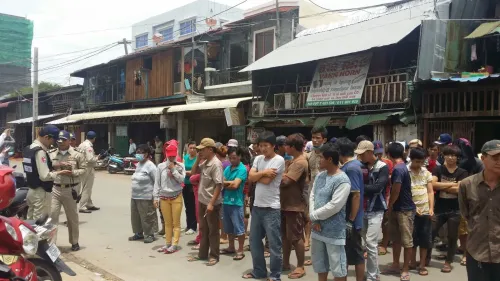
The FBI launched Operation Blackout specifically to dismantle scam centres operating across national borders, including in Burma and Thailand. Patel described it as the only law enforcement-led US government initiative focused on such compounds. The bureau worked alongside foreign law enforcement partners during the raids.
'We stood up a symposium there. We went and raided four compounds there,' Patel said. 'We raided another in the Middle East. We seized $17 billion in illicit gotten gains out of these scam center fraud schemes. We freed thousands of trafficked workers and made hundreds of arrests.' He did not identify the Middle Eastern country involved, nor did he provide a detailed breakdown of the seized funds, arrests, or the number of rescued workers.
Patel noted that some of the targeted compounds were vast enough to resemble small cities. Workers allegedly trafficked into these facilities were reportedly forced to conduct online fraud against victims in other countries. 'We went in there with our partners and bulldozed them to end the fraud,' he said.
Most Wanted Fraudsters List: Six Captured
The FBI director also revealed that the bureau had apprehended six fugitives from its newly created Most Wanted Fraudsters list. These suspects had collectively evaded capture for approximately 5,000 days before being caught. One individual was arrested in Vietnam after allegedly defrauding the US Medicaid programme of more than $100 million. Other suspects had reportedly fled to Africa, Southeast Asia, and other distant jurisdictions after allegedly stealing hundreds of millions of dollars.
'We brought them all back to be prosecuted,' Patel said. 'And we're looking to seize all those funds.'
Political Response and the Push for Coordinated Action
Republican Senator Ashley Moody of Florida highlighted that older Americans are disproportionately targeted by online and telephone scams, and called for tighter coordination among federal, state, and local law enforcement. When asked whether Congress should establish dedicated inter-agency teams to combat scams targeting senior citizens, Patel's response was unambiguous: 'Do it and do it yesterday.'
This comes amid growing recognition of organised scam centres as a major transnational crime problem across Southeast Asia, where criminal groups routinely deploy fraudulent investment schemes, fake romantic relationships, cryptocurrency fraud, and impersonation scams to extract money from victims worldwide. With Operation Blackout now public and Congress being pressed for legislative action, the scale of the FBI's counter-fraud push is only expected to grow.
Point of View
But the more revealing number is Patel's $240 billion estimate for the overall fraud industry — and his admission that even that is 'probably low.' What often goes under-reported is the human trafficking dimension: scam compounds in Southeast Asia are not just financial crime nodes but forced-labour operations, a fact that puts pressure on US foreign policy alongside law enforcement. Patel's call for inter-agency scam-fighting teams targeting seniors signals an awareness that domestic victims are a political flashpoint, yet the structural enablers — cryptocurrency anonymity, weak extradition treaties, and uneven Southeast Asian governance — remain largely unaddressed. The arrests are a headline win; the systemic fix is still a long way off.
NationPress
16 Sept 2026
Frequently Asked Questions
How much did the FBI seize from international scam centres?
The FBI seized $17 billion linked to international scam centres during operations in Southeast Asia and the Middle East, according to Director Kash Patel's testimony before the Senate Judiciary Committee on 16 September 2026. The seizures were part of the bureau's Operation Blackout initiative targeting cross-border fraud compounds.
What is Operation Blackout?
Operation Blackout is an FBI-led initiative described by Director Kash Patel as the only US law enforcement-focused programme specifically targeting scam compounds operating across international borders. Operations under it included raids on four compounds in Burma and Thailand and at least one in an unidentified Middle Eastern country.
Who is Kash Patel and why did he testify?
Kash Patel is the Director of the Federal Bureau of Investigation (FBI). He appeared before the Senate Judiciary Committee on 16 September 2026 for an oversight hearing, during which he disclosed the scale of the FBI's counter-fraud operations and called on Congress to strengthen inter-agency cooperation against scams targeting senior citizens.
How big is the global scam industry according to the FBI?
Director Patel estimated the global fraud industry at approximately $240 billion, and noted that even this figure is 'probably low.' The industry spans government programme fraud — including Medicare and Medicaid — as well as telephone, email, and text-based scams targeting individuals' savings and retirement funds.
Were any fugitives caught as part of these operations?
Yes. The FBI captured six fugitives from its newly created Most Wanted Fraudsters list, who had collectively been at large for approximately 5,000 days. One suspect was arrested in Vietnam for allegedly defrauding the US Medicaid programme of more than $100 million; others had fled to Africa and Southeast Asia after allegedly stealing hundreds of millions of dollars.