Cauvery delta farmers seek ₹25,000/acre relief as kuruvai cultivation crashes
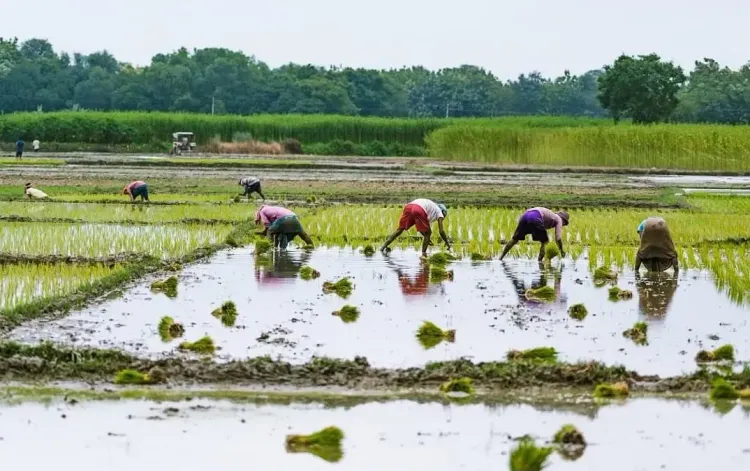
Synopsis
Kuruvai paddy cultivation in Tamil Nadu's Cauvery delta has nearly collapsed in 2026 — Nagapattinam went from 28,000 cultivating farmers to just 1,100. Thousands excluded from the government's ₹134-crore relief package are now demanding ₹25,000 per acre in compensation and a separate samba package, warning the next major crop season could be at risk too.
Key Takeaways
Kuruvai paddy cultivation in Nagapattinam fell from 28,000 farmers on 30,000 hectares in 2025 to just 1,100 farmers on 1,720 hectares in 2026.
In Tiruvarur , farmer count dropped from 59,885 to 38,330 and cultivated area from 77,573 to 46,338 hectares .
The Tamil Nadu government's ₹134-crore kuruvai package excluded farmers who could not begin cultivation due to water scarcity — an estimated 48,455 farmers across both districts.
Farmers report losses of around ₹10,000 per acre after failing to cultivate, with some sown crops withering due to falling groundwater and summer heat.
Farmer organisations are demanding ₹25,000 per acre compensation and a declaration of agricultural distress for the delta districts.
Groups are warning that without intervention, the samba season could also be severely affected.
Tens of thousands of farmers across the Cauvery delta districts of Nagapattinam and Tiruvarur have urged the Tamil Nadu government to provide compensation for losses suffered during the kuruvai paddy season, after inadequate water availability forced widespread crop failures and prevented many from sowing at all. Farmer organisations are also demanding that special package benefits be extended to the upcoming samba cultivation season.
Steep Decline in Kuruvai Cultivation
Official data reveal a dramatic collapse in kuruvai acreage this year. In Nagapattinam, approximately 28,000 farmers cultivated paddy across around 30,000 hectares during the 2025 kuruvai season. In 2026, only around 1,100 farmers raised the crop across approximately 1,720 hectares — a near-total collapse in both farmer participation and cultivated area.
The situation in Tiruvarur was similarly dire. The number of farmers growing kuruvai fell from 59,885 in 2025 to 38,330 in 2026, while the area under cultivation dropped from 77,573 hectares to 46,338 hectares. Taken together, the figures indicate that roughly 26,900 farmers in Nagapattinam and 21,555 farmers in Tiruvarur were unable to begin cultivation and therefore remained ineligible for government assistance under the existing scheme.
The Gap in the Government Package
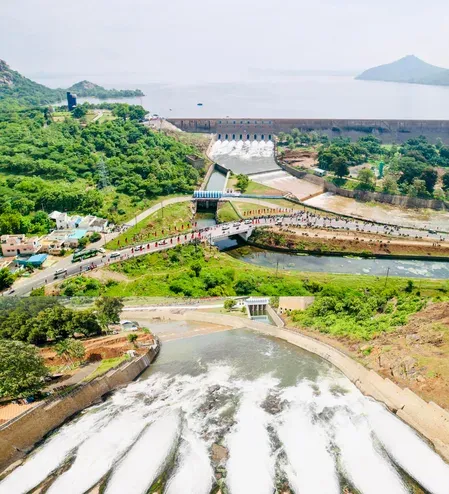
The Tamil Nadu government had earlier announced a ₹134-crore kuruvai special package after water could not be released from the Mettur dam on the customary date of 12 June. The relief was designed to support paddy cultivation through alternative irrigation sources, including filter-point wells. However, farmers who were unable to begin cultivation at all because of water scarcity were excluded from the scheme — leaving thousands of agricultural families without any income support for the short-season crop.
This is a critical structural gap: the package rewarded those who found a way to cultivate but left behind those worst affected by the shortage. Notably, this exclusion is at the heart of the current agitation.
Crop Losses and Rising Costs
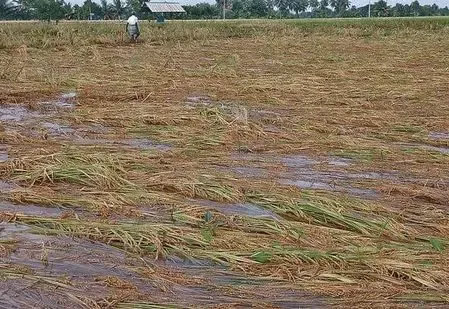
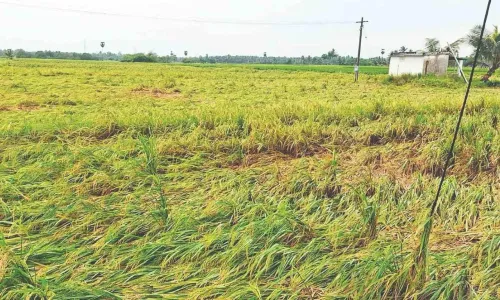
Several farmers reported losing around ₹10,000 per acre after failing to cultivate kuruvai paddy. Others said crops sown using groundwater withered due to intense summer heat, deficient rainfall, and rapidly falling groundwater levels. In Tirumarugal, crops reportedly failed on three of five acres after irrigation sources dried up.
Farmer representatives warned that the continuing water shortage and rising cultivation expenses could threaten the samba season as well — the longer-duration crop that is the delta's primary harvest. Any disruption to samba would have far graver consequences for the regional rural economy.
Demands: ₹25,000 Per Acre, Distress Declaration
Farmers' organisations have submitted several demands to the state government. They have asked authorities to declare the delta districts agriculturally distressed and grant compensation of ₹25,000 per acre — covering both farmers who could not sow kuruvai paddy and those whose crops failed after sowing. They have also called for a separate relief package for the samba season following water release from the Mettur reservoir, and for immediate government intervention in areas like Tirumarugal to prevent further livelihood losses.
What Comes Next
The Mettur dam water release is expected to determine the fate of the samba season. Farmer groups say the state must act swiftly — both on compensation and on ensuring adequate water supply — before the samba cultivation window narrows. The Tamil Nadu government has not yet publicly responded to the latest round of demands, and the depth of distress across two major delta districts is likely to increase political pressure on the state administration.
Point of View
000 farmers to 1,100 in a single year — is a crisis that dwarfs the government's relief design. The ₹134-crore package was structured to support those who cultivated; it had no provision for the far larger group that could not even begin. That exclusion is not an administrative oversight — it is a structural flaw that turns a water-scarcity problem into a livelihood catastrophe. The real risk now is that the samba season, the delta's main harvest, inherits the same water deficit and the same policy gap, compounding rural distress across one of Tamil Nadu's most agriculturally significant regions.
NationPress
16 Sept 2026
Frequently Asked Questions
Why did kuruvai paddy cultivation collapse in the Cauvery delta in 2026?
Kuruvai cultivation collapsed primarily because water could not be released from the Mettur dam on the customary date of 12 June 2026, leaving farmers without adequate irrigation. Rising summer heat, deficient rainfall, and rapidly falling groundwater levels further prevented or destroyed crops for those who attempted cultivation using alternative sources.
What was the Tamil Nadu government's kuruvai special package?
The Tamil Nadu government announced a ₹134-crore kuruvai special package after the Mettur dam water release was delayed. The scheme was intended to support paddy cultivation through alternative irrigation sources such as filter-point wells. However, it excluded farmers who could not begin cultivation at all, leaving thousands without any relief.
How many farmers were left out of the kuruvai relief package?
According to official data, approximately 26,900 farmers in Nagapattinam and 21,555 farmers in Tiruvarur — around 48,455 in total — were unable to begin cultivation and therefore could not access the benefits under the existing kuruvai package.
What are farmers demanding from the Tamil Nadu government?
Farmer organisations are demanding that the delta districts be declared agriculturally distressed, with compensation of ₹25,000 per acre for both farmers who could not sow and those whose crops failed after sowing. They are also asking for a separate relief package for the samba cultivation season.
Could the samba season also be affected by the water shortage?
Yes, farmer representatives have warned that the continuing water shortage and rising cultivation costs could affect the samba season as well. They have called for immediate government intervention and assured water release from the Mettur reservoir to protect the longer-duration crop, which is the delta's primary harvest.