US targets Asian scam networks that stole $12.5 billion in 2025

Synopsis
Americans lost $12.5 billion to Southeast Asian scam networks in 2025 — a 25 per cent jump from the year before — and the Trump administration says the problem is still getting worse. With the DOJ having restrained $15 billion in crypto and criminal groups now spreading from Cambodia into Malaysia, Indonesia, and Timor-Leste, Washington is racing to build a regional coalition before the networks outrun enforcement.
Key Takeaways
Southeast Asian scam networks defrauded Americans of more than $12.5 billion in 2025 , a 25 per cent increase over 2024 .
The Department of Justice has restrained more than $15 billion in cryptocurrency from scam centres since October 2025 .
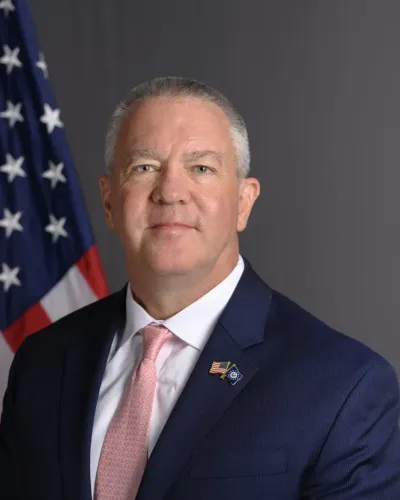
Assistant Secretary Michael G.
DeSombre testified before the House Foreign Affairs Subcommittee on 26 June , calling it a 'whole of government effort.' Criminal groups displaced by enforcement in Cambodia have spread into Malaysia , Indonesia , and Timor-Leste .
The US has formed a new contact group with allies and Southeast Asian nations to coordinate intelligence sharing and law enforcement.
Scam operations are also linked to drug trafficking and the use of trafficked workers , according to congressional testimony.
The Trump administration has escalated its campaign against Southeast Asian transnational criminal networks responsible for online scam operations that defrauded Americans of more than $12.5 billion in 2025 — a 25 per cent increase over the previous year. The push was outlined before the House Foreign Affairs Subcommittee on East Asia and the Pacific on 26 June, where senior officials warned the problem continues to worsen despite enforcement gains.
What the Administration Said
Michael G. DeSombre, Assistant Secretary of State for East Asian and Pacific Affairs, described a 'whole of government effort' to combat criminal syndicates operating across the Indo-Pacific. He said the objective was not merely to shut down scam centres but to dismantle the organisations behind them entirely. 'The goal is to make sure we arrest the bad guys and make sure they don't ever do it again,' DeSombre said.
He confirmed that the Department of Justice had 'restrained more than $15 billion in cryptocurrency from scam centers since October 2025,' while the administration was simultaneously advancing 'targeted sanctions and diplomatic pressure to hold governments accountable for enforcement.'
Scale of the Fraud and Regional Spread
Ranking Member Ami Bera flagged the rapid expansion of scam compounds along the Mekong region, noting that Chinese criminal organisations had been exploiting special economic zones in Vietnam, Cambodia, and Laos. He added that these syndicates were also linked to drug trafficking and routinely forced civilians into working in online fraud operations — a practice widely documented by human rights groups.
DeSombre acknowledged that enforcement pressure in Cambodia had produced an unintended consequence: criminal groups have migrated to neighbouring countries. 'We now see scam centers cropping up in Malaysia, Indonesia, even in Timor-Leste and other places,' he said. While describing the development as 'not good,' he noted it had spurred broader regional cooperation as more governments began experiencing the direct impact of organised cyber fraud.
Cambodia's Progress and Limits
DeSombre credited Cambodian Prime Minister Hun Manet with making the issue a government priority, saying there had been 'positive developments' in enforcement. However, he was clear that progress in one country had simply displaced criminal activity rather than eliminating it — underscoring the transnational nature of the threat.
Regional Coordination Efforts
To address the cross-border dimension, DeSombre said he had recently convened a contact group comprising US allies, partners, and several Southeast Asian nations to strengthen intelligence sharing and law enforcement cooperation. Online investment fraud, cryptocurrency scams, and romance scams have emerged as among the fastest-growing forms of transnational organised crime in the region, with criminal networks deploying trafficked workers to run sophisticated digital fraud schemes targeting victims worldwide.
With fraud losses rising year-on-year and criminal networks proving highly adaptive, the administration's next steps — including the scope of threatened sanctions and the membership of the new contact group — will be closely watched by both regional governments and US lawmakers.
Point of View
But the more telling detail is the trajectory — a 25 per cent year-on-year increase despite active DOJ enforcement and $15 billion in restrained crypto. That gap between asset seizures and actual fraud reduction points to a structural problem: dismantling individual scam centres without eliminating the criminal organisations behind them simply relocates the threat. The spread from Cambodia into Malaysia, Indonesia, and Timor-Leste is a textbook example of enforcement displacement. The new US-led contact group is a step forward, but regional coordination has historically been slow against networks that move faster than diplomatic processes. The harder question — whether targeted sanctions on complicit officials in special economic zones will actually change state-level behaviour — went largely unaddressed in the testimony.
NationPress
24 Sept 2026
Frequently Asked Questions
How much did Southeast Asian scam networks steal from Americans in 2025?
According to testimony before the House Foreign Affairs Subcommittee, scam networks defrauded Americans of more than $12.5 billion in 2025 — a 25 per cent increase over 2024. Officials described the problem as continuing to worsen despite ongoing enforcement action.
What action has the US Department of Justice taken against these scam networks?
The Department of Justice has restrained more than $15 billion in cryptocurrency linked to scam centres since October 2025. The Trump administration is also pursuing targeted sanctions and diplomatic pressure to hold regional governments accountable for enforcement.
Which countries are the scam networks operating in?
Criminal networks have been documented in Vietnam, Cambodia, and Laos, often exploiting special economic zones. Enforcement pressure in Cambodia has pushed groups into Malaysia, Indonesia, and Timor-Leste, according to Assistant Secretary Michael G. DeSombre.
What is the US doing to coordinate a regional response?
Assistant Secretary DeSombre said he had recently organised a contact group involving US allies, partners, and several Southeast Asian nations to improve intelligence sharing and law enforcement cooperation against the criminal syndicates.
Are the scam networks linked to other crimes beyond fraud?
Yes. Ranking Member Ami Bera testified that the syndicates are also connected to drug trafficking and regularly force trafficked civilians into working in online fraud operations, making them a broad transnational organised crime threat.