US ambassador nominee vows Cambodia cyber scam crackdown, China pushback

Synopsis
Trump's pick for US Ambassador to Cambodia told the Senate that dismantling cyber scam compounds — which have allegedly stolen tens of billions from Americans — is his top priority. The hearing also surfaced deep US concerns over China's role at Ream Naval Base, framing Cambodia as either a growing partner or a strategic vulnerability depending on how Washington plays its hand.
Key Takeaways
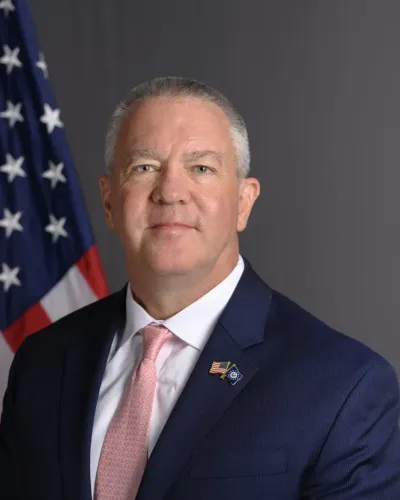
Christopher Anderson , President Trump 's Cambodia ambassador nominee, testified before the Senate Foreign Relations Committee on Thursday .
Anderson called dismantling cyber scam centres his 'top priority,' citing losses of tens of billions of dollars to American citizens.
He said combating scam networks would require coordination across the State Department , Department of Justice , and regional allies.
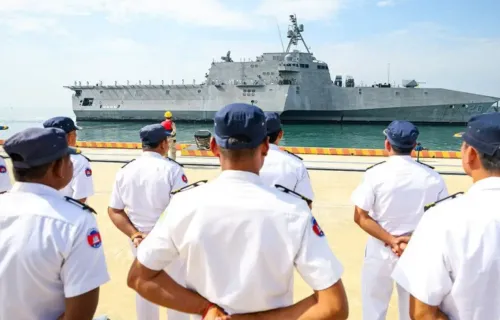
Ream Naval Base and China 's involvement in its development were flagged as a key security concern requiring direct engagement with Phnom Penh .
Anderson credited President Trump with facilitating a Cambodia-Thailand ceasefire that has improved bilateral relations.
He cited the Mekong-US Partnership and a more predictable investment climate as pillars of deeper economic engagement.
Christopher Anderson, President Donald Trump's nominee for the post of US Ambassador to Cambodia, told the Senate Foreign Relations Committee on Thursday that dismantling cyber scam compounds operating across Southeast Asia would be his foremost priority if confirmed, while also pledging to counter China's deepening footprint in the region and strengthen bilateral ties with Phnom Penh.
Cyber Scams Top the Agenda
Anderson, who currently serves as a national security adviser to Senator Steve Daines, made clear that tackling online fraud networks would define his tenure. 'My top priority would be dismantling online scams and the criminal networks behind them,' he said at his confirmation hearing. 'These operations have stolen tens of billions of dollars from American citizens. If confirmed, I will work with Cambodian counterparts and regional partners to deliver results.'
He acknowledged that eliminating these networks would require coordinated action across multiple US agencies and governments in the region. 'It'll be State Department, Department of Justice, Department of War, and then our regional allies to really attack the scam centres,' Anderson said. He added that dismantling the compounds would also reduce demand for human trafficking directly linked to these criminal operations — a secondary consequence that has drawn international concern.
Framing the US-Cambodia Relationship
Anderson characterised the current state of US-Cambodia relations as meaningfully improved, saying the bilateral relationship was 'fundamentally in a stronger place than it was a few years ago.' He credited President Trump with helping broker a ceasefire between Cambodia and Thailand, which he described as opening 'a new chapter' in ties between the two countries.
The nominee argued that Cambodia had 'the opportunity to be a growing partner, not a strategic vulnerability,' and outlined plans to advance US interests through stronger security cooperation, economic engagement, and regional partnerships. He also cited the Mekong-US Partnership as an important platform for economic and natural resource cooperation, noting that Washington should continue working with partners including Japan to strengthen development initiatives across mainland Southeast Asia.
China's Shadow Over Ream Naval Base
Senators pressed Anderson on China's expanding influence in Cambodia, particularly regarding the Ream Naval Base — a facility whose development has drawn sustained scrutiny from Washington over alleged Chinese involvement. Anderson said engagement with Phnom Penh would be essential to ensuring Cambodia did not become overly reliant on Beijing.
'I think the first part of answering your question is engagement,' he said. 'If confirmed, it will rely on me to sit down and have frank conversations of the reality of Ream Naval Base and if it truly is, as it says, open to all friendly nations.' He suggested that such dialogue could create openings for additional visits by US naval vessels to the base.
Investment Climate and Economic Ties
On the economic front, Anderson argued that a more predictable investment environment would be critical to encouraging greater American business activity in Cambodia. 'The goal would be to work together again, engagement, engagement with Cambodia to provide a predictable outlook for the future,' he said, pointing to recent trade agreements and bilateral initiatives as a foundation for deeper commercial ties.
With his confirmation still pending, Anderson's testimony signals that a confirmed US ambassador to Cambodia would pursue an agenda spanning counter-fraud operations, strategic competition with China, and economic partnership — a broad mandate that reflects Cambodia's rising importance in the broader Indo-Pacific calculus.
Point of View
The next ambassador will need leverage beyond dialogue — and that leverage has been conspicuously absent for years.
NationPress
15 Oct 2026
Frequently Asked Questions
Who is Christopher Anderson and why is he in the news?
Christopher Anderson is President Donald Trump's nominee to serve as the next US Ambassador to Cambodia. He appeared before the Senate Foreign Relations Committee on Thursday for his confirmation hearing, where he outlined his priorities including dismantling cyber scam networks and countering China's influence.
What are Cambodia's cyber scam centres?
Cambodia's cyber scam centres are criminal compounds that run large-scale online fraud operations, reportedly stealing tens of billions of dollars from victims including American citizens. They have also been linked to human trafficking, as workers are often coerced into operating the scams.
What is the concern over Ream Naval Base?
The Ream Naval Base in Cambodia has drawn sustained US concern over China's alleged involvement in its development and expansion. Anderson said he would seek frank conversations with Cambodian authorities to clarify whether the base is genuinely open to all friendly nations, including the possibility of US naval visits.
How does Anderson plan to dismantle the scam networks?
Anderson said the effort would require multi-agency coordination involving the State Department, Department of Justice, and regional allies, alongside direct engagement with Cambodian counterparts. He also noted that eliminating scam compounds would reduce associated human trafficking demand.
What is the Mekong-US Partnership?
The Mekong-US Partnership is a multilateral platform focused on economic cooperation and natural resource management across mainland Southeast Asia. Anderson cited it as an important vehicle for US engagement in the region, alongside collaboration with partners such as Japan on development initiatives.